We do not simply construct warehouse-type industrial buildings. We design warehouses based on how your actual company operates. Hampshire has long been known as one of the UK's largest hubs for both heavy goods transportation/industrial activity, supported by the region's deepwater ports located on the Solent, and a large presence in Aerospace and Defence. Projects undertaken throughout the county include Port Logistics (around Southampton), Distribution (alongside the M3) and Manufacturing (across the County). Warehouse Construction Contractors manages all project types within the county, including New Build, Extension to existing structures and Refurbishment of Older Units from First Site Visit to Hand Over.
Construction of a new warehouse begins long before the first piece of the foundation is laid. The process will start with an initial site visit to assess the condition of the land, the access points to the land, if there are any existing service connections such as utilities (water, electricity, etc.), and any historical uses of the land which may impact either the design of the building or the overall construction project timeline.
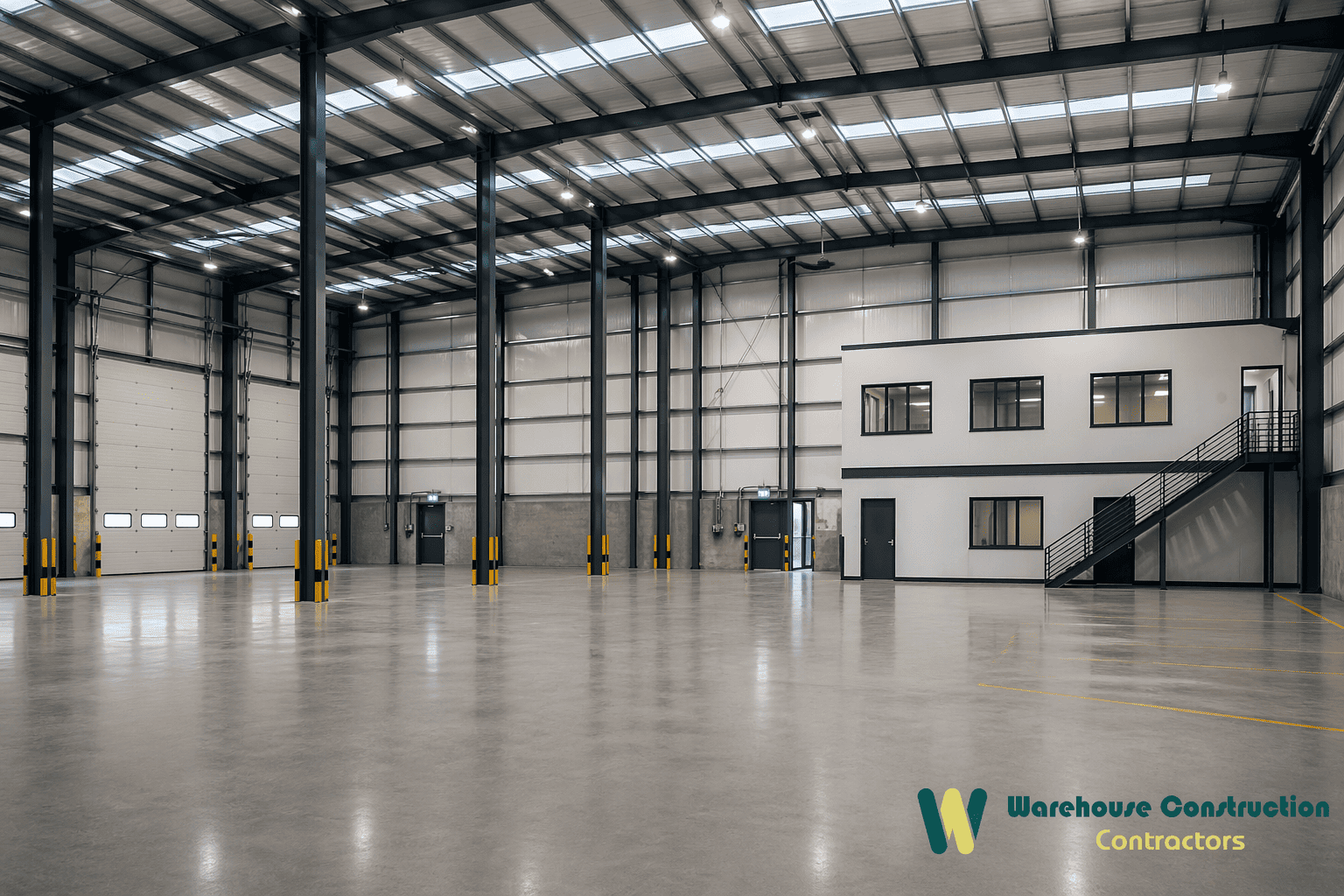
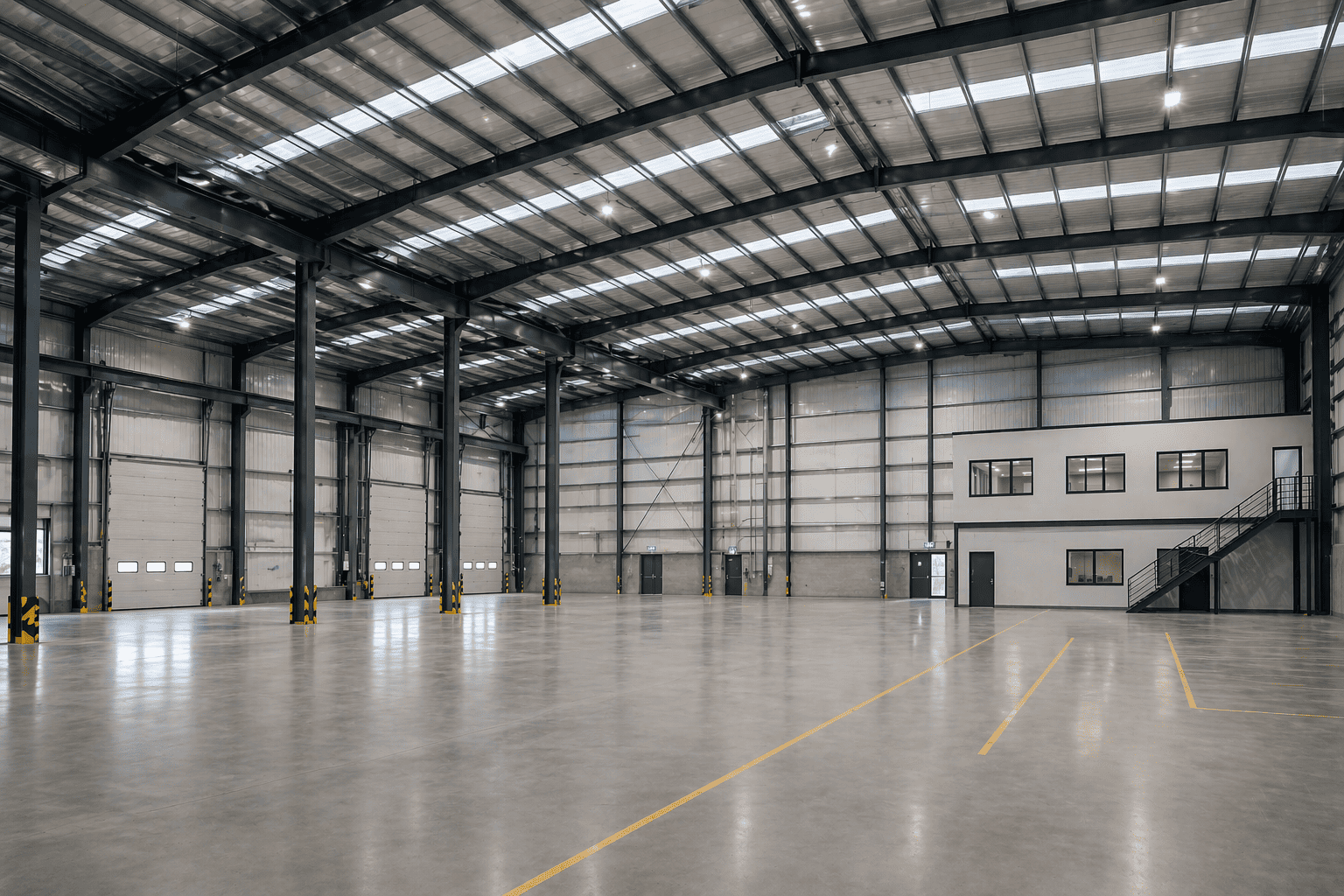
After planning permission has been granted, we enter into the detailed design phase including costings. It is during this part of the project that the building structure starts to take its final form: Steel Frame Size; Floor Slab Specification (to accommodate Racking & Vehicle Movement); Building Height; Layout of Yard/Parking/Access Points. In the UK, most warehouse buildings utilise a steel Portal Frame supported by a Reinforced Concrete Floor Slab; therefore, nearly all projects will start from this base specification and then be adapted to meet your specific operational requirements.
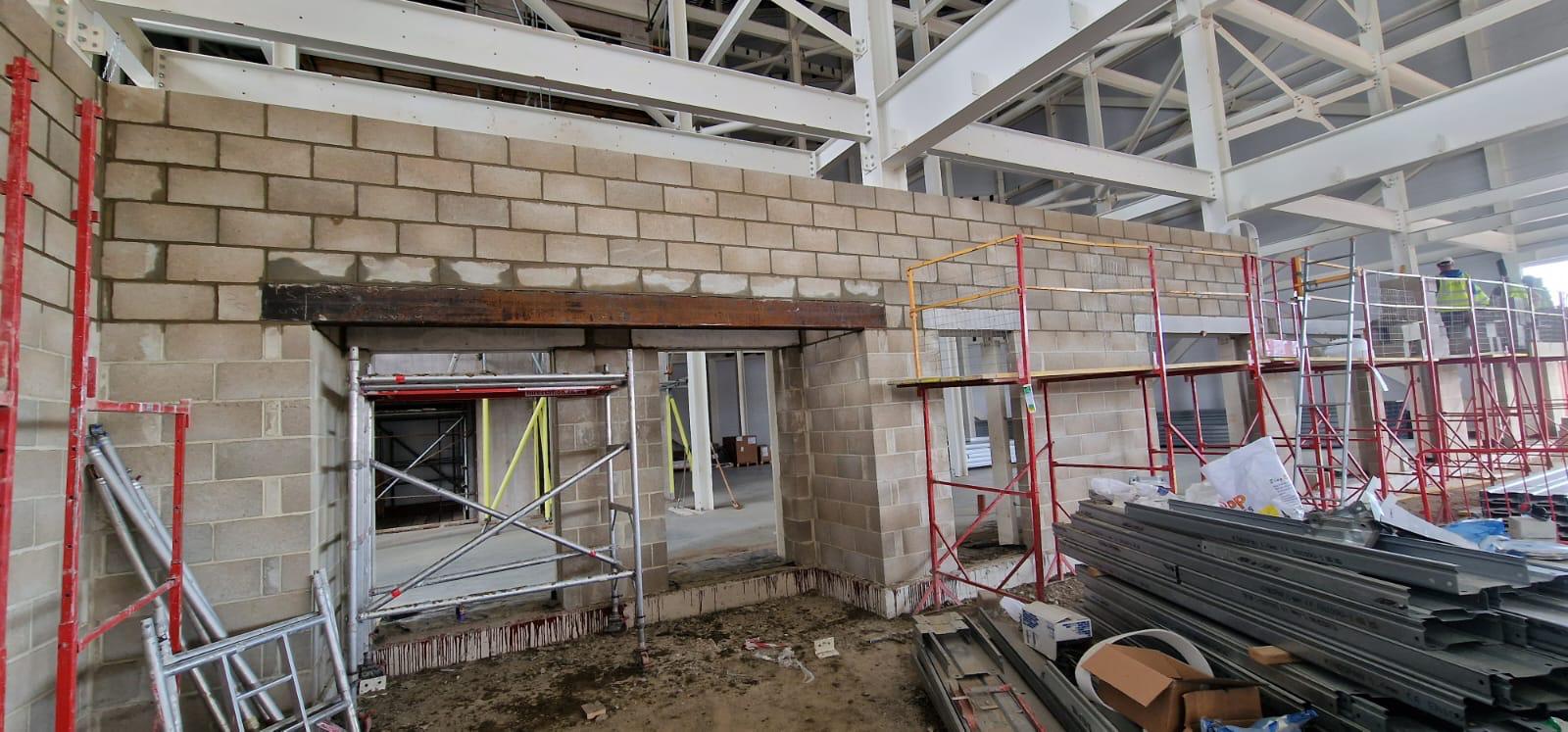
Once we have completed the Design Phase, we proceed with the construction sequence: Ground Works; Structural Frame; Roofing Cladding Fit-Out Work; and External Works. Throughout this process, you will always work with one team and a single Point of Contact. Unlike traditional methods, where responsibility is passed between multiple Contractors, resulting in finger-pointing should delays occur, our method ensures a seamless delivery. Regardless of whether it’s a major Port Logistics Site or a smaller plot within a town/city centre, effective Site Management will ensure that your new warehouse is delivered on time and to budget.
While distribution centres share some similarities with standard units, many critical factors require additional consideration when designing them. Mistakes made now can become very costly to correct later. Typically, high bay racking systems dictate the structural design and framing configurations. Therefore, we recommend determining the structural frame configuration and floor system early, based on your high bay racking and internal equipment needs. We also coordinate closely with your racking supplier throughout this process, ensuring that your structural frame and floor are designed around your intended operating parameters, rather than adapting your operating parameters to fit the structural frame and floor.
As previously mentioned, dock levellers and loading bays need to be configured appropriately for your vehicles and throughput. Additionally, the number of entries and exits to your facility will significantly affect your yard layout and how quickly you can turn over incoming/outgoing traffic. As part of the yard design process, we calculate the required turning radius, parking spaces, and queueing areas to ensure your facility operates efficiently under fully loaded conditions, rather than simply functioning adequately upon completion.
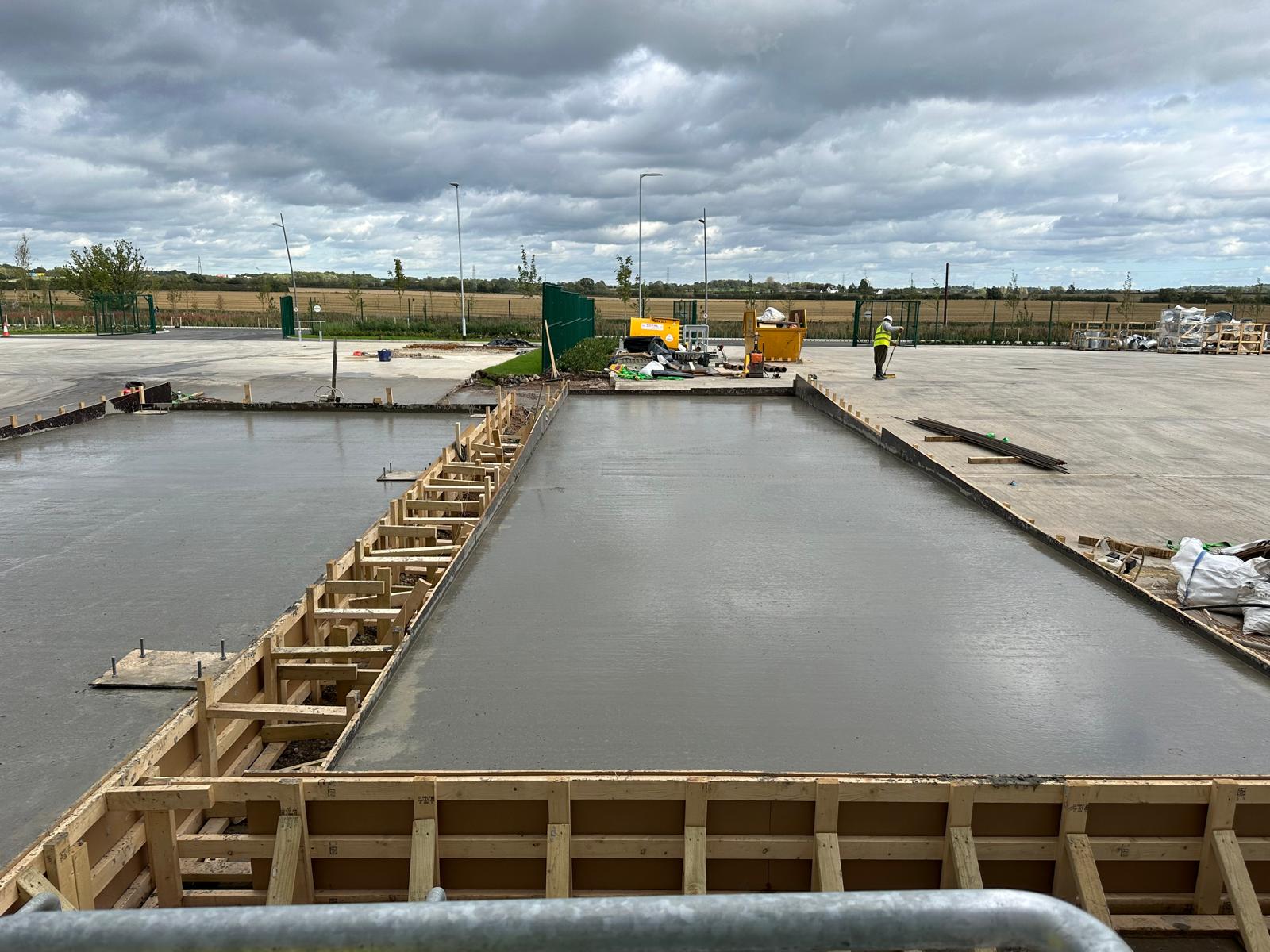
In addition to the structural differences, a Distribution Centre requires a heavier-duty floor slab due to heavy point loads from racking leg supports and the need for extremely high flatness to allow easy travel by Narrow Aisle Fork Lifts. We meticulously plan and execute concrete placement for our slab work to ensure accuracy, as the slab plays a vital role in supporting your overhead storage racks.
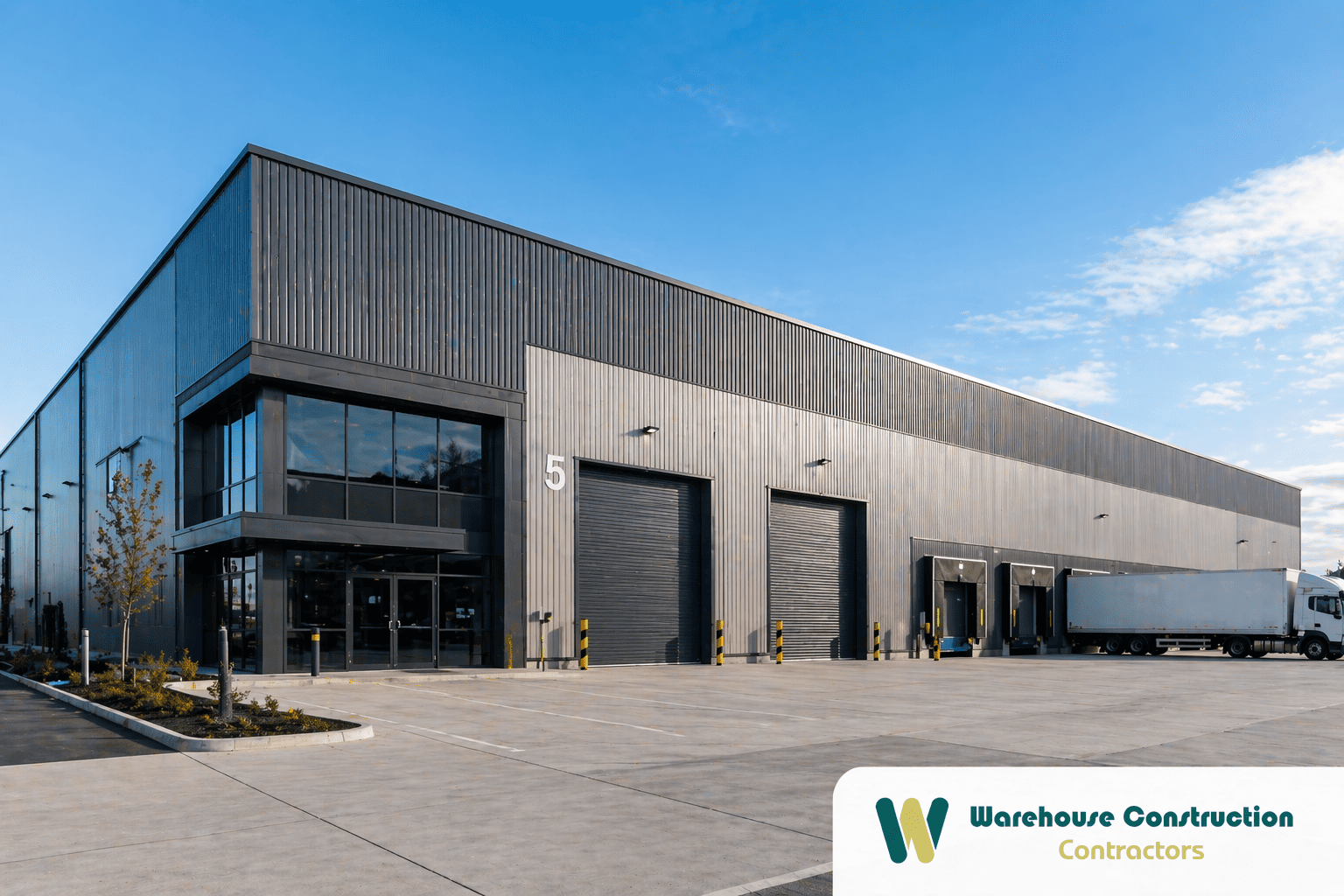
We do a number of extensions, but it's rare that extending a warehouse is simply a matter of additional floor space. An extension will have to attach itself to the original build, provide matching cladding and roofing and integrate with existing services and drainage systems. It also needs to be designed to ensure safe connection to the existing structure. We begin by assessing the load capacity of the existing building and determining how the extension should be safely connected.
The biggest concern for many businesses is ensuring continuity of operation while the works are undertaken. Most warehouses remain operational throughout the construction process. This requires careful sequencing (to prevent disruption), maintaining weather tightness at the point where the new joins the old and managing construction traffic to avoid disrupting working areas.
Ensuring that the extension matches the look of the rest of the building is not merely an aesthetic choice. Pitch of the roof, height, frame spacing, and cladding all need to be aligned to create a seamless addition to the building rather than a visual anomaly. Where neighbouring units and shared access constraints restrict available space in established Hampshire Estates, achieving this integration is critical to the success of the extension, rather than creating a long-term issue for adjacent users.
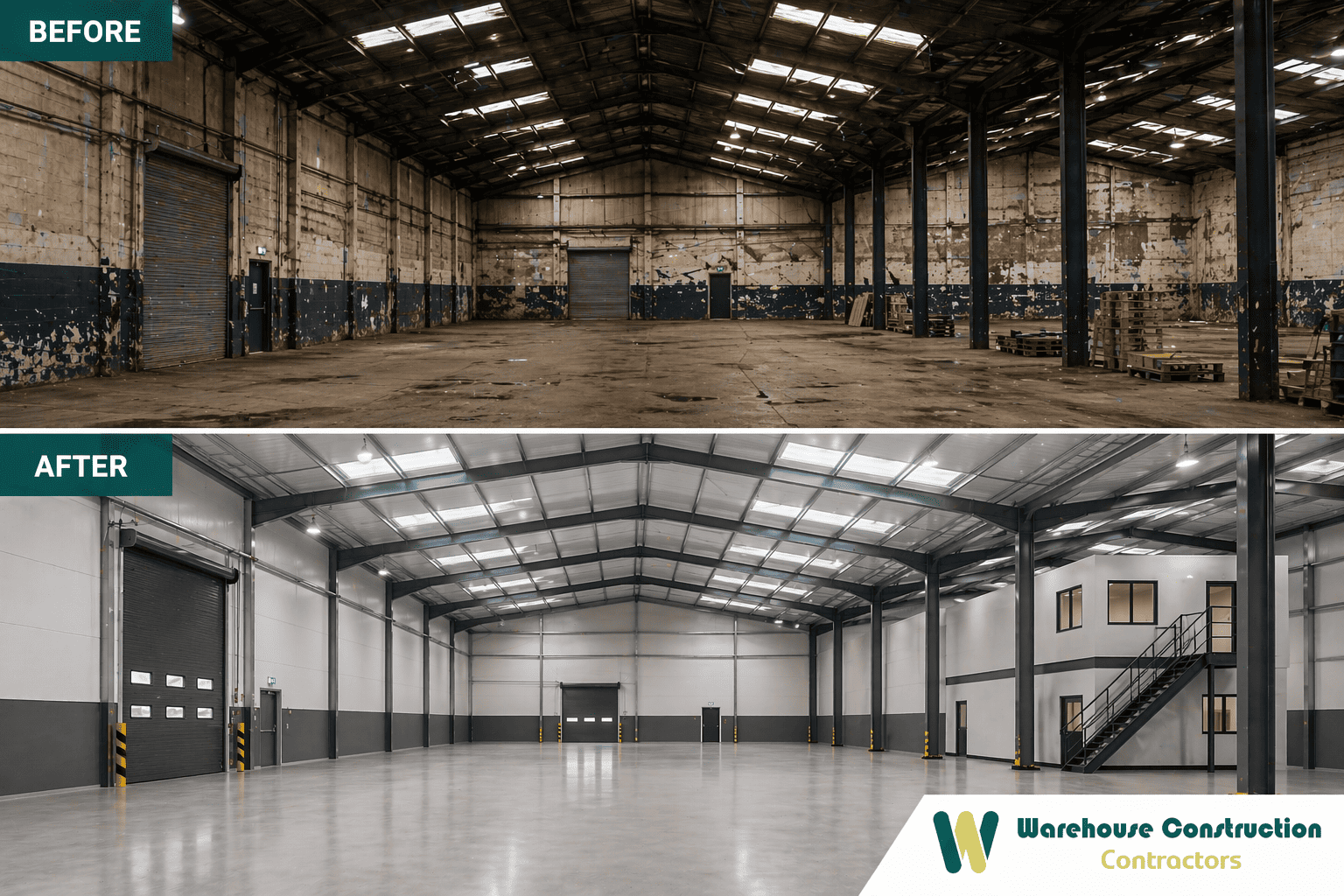
Compared with vacant land plots, much of our Hampshire-based work involves existing buildings that require refurbishment. Refurbishment can range from specific repairs to a full strip-back and rebuild of major components such as the roof, floors, cladding, services, and office facilities.
Roofing and Cladding are usually the first items addressed, particularly on older buildings that may have inadequate insulation, poor weathertightness, or fail to meet modern-day fire safety standards. Flooring may require remedial work, resurfacing, or complete replacement, depending on usage and the extent of degradation. Existing services within older buildings typically require upgrade prior to occupation by a new tenant due to their undersized or condition.
Cat A or Cat B office upgrades within industrial buildings are commonplace in preparation for occupancy by a new user. Through our associated company 'Strip Out Company ', we undertake the removal/demolition element of projects along with necessary surveys and waste management duties to prepare the site for commencement of refurbishment works.
Appraisal of the site (ground conditions, access, existing structures, utilities, and potential site constraints) - This process ensures that every project begins on factual evidence rather than assumptions. Where a site is located near the sea or in an area where there may have been previous use of the land, particular attention will be paid to the ground conditions.
Feasibility study (size of development, access arrangements, car park provision, yard spaces, etc.) - We will then produce a feasibility study that provides a detailed analysis of whether the proposed development is feasible, taking into account both cost implications and client requirements.
Planning Application - We will submit a full Planning Application to the relevant Local Authority within Hampshire (taking account of highways, drainage and environmental matters).
Design (detailed drawings) - Following approval of the Planning Application, the next stage is to produce detailed Design Drawings that enable construction to proceed. These drawings cover structural elements, the building fabric (envelope), services (such as electrical & mechanical installations) and external works.
Preparation of Groundworks (site preparation, excavation and formation of foundation trenches and laying drainage) - At this point in time, the site is being prepared for the steel frame and slab.
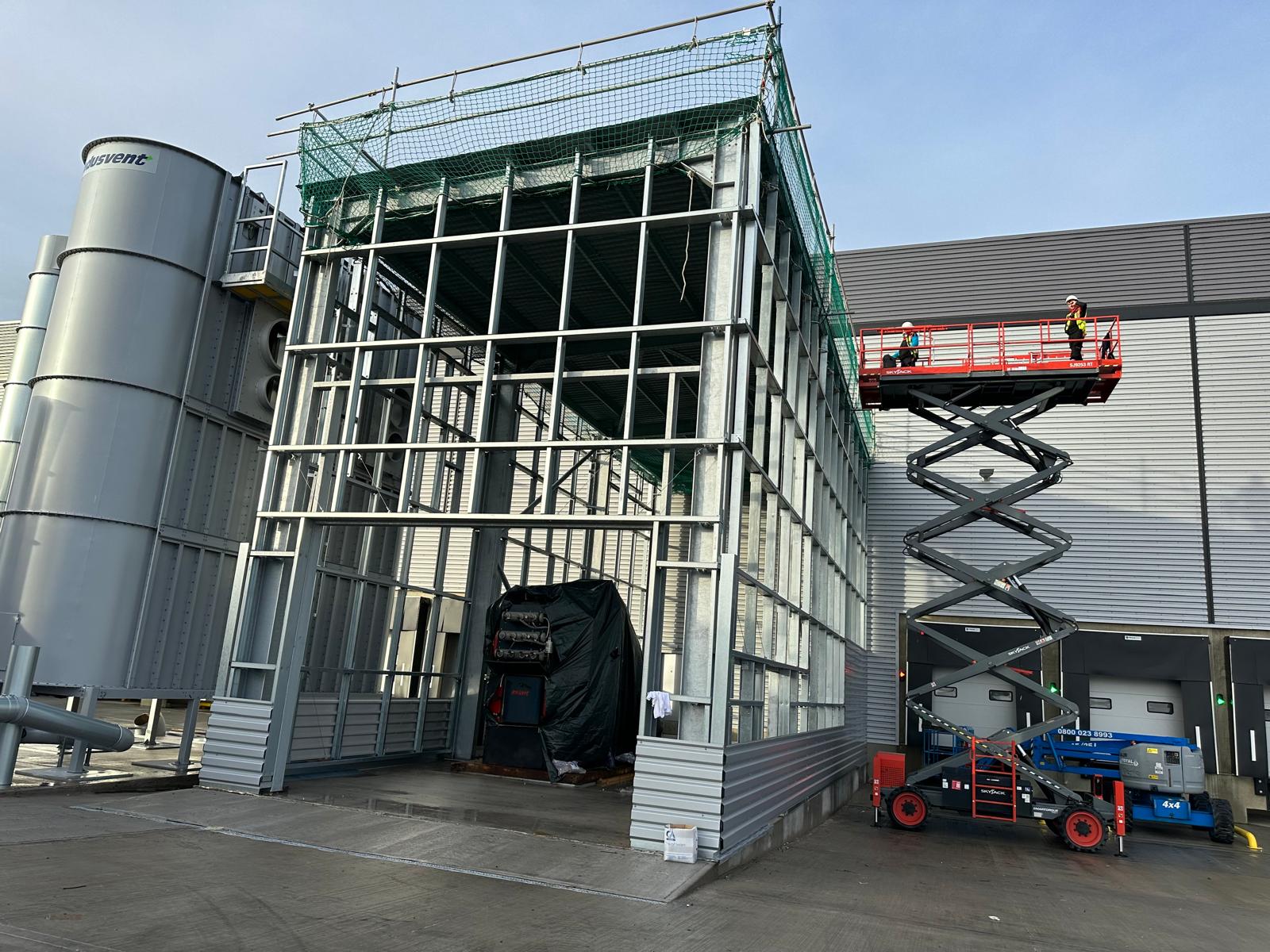
Construction of Steel Frame (structure erected to provide basic form of the building including heights and spans) - Once the site has been prepared for the steel frame, it is constructed. This provides the framework for the rest of the building.
Installation of Envelope (roofing & cladding installed to make the building watertight prior to commencement of fit-out works) - With the steel frame complete, roofing and cladding are added to protect against weather damage, allowing internal fit-out works to commence.
Internal Fit-Out Works (floors, services installation, office areas creation, fire suppression systems installation and racking installation) - All internal works required to create a functional warehouse space are completed at this stage.
External Works (yards formed, access road created, drainage system laid, car parking area provided and landscaping works carried out) - The final stage of our delivery process involves completion of the external aspects of the project, ensuring that the entire facility is fully operational.
Hand Over - On completion of all works, we formally hand over the completed warehouse facility together with all documentation, certificates and as-built information.
It depends on size, spec, location and ground conditions, so there's no single figure. The best way to get a real number is a site visit and a chat about what you need, which we do free.
It depends on size, complexity and whether you need planning. As a rough guide, a straightforward new unit takes several months from groundworks to handover, with planning and design before that.
Usually yes, as long as the existing structure can take the connection and there's room and access on site. We check the building as part of the design to confirm what's possible.
It's common around the Solent and very manageable, but it needs proper investigation first. Soft ground, high water tables, and former industrial use can all affect foundations, and identifying these conditions through site investigation before design is what keeps a project on programme. We factor this in from the site appraisal stage.
We build across Hampshire, including Southampton, Portsmouth, Basingstoke, Eastleigh, Fareham, Farnborough, Aldershot, Andover, Winchester, Gosport, Havant, Fleet and Petersfield, as well as the surrounding areas served by the M3, M27, A34 and A3(M).
Would you like to learn more about how we can help you with your next residential or commercial project, fill in your details and a member of our team will be in touch.
A strip-out is the first phase of most warehouse refurbishment, redevelopment and end-of-lease projects, and it sets up everything that follows. Get it right and the building hands over clean, safe and ready for the next stage. Get it wrong, and the problems carry thro..
Read Full Story »
In choosing a site, every other element of the project is set, including the cost of acquisition, the time required to complete the project, planning risks, and ultimately, the structure you will create. If the choice is incorrect, the rest of the project will be spent recovering from an error in judgment that was made within days of commencing...
Read Full Story »