Warehouse EPC and MEES Rules Explained | 2026 Update
August 1, 2026
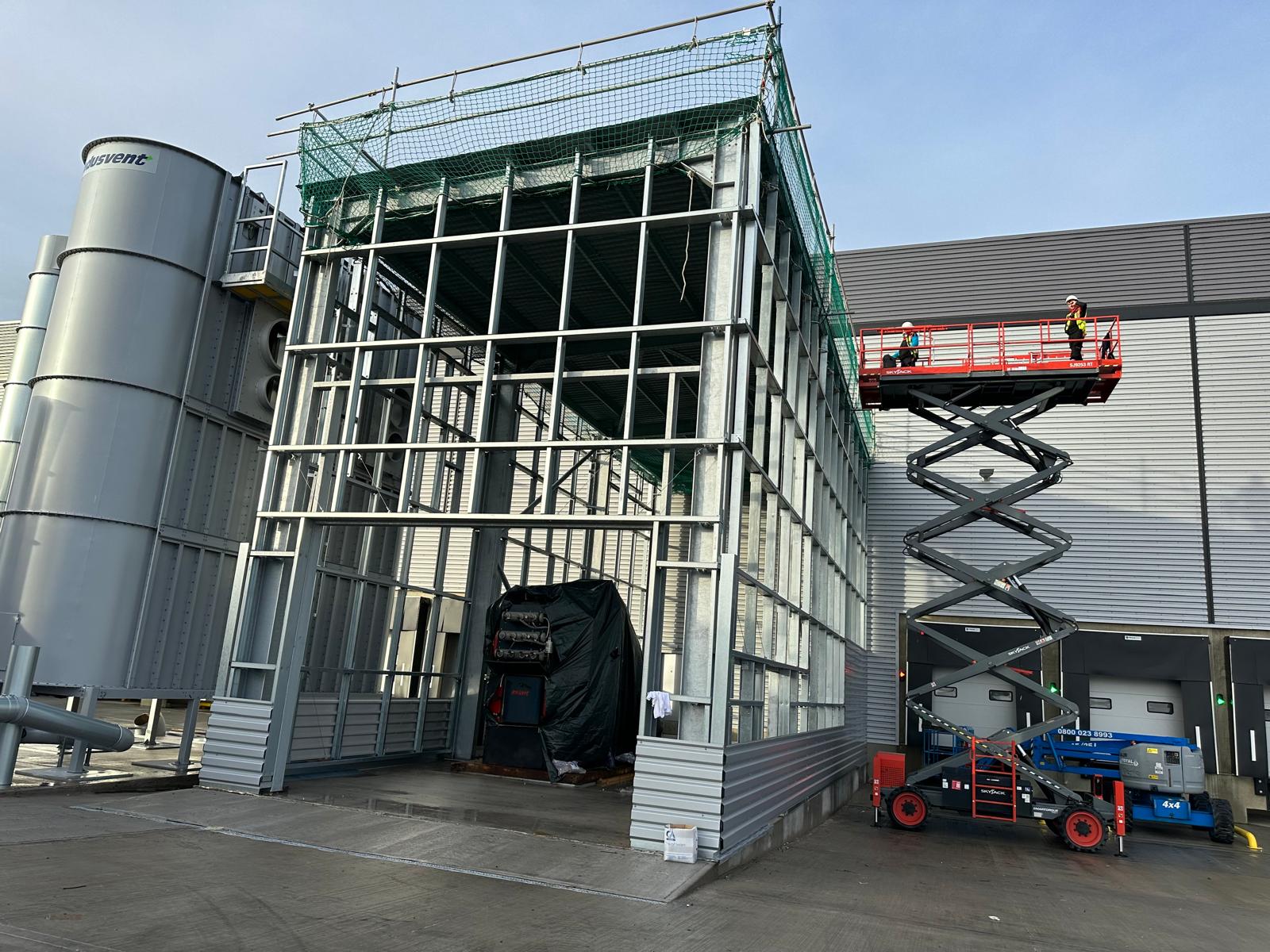
If you own or let a warehouse, its EPC rating affects whether you can legally rent it out. The rules have tightened over the last few years, and they are set to tighten further for larger buildings, which is most warehouses. This guide explains where the rules stand now, what is coming, and what you can do about it.
This is a plain guide, not formal advice, so check your own building's EPC and get a proper assessment before making decisions.
What MEES is
MEES stands for Minimum Energy Efficiency Standards. It sets the lowest EPC rating a property can have and still be legally let in England and Wales. EPC ratings run from A, the best, down to G, the worst.
Scotland has its own separate rules, so this covers England and Wales.
The rule right now: EPC E
The current legal minimum is EPC E. In practice:
- Since 2018, you cannot grant a new lease on a commercial building rated F or G.
- Since 2023, that also applies to existing lettings. You cannot continue to let an F or G building.
- The only way round it is a valid registered exemption, and those are limited.
So if your warehouse is rated F or G, you cannot lawfully let it as things stand without improving it to at least an E or registering an exemption. That is the floor today.
What is coming: EPC B by 2031 for larger buildings
This is the part that matters most for warehouse owners, and it changed recently.
For years the plan was to raise the minimum to EPC C by 2027 and then B by 2030, for all rented commercial buildings. In June 2026 the Government revised that. The key points:
- The EPC C by 2027 milestone has been dropped. It is no longer happening.
- The new proposal is EPC B from 2031, but only for privately rented commercial buildings over 1,000 square metres, and only where it is cost-effective to reach.
- Buildings of 1,000 square metres or less stay on the current EPC E minimum, with no set date for any further rise.
Two things to be clear about. First, this is a proposal, not yet law. It needs to pass through Parliament as secondary legislation before it bites, and until then EPC E remains the legal requirement. Second, the detail on how "cost-effective" will be judged, and how the 1,000 square metre threshold will work, is still to come.
But here is why it lands on warehouses in particular. Warehouses are large buildings. Almost all of them are well over 1,000 square metres. So the smaller-building carve-out will not help most warehouse owners. If this becomes law, the EPC B standard is aimed straight at the kind of stock you own. The direction of travel is set, even if the exact date and detail are not.
Why warehouses often score badly
Warehouses tend to have weak EPC ratings for reasons built into how they are made:
- Big volumes to heat, often with old or inefficient heating.
- Old cladding and roofs with little insulation.
- Poor air-tightness, so heat leaks out.
- Older lighting, which in a large warehouse is a major energy user.
The good news is that these are the same things a refurbishment can fix, and most of them cut running costs at the same time.
What actually improves a warehouse EPC
If you need to lift a rating, these are the measures that tend to move the needle in a warehouse:
- LED lighting with proper controls. In a building this size, lighting is a big share of the energy use, so this is often the quickest win.
- Roof and wall insulation, or recladding with modern insulated panels.
- Better air-tightness, sealing the gaps that let heat out.
- More efficient heating, and destratification fans to push warm air back down instead of letting it sit at roof level.
- Solar panels on the roof. A warehouse roof is a large, unshaded area, and on-site generation helps the rating as well as the bills.
- Upgraded controls and, in the office areas, more efficient heating and cooling.
Which of these makes sense depends on the building and its current rating. On many warehouses, a sensible package of measures moves the EPC up several bands.
Why it pays to start early
2031 sounds a long way off. In building terms it is not.
Improving a large warehouse to EPC B is not a quick job. It can mean assessment, design, agreeing works with any sitting tenant, procurement, installation and then a fresh EPC assessment to confirm the new rating. On a complex building that can take a few years. Leaving it late risks a building you cannot let, at the worst possible moment.
There is also an upside beyond compliance. A better-rated warehouse is easier to let, worth more, and cheaper for occupiers to run, which makes it more attractive. Owners who improve their stock ahead of the deadline are not just avoiding a problem, they are improving the asset.
How we help
We refurbish warehouses across London and the South East, and energy performance work is a core part of that. We can carry out the measures that lift an EPC, from recladding and insulation to lighting, heating and solar, and because we deliver the whole job under one roof, the works are planned and sequenced together rather than split across separate trades.
If your building has a sitting tenant, we plan the work around the operation so the disruption is kept down, which matters when the building has to keep running while it is upgraded.
A note for the team: a real example would strengthen this a lot. For instance a warehouse taken from an F or G up to a lettable rating, with the actual measures used, or an EPC improvement that also cut the occupier's energy bills. A genuine before-and-after would set this apart.
The takeaway
Right now, the minimum is EPC E, and an F or G warehouse cannot be let without improvement or an exemption. Looking ahead, the Government intends to require EPC B from 2031 for buildings over 1,000 square metres, which covers most warehouses, though that is still a proposal and not yet law. Either way, the direction is clear, and the buildings most affected are exactly the large ones.
If you want to know where your warehouse stands and what it would take to improve it, the first site visit is free. Send us the current EPC if you have it, and we will give you a realistic view of the work and the cost