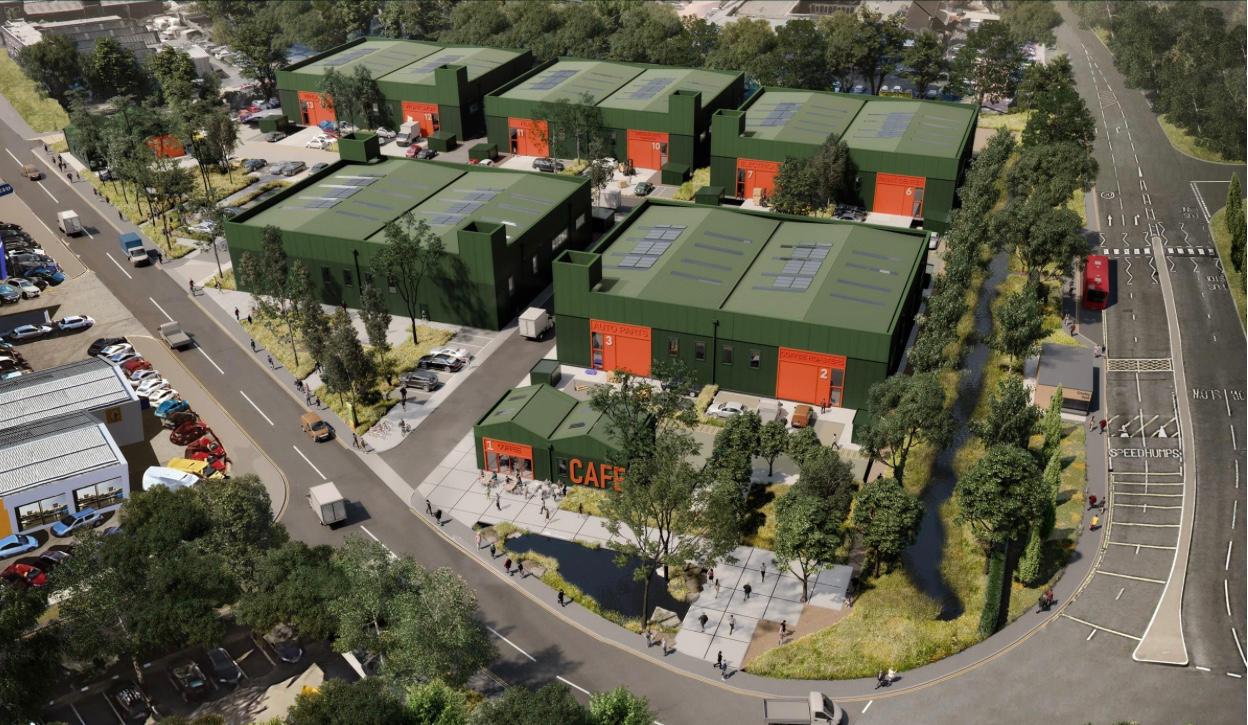
Warehouse construction isn't simply about putting up an industrial warehouse. It’s about creating a warehouse that works as your business does. Kent is a major gateway to Europe, and this is reflected in Kent's warehousing sector. Warehouse Construction Contractors deliver warehousing projects throughout Kent, including Freight & Distribution warehouses near the Channel Ports, Manufacturing Plants, Trade Parks, Logistics Centres and Storage Buildings. Whether you are looking to construct a new facility, extend your existing space, or renovate an old unit, we will oversee your project from our initial site visit right through to Hand Over.
More than anything else, it is Kent’s geography that defines the nature of Kent’s industries. It is here that the UK borders the European continent. Freight crossing from the UK to mainland Europe via the Roll-on/Roll-off ferry terminal at the Port of Dover accounts for a very significant proportion of the UK’s total volume of cross-channel freight. Much of the remaining freight is transported using the Channel Tunnel, which passes through Folkestone. As such, many road freight routes in/out of the UK pass through Kent. This creates high demand for warehouse/distribution/storage facilities throughout Kent.
There are three main motorways in Kent. The M20 follows the coast. Starting in Maidstone, passing through Ashford, and ending near Dover and Folkestone. The M2 also follows the coast. From Medway and Faversham, and continuing to connect to Canterbury and then onto the coast. The M25 surrounds Kent on the west side, connecting Kent to the rest of England and London. The A2 and A20 provide connectivity between other major towns within Kent.
Kent’s industrial locations are directly connected to the main motorway routes. Ashford has become a prominent logistics hub due to its proximity to the M20 and its direct access to a railway line. Maidstone, the capital city of Kent, has an even split between Industrial and Commercial businesses. Many areas along the M2 have been used for Industrial purposes since before World War II. Ebbsfleet (along with the wider Thames Gateway) is identified as an area for future development in the northwest of Kent. When a company wishes to export/import goods to or from Europe, Kent is a convenient location due to its geographical position.
When you decide to build a new warehouse, it doesn't start with the first foundation. It begins with the site assessment, which assesses whether the soil will support the building, whether there are any service restrictions affecting the location of your buildings (e.g., mains water or gas), and identifies potential issues that may delay or impact your project. Because Kent is an area of natural beauty, some areas of the county have a protected landscape designation or Greenbelt status. Therefore, these factors need to be taken into consideration when determining what type of development is acceptable.
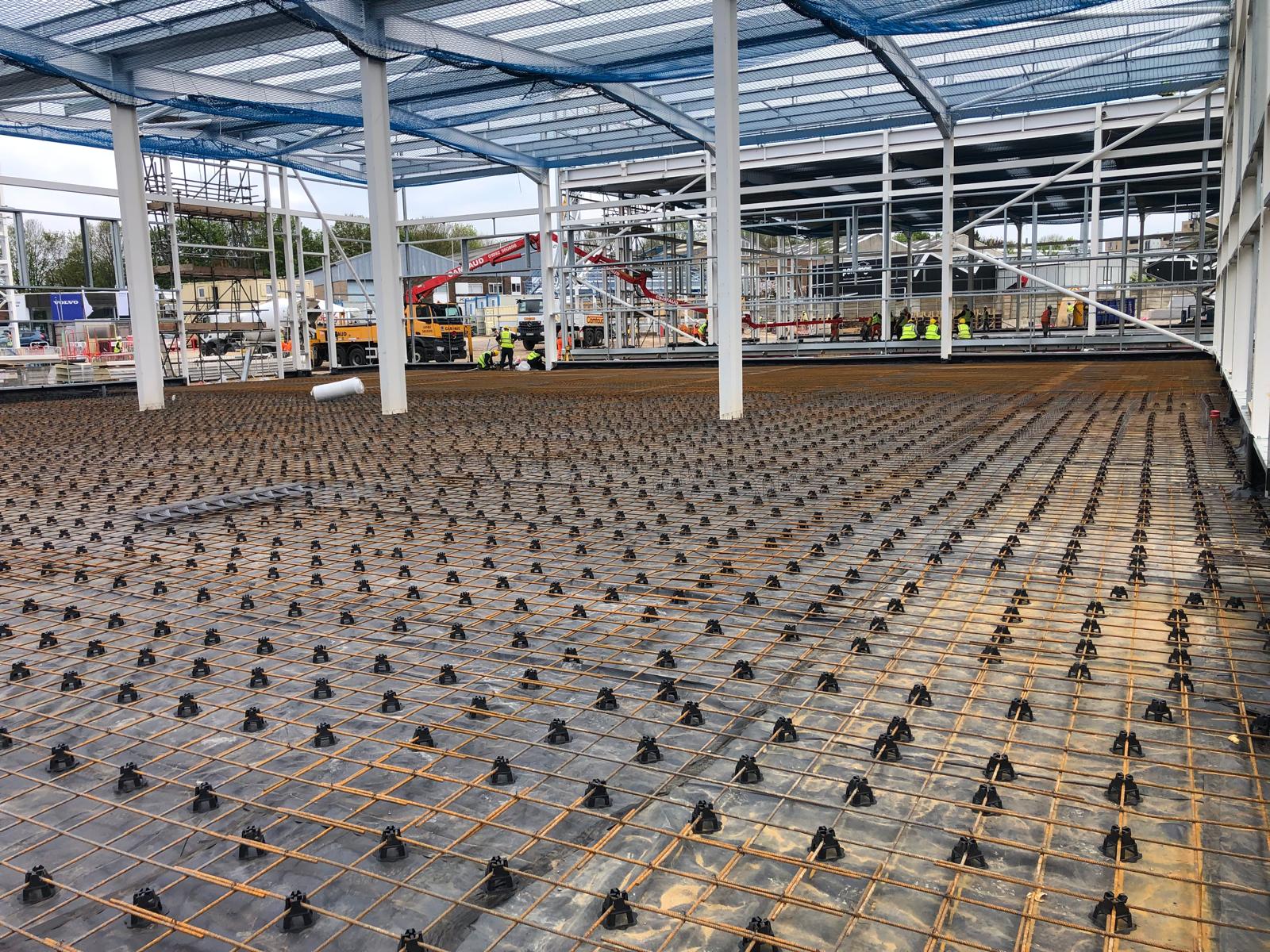
After obtaining approval to develop the land, we then proceed with developing the plans and estimates for the proposed building. At this stage, the building becomes defined by its specifications. The dimensions of the steel portal frame, the specification for the floor slab to accommodate both your racking and your vehicle traffic, the overall height required, and finally, the layout of the yard and car park. Most commercial warehouse developments utilise a steel portal frame supported by a reinforced concrete slab. As such, most projects begin utilising this format and adjusting accordingly based on how you intend to use your building.
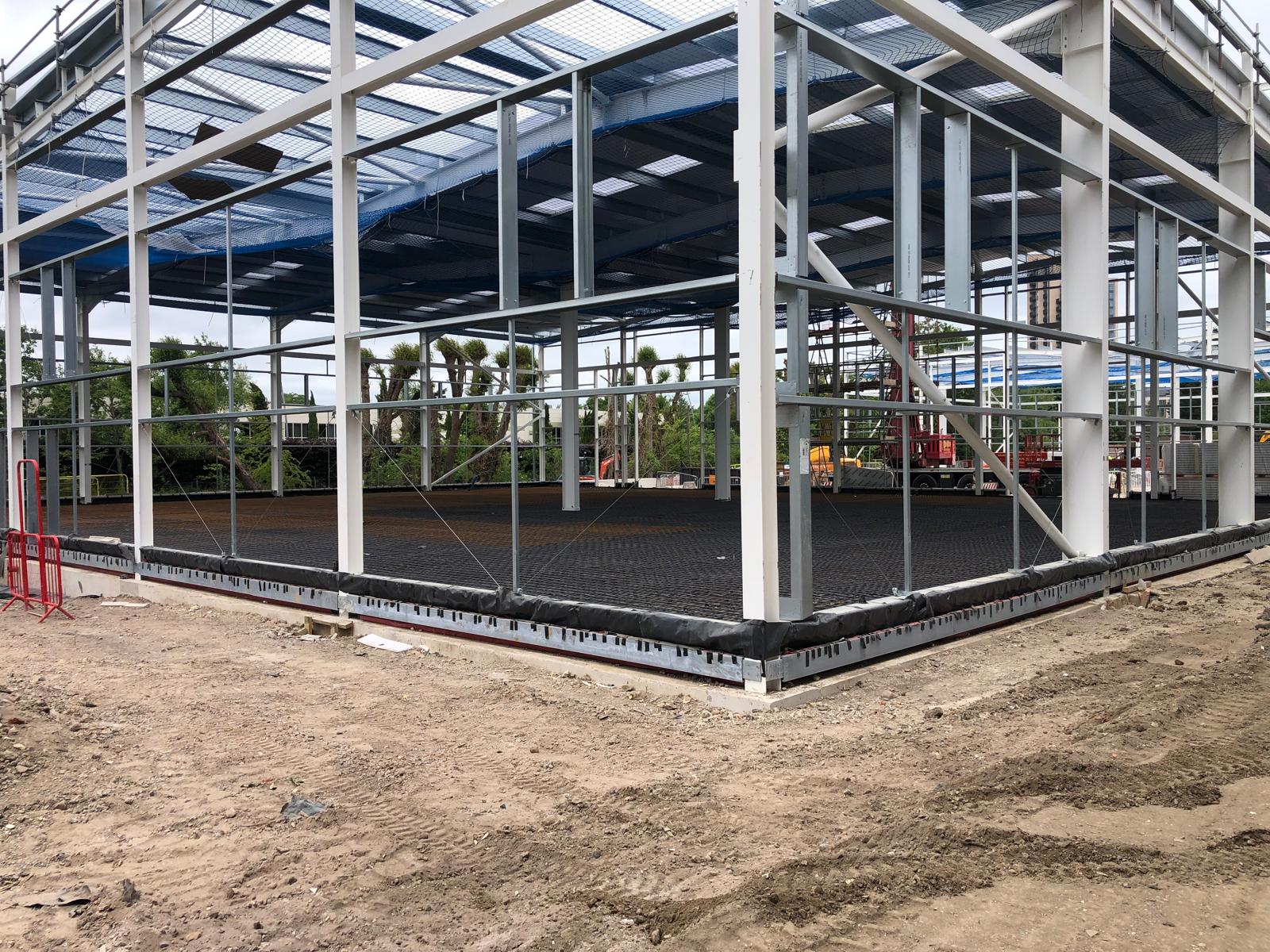
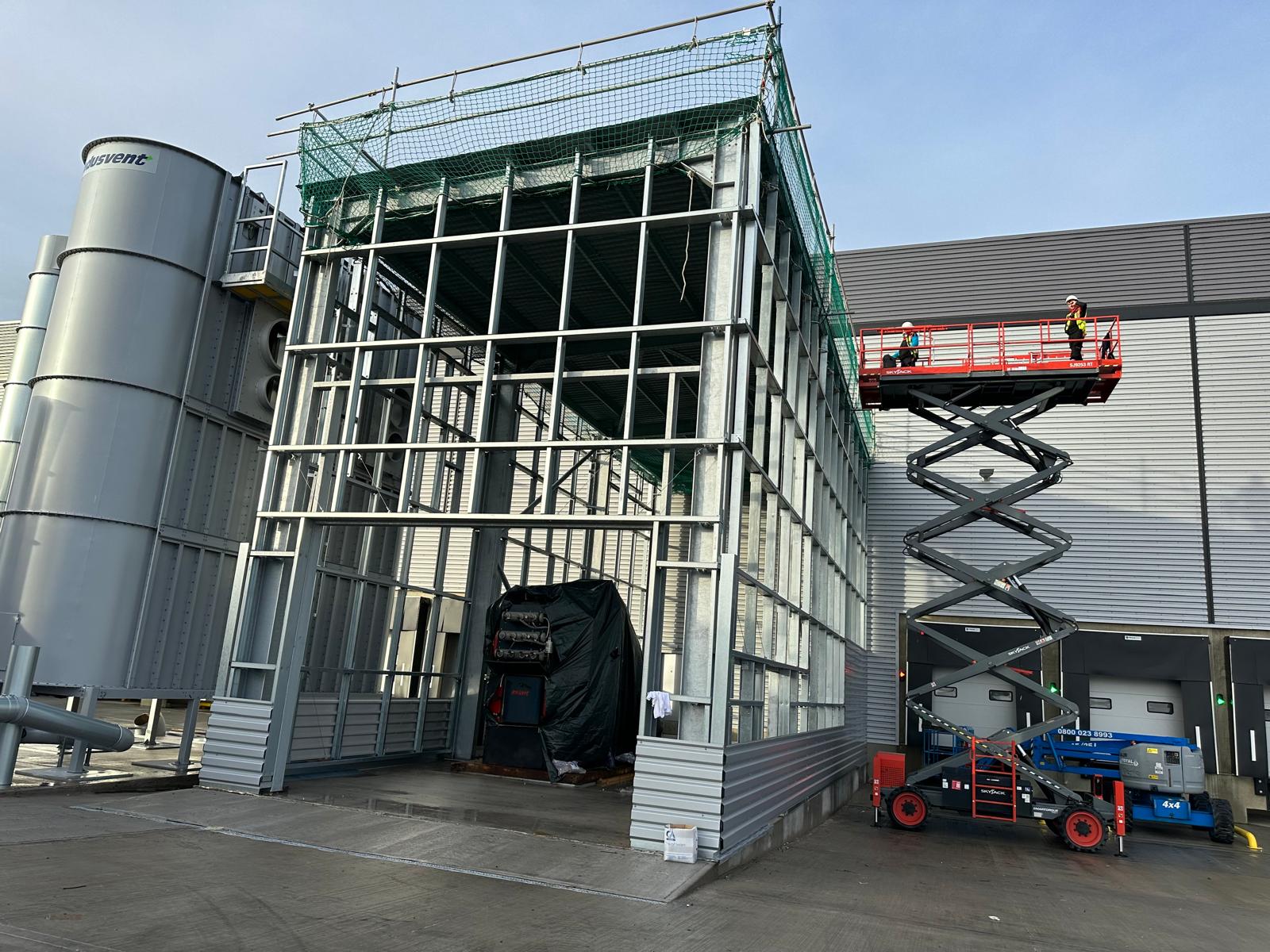
Following completion of all designs and approvals, we proceed to construct the building. The typical sequence for warehouse construction includes ground works, structural frames and roofing, cladding and fit-out, and finally the external works. Throughout this process, our clients will communicate directly with our dedicated site managers, who will oversee their individual projects. Because many industrial sites are situated near residential or commercial properties in Kent, effective site management is essential to minimise disruptions during construction.
Distribution centres require significantly more deliberation than a standard warehouse unit. Any mistakes made during this phase will ultimately cost money to rectify down the line. Typically, high bay racking systems dictate the design elements of distribution centres, including the structural frame spacing, and thus determine how tall the structure should be. Our team coordinates with you and your racking supplier to establish these parameters prior to completing the design of your distribution centre. With this information established, we can ensure that your distribution centre's structural frame and floor are designed specifically for your intended operational requirements, rather than designing a facility with a generic configuration and subsequently attempting to incorporate your specific needs.
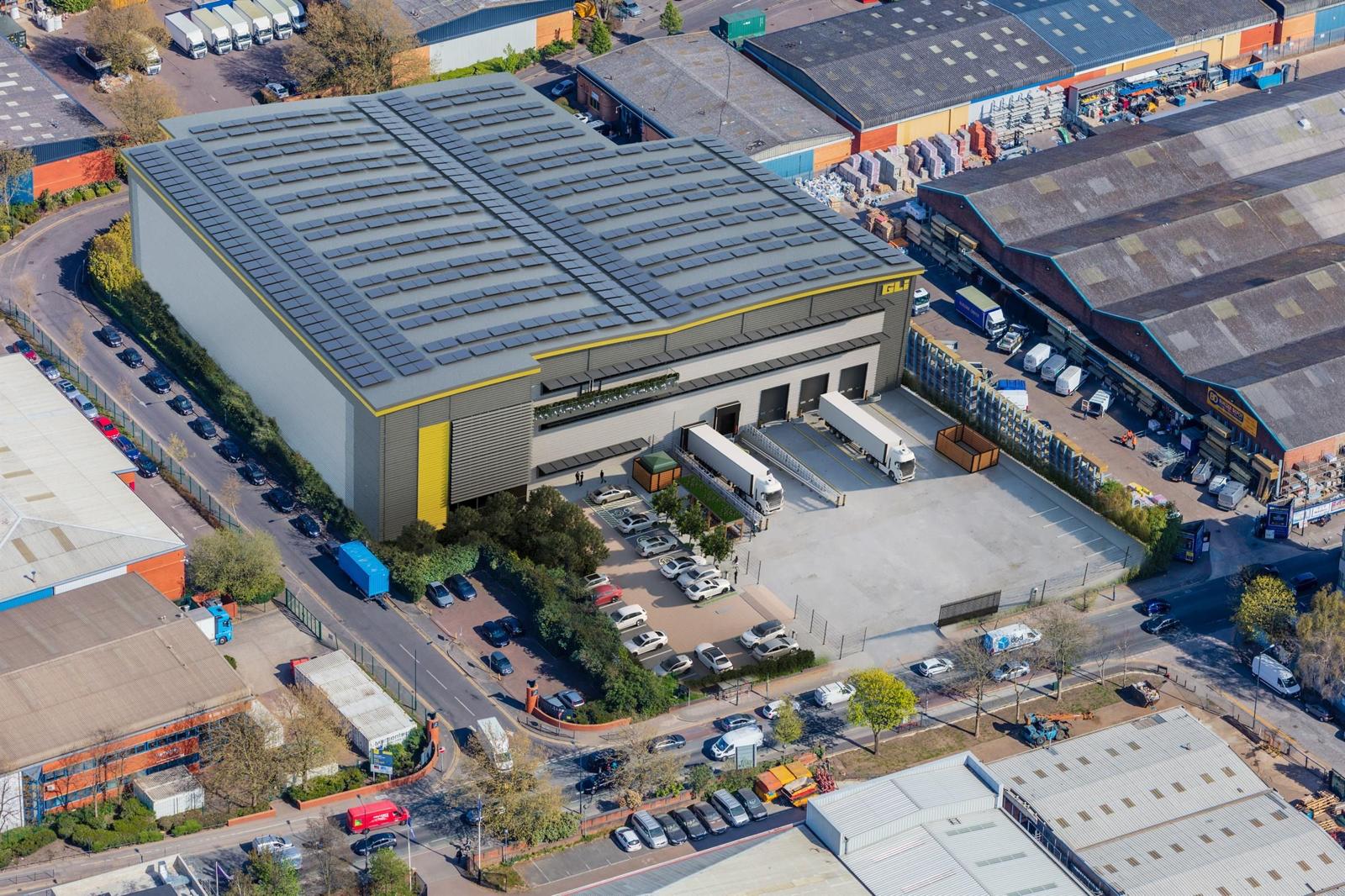
Your dock levellers and loading docks must also be tailored to meet your operating parameters, including your fleet composition and expected throughput rates. Similarly, how many doors you desire for your building, and where you want them located relative to each other, will influence the ultimate layout of your distribution centre's yard and ultimately contribute to how quickly you can turn around a truck. When designing the yard for your distribution centre, we take into account not only truck turning circles but also provide adequate space for truck drivers to park while waiting for unloading/loading operations to commence. Additionally, we create sufficient queuing space within the yard to enable efficient truck movement throughout your facilities.
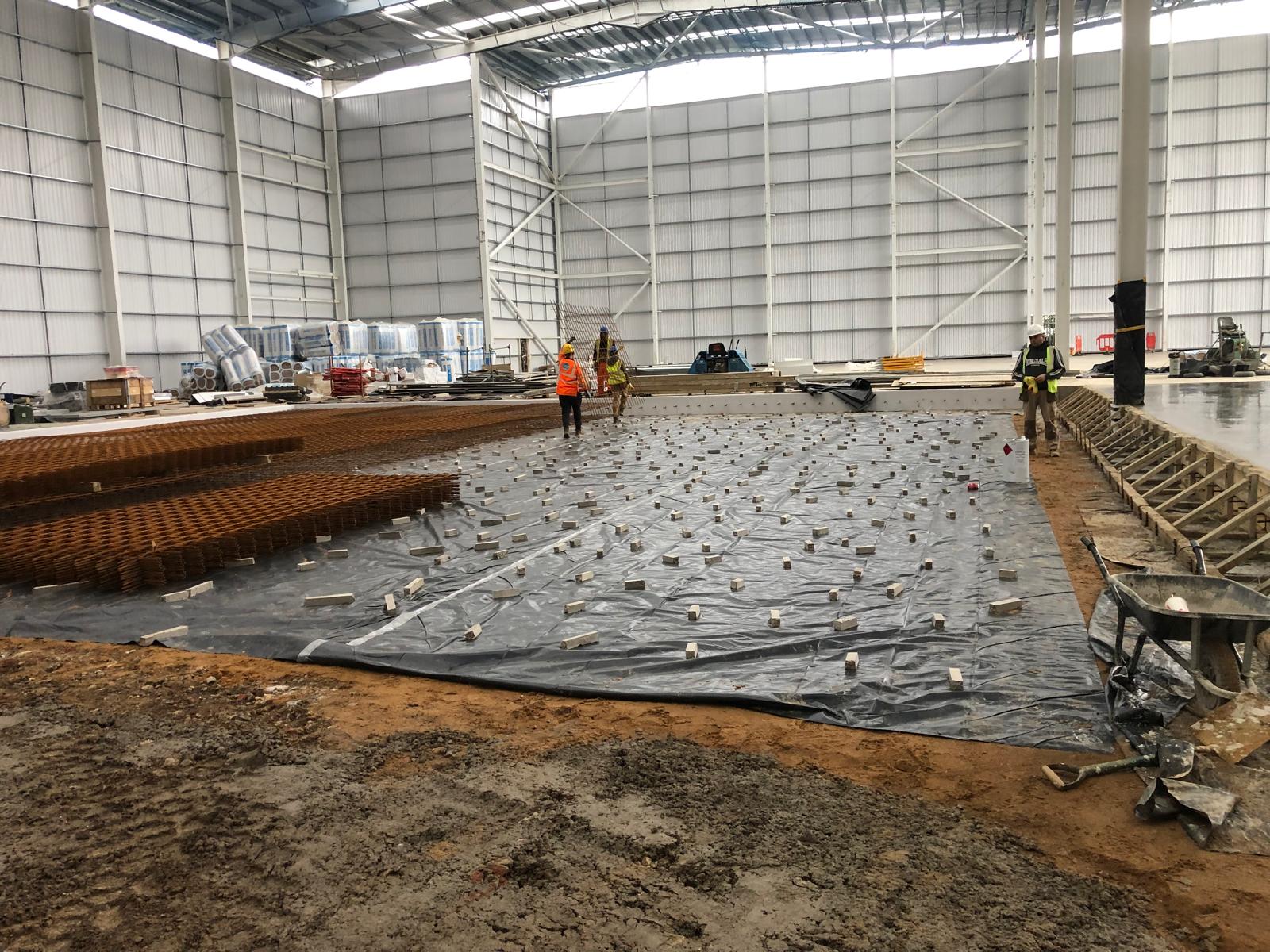
The slab thickness at a distribution centre typically differs greatly from that of other warehouse facilities due to heavy, concentrated loads placed directly onto racking leg supports. Furthermore, maintaining a suitable environment for narrow-aisle trucks and other specialised equipment used in distribution centre operations requires that the slab be poured perfectly.
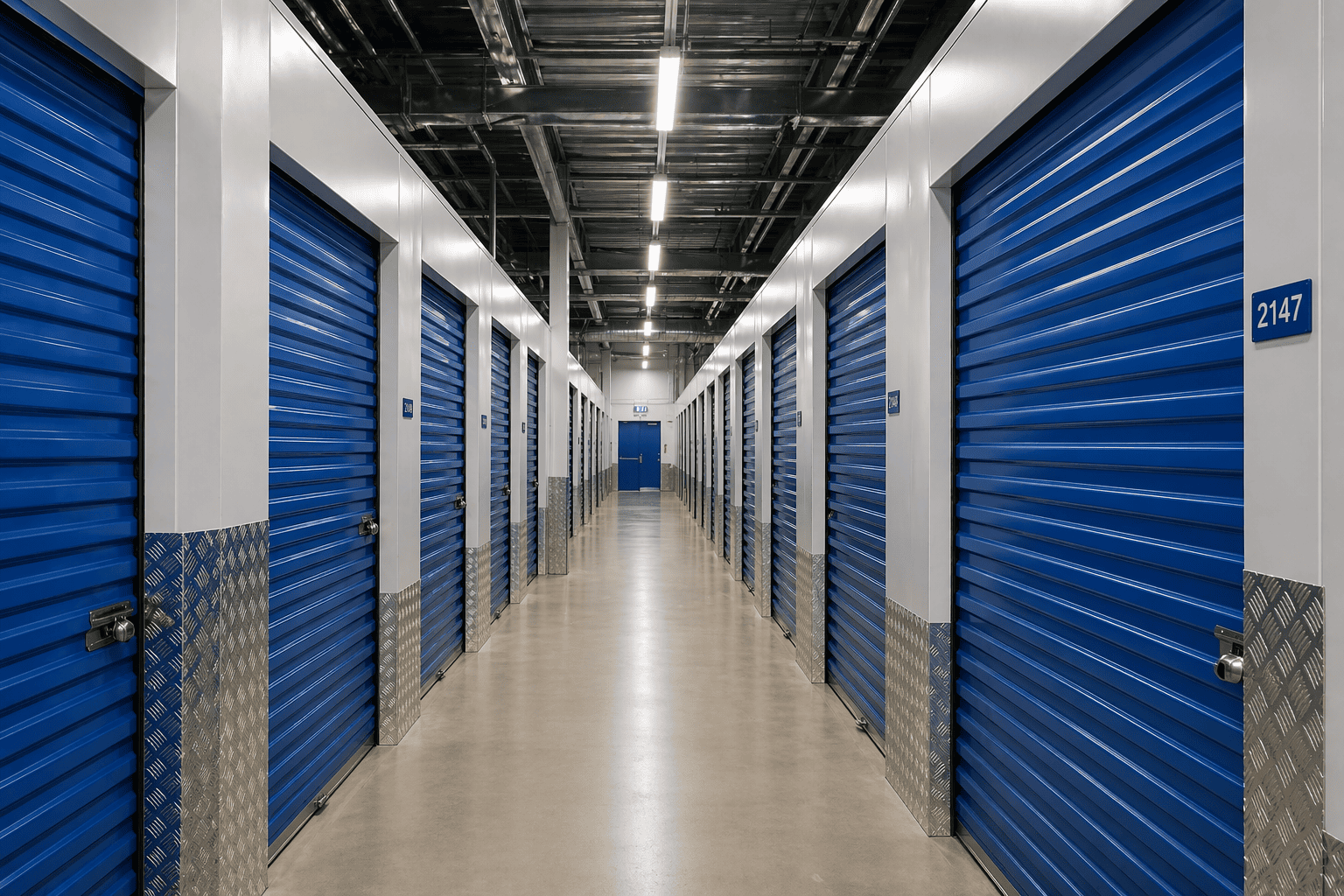
The logistics facility involves several aspects, including cross-dock facilities, parcel distribution centres (hub-and-spoke), and E-fulfilment. All three types of facilities require an appropriate configuration. For example, cross-docks will be designed to maximise throughput as quickly as possible, utilising the shortest possible distance when transferring goods between trucks. As such, we take these requirements into account early in the design process, rather than trying to accommodate them during construction.
Parcel distribution centres typically involve warehouse-type configurations, with mezzanines used for picking products and/or robust power and data infrastructure required for conveyor systems and sorters. By taking advantage of our ability to properly configure the structural elements (i.e. floor loading, door locations, service routes) at the beginning of the design phase, costly modifications may be avoided once the construction/fit-out process commences. Due to Kent's strategic location near major European freight routes, the county provides an ideal environment for both Parcel Distribution Centres and E-Fulfilment centres.
As technology continues to advance in the logistics arena (e.g., Automated Storage Systems, Conveyance Systems, Robotic Picking), the need for proper design considerations for each system has become increasingly important. Specifically, many of these systems require certain specifications for floor flatness, power availability and/or foundation support. To avoid costly retrofits during the build-out process, we coordinate with automation vendors in the design phase to ensure the building can accommodate all necessary automation equipment without modification.
Similar to warehousing structures (i.e., Steel Frame Construction, Concrete Slab Flooring, Clear Span), Manufacturing Structures utilise a basic structure but differ in detail. For example, production lines often require increased electrical capacity, dedicated drainage areas for processes, segregated spaces for different production phases, and flooring systems capable of supporting machinery/equipment.
We begin by designing a structure that supports the operational process. This includes providing sufficient headroom for overhead crane systems if heavy components will be lifted, adequate ventilation/extraction systems where applicable, and configuring material movement throughout the site to ensure efficient flow of raw materials through to final product shipment. The County of Kent has a substantial manufacturing presence; therefore, buildings that combine manufacturing capabilities with storage must be carefully planned so as not to compromise either function.
Warehouse extensions tend to be much more involved than simply expanding onto additional land. The new area will have to tie in to the original building, have similar roofing, exterior walls, and architectural features, and also accommodate existing plumbing, electrical services, and other amenities. Therefore, we assess what the original structure can support and determine how the expansion will be safely connected to it.
Typically, business owners' biggest concern is maintaining operations while the warehouse is under renovation. While some renovations may require shutting down a portion of the warehouse to complete the construction, many do not. Most warehouses continue to operate through their entire reconstruction. This is typically due to well-planned staging, maintaining the integrity of the new connection (to keep it weather-tight), and keeping construction traffic away from operational spaces.
Matching the appearance of the original building does not merely address aesthetic issues. Matching roof pitch, overall elevation, structural framing, and exterior wall coverings are essential to ensure the new addition functions as an integrated unit of the larger building and does not become a visual disruption. When developing warehouse additions in tight spaces such as those found in Kent, achieving these similarities is what makes the difference between a successful addition and one which creates long-term operational issues.
In contrast to developing warehouse additions on vacant parcels of land, much of our work in Kent involves performing various levels of rehabilitation on occupied structures. Rehabilitation encompasses everything from making isolated repairs to completely removing/ replacing nearly every major component of a building: roofs; floors; cladding systems; service infrastructure (heating, cooling, electrical); and office elements.
Roofing and cladding components are generally addressed first in older warehouse facilities where current insulation, weather-tightness, and fire protection standards are no longer met. Floor conditions vary significantly based on usage patterns and age; floors may be repaired, overlaid, or replaced entirely, depending on existing condition and intended future use. Existing service infrastructure within older structures is frequently undersized or has deteriorated to the point where an upgrade prior to occupancy by a new user is required.
Improvements to offices within commercial-industrial buildings (typically referred to as Cat A or Cat B, depending on the level of completion) are made quite regularly when preparing an existing facility for a new occupant. Our related company, Strip Out Company, performs all aspects of stripping-out/demolition activities (including surveys and waste management), enabling us to prepare the site fully before commencing our renovation efforts.
Design and build is when we take the project from concept to completion and construct the building. The initial step will be to identify your needs, then create a design that meets those needs while remaining within a reasonable budget and time frame for completion.
Part of the design includes planning. Kent is generally a two-tier county council system with twelve district councils; however, the unitary authority (Medway) handles its own planning. We consider the requirements by the correct authority during our design process, including any Green Belt or land protection issues if applicable. Building regulations have been incorporated into our designs from day one and not added at the end.
Costs run in parallel with design; thus, we can determine how much money is required to complete the project before making an investment. Once both costs and design are acceptable, construction begins as usual, with one company managing the project from inception to final product delivery.
Freight and Logistics
The freight and logistics sector is the largest industrial area within the county. This is due to the proximity of Kent's ports (including Dover) and the Channel Tunnel. For this type of operation, the business will require large-span warehouses, many dock door locations, and large yards designed to accommodate trucks coming and going at all times. At the time we begin designing the facility and site layout, we will do so based upon vehicle traffic patterns and the flow of goods; as such, the actual movement of freight is paramount.
E-Commerce and Fulfilment
Kent has an advantageous position both as a hub for transportation to/from Europe and as being close enough to London to be attractive to e-commerce and fulfilment businesses. Warehouses for these types of businesses typically feature larger floor plates than other warehouse designs, along with mezzanine pick areas, automated systems, and higher-than-average power requirements. Therefore, our goal during the initial design phase is to create structures and services that support this from day one.
Food and Drink
Kent is known as "the Garden of England", which reflects the significant number of food and drink producers throughout the county. Food and drink processing, growing, production, cold storage and distribution have long been part of Kent's economy. There are specific requirements for cold or chilled warehousing (insulation, flooring, and refrigeration) that are significantly different from those for standard warehouse design. We will always consider the operational realities of operating a cold or chilled storage facility when designing these facilities.
Manufacturing and Engineering
Kent also features a solid foundation of manufacturers and engineers who operate from premises requiring buildings with additional power capacity, special services (e.g., specialised ventilation systems), and heavy-duty floors capable of supporting heavy machinery. From the beginning, we will plan and construct these facilities with their specific needs in mind.
Trade Counter Operations
Established builders' merchants, electrical wholesalers, plumbing suppliers, etc., all rely on a combination of warehouse storage for inventory management, dedicated customer-facing trade-counter space and yards that allow customers to load their materials onto vehicles parked beside delivery vehicles. Ongoing development in Kent, coupled with increased residential populations, has created consistent demand for this product.
Kent is the easiest place to reach European markets. It has a high proportion of Britain’s RORO cargo, and the majority of the remainder goes through the Channel Tunnel. Therefore, if you're involved in international trade via RORO or the Channel Tunnel, there is no other Country that offers better proximity.
There are also good connections from Kent to the UK. The M20 and M2 motorways go from the coast northwards to the M25 and beyond. There are high-speed train lines connecting Ashford and Ebbsfleet to London (under one hour), so this can help with both logistics and employee travel. In addition, the Thames Gateway in Northwest Kent is a growing area where some greenfield sites remain available for development.
The demand for Industrial Space in Kent remains strong due to the availability of freight routes, the food industry, and consistent local population growth. While certain areas of Kent are constrained, such as the Western Greenbelt and other protected landscapes, Kent still has greater potential for expansion than most of its neighbours closer to London. If your company plans to develop or expand, a well-positioned unit in Kent will be a valuable resource.
Site appraisal- we look at the Site itself; the ground, access to it, any existing buildings, the provision of services and anything that may cause a problem when we are designing. So this way, the job will be based on facts rather than speculation.
Feasibility study – this stage determines whether the project is feasible in terms of the Site’s dimensions, access arrangements, car and lorry parking spaces, and yard areas, and whether they meet the client's requirements and budget.
Planning - we submit the necessary application to the appropriate local authority in Kent and handle road issues, drainage, etc. And any environmental concerns.
Design - once an agreement has been reached on the scope of the project, detailed drawings will be prepared to define every aspect of the proposed development, including structural elements, exterior envelope (cladding and roof), services (plumbing/electricity/heating), and external works.
Groundworks - preparation of the Site for construction, foundation laying and drainage preparations.
Steel framing- the steel frame is erected, which sets the overall dimensions, span and height of the building.
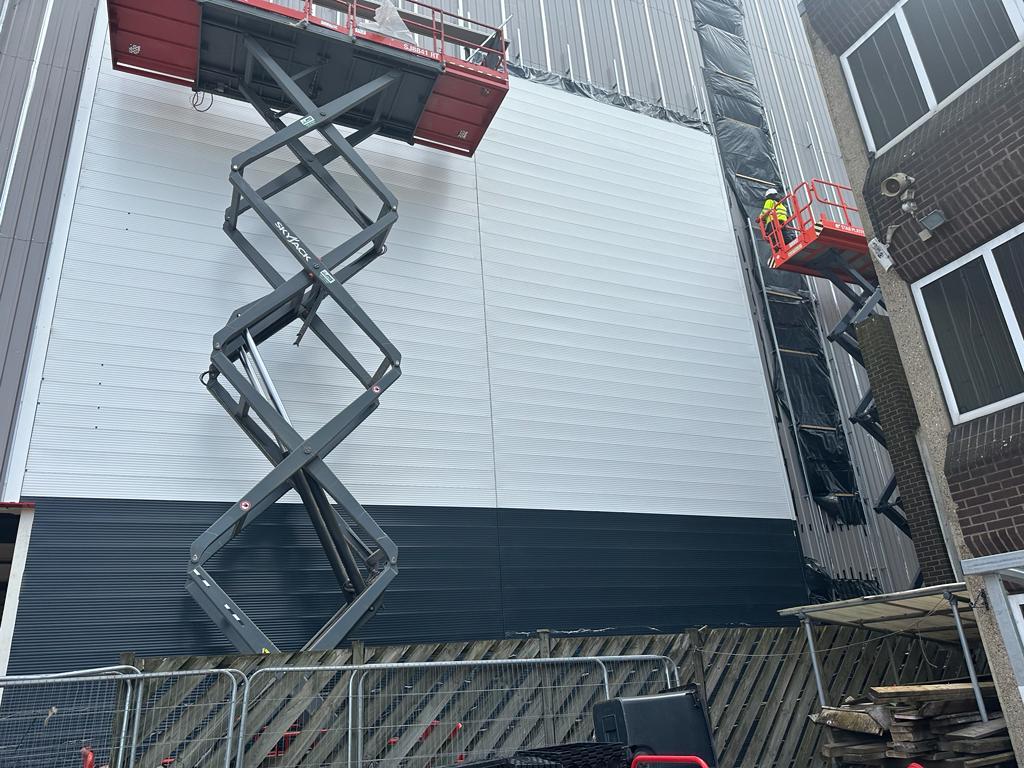
Envelope – installation of roofing and cladding systems, which provides weather-tightness to allow interior fit-out to begin.
Fit-out- interior construction: installation of floor finishes, service infrastructure, office facilities, fire suppression system and shelving/racking.
External works - construction of Yards, access roads, drainage systems, parking lots, and landscaping complete the Site.
Handover- once the project is completed, all documentation, including certifications and "as-built" information, is delivered to the client.
Working in Kent will have challenges that many of our competitors do not discuss, and those issues will impact how jobs get done. The biggest challenge is trucking and border traffic. Cross-Channel trucking does back up at times, and when that happens, the M20 freight management system gets kicked into high gear. At that point, the Sevington inland border facility near Ashford takes over the checking process. That impacts traffic, access, and logistics for a number of locations in Kent. Especially those located near the M20 and port areas. Logistics and access on-site are planned to accommodate that.
A significant amount of land in Kent cannot be developed due to protected landscapes and green belts. The Kent Downs is a protected national landscape, and the green belt area exists near the M25 in the western part of the county. Many developments are expansions or restorations of existing buildings. Often, these types of projects require a thoughtful planning application. Having that knowledge prior to purchasing the land would have saved time and money.
Kent is split by two separate authorities for planning purposes. While Kent County Council and its districts set the primary planning requirements, the town of Medway also serves as a unitary authority. There are some differences in how each authority plans; knowing which jurisdiction your site resides under is important to start with.
Flood and drainage are concerns in certain areas of Kent. The northern part of Kent is primarily concerned with flooding near the River Thames. Also, along rivers and coasts, drainage and flood risks exist. Some sites located within flood zones will require special drainage, such as a Sustainable Drainage System (SuDS), and/or floor elevations set higher than the potential flood elevation.
Building near residential homes or other working facilities is an issue in nearly every town in Kent. As a result, industrial operations near residential homes or other operational facilities will require careful consideration of noise, traffic, and work schedules. Site management during construction will be key to a successful project.
The HGV (Heavy Goods Vehicle) access will need to be considered from day one. The yard layout, turning circle, and path for HGVs entering and exiting the property will ultimately determine whether the property functions properly after it is built. If it is designed incorrectly initially, it could lead to costlier corrections down the line.
Warehouse refurbishment in Kent also plays an important role in what we do at Mosaic, primarily due to Kent’s planning restrictions, which have limited the ability to reuse properties and to build new on existing sites. If the building has good structural integrity but lacks suitable services, envelope, or layout, then typically refurbishing will be less expensive and quicker to complete than rebuilding the entire property. In many cases, especially in environmentally sensitive areas such as Protected Areas (Green Belts) and other sensitive locations in Kent, this may be the only viable solution available.
Our range of projects varies from Cat A (fit-out), returning a property to a base level of “ready for letting,” to Cat B, a tailored fit-out to meet a particular tenant's needs. We often provide extensions to support the upgrade/refurbishment of the remainder of the building. When there are changes in use within a building (i.e. heavy duty racking); we may need to perform structural enhancements to ensure that the building can withstand the increased load.
We see increasing demand from office users requiring improved working environments for their employees, without having to move premises. As regulations regarding energy performance certificates (EPCs) for commercial properties continue to tighten, we expect the number of requests for improving energy efficiency/insulation/glazing/lighting/services to grow.
The price will depend upon the size of the building, specification, the site, and ground conditions. Therefore, there is no one figure to rely upon. The best way to find out costs is to undertake a site visit, discuss your requirements, and get a quotation, which we provide at no cost.
Again, the time taken to build a warehouse will depend on its size, complexity, and whether you require a planning application. Roughly, a straightforward new building will take three or four months from commencement to completion and handover. However, if you wish to develop a site that requires an application, there may be an additional month for design prior to construction, in addition to the above timescale.
Generally yes. Provided that the old building has sufficient strength to accommodate the new extension, and there is adequate space and access available within the confines of the existing property. We evaluate the condition of the existing building as part of our design process to determine whether such extensions can be undertaken.
Yes. Refurbishment is a significant amount of work that we undertake on many different types of warehouse properties. These include replacing roofs and cladding as well as undertaking major internal renovation and upgrading offices.
Yes. We design and build distribution centres of all sizes, including high bay warehousing, dock levellers, and yard layouts for HGV movements.
Would you like to learn more about how we can help you with your next residential or commercial project, fill in your details and a member of our team will be in touch.
A strip-out is the first phase of most warehouse refurbishment, redevelopment and end-of-lease projects, and it sets up everything that follows. Get it right and the building hands over clean, safe and ready for the next stage. Get it wrong, and the problems carry thro..
Read Full Story »
In choosing a site, every other element of the project is set, including the cost of acquisition, the time required to complete the project, planning risks, and ultimately, the structure you will create. If the choice is incorrect, the rest of the project will be spent recovering from an error in judgment that was made within days of commencing...
Read Full Story »