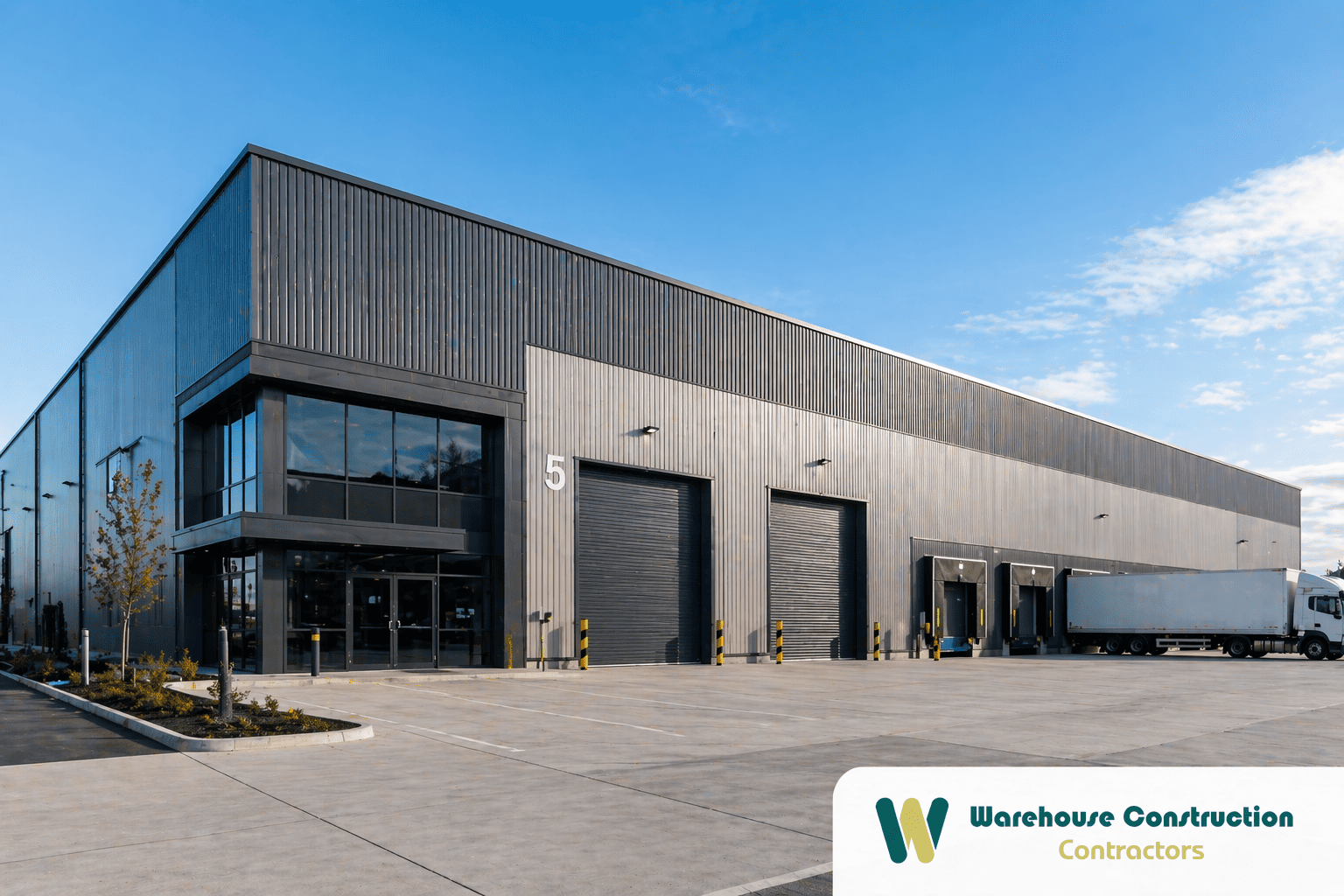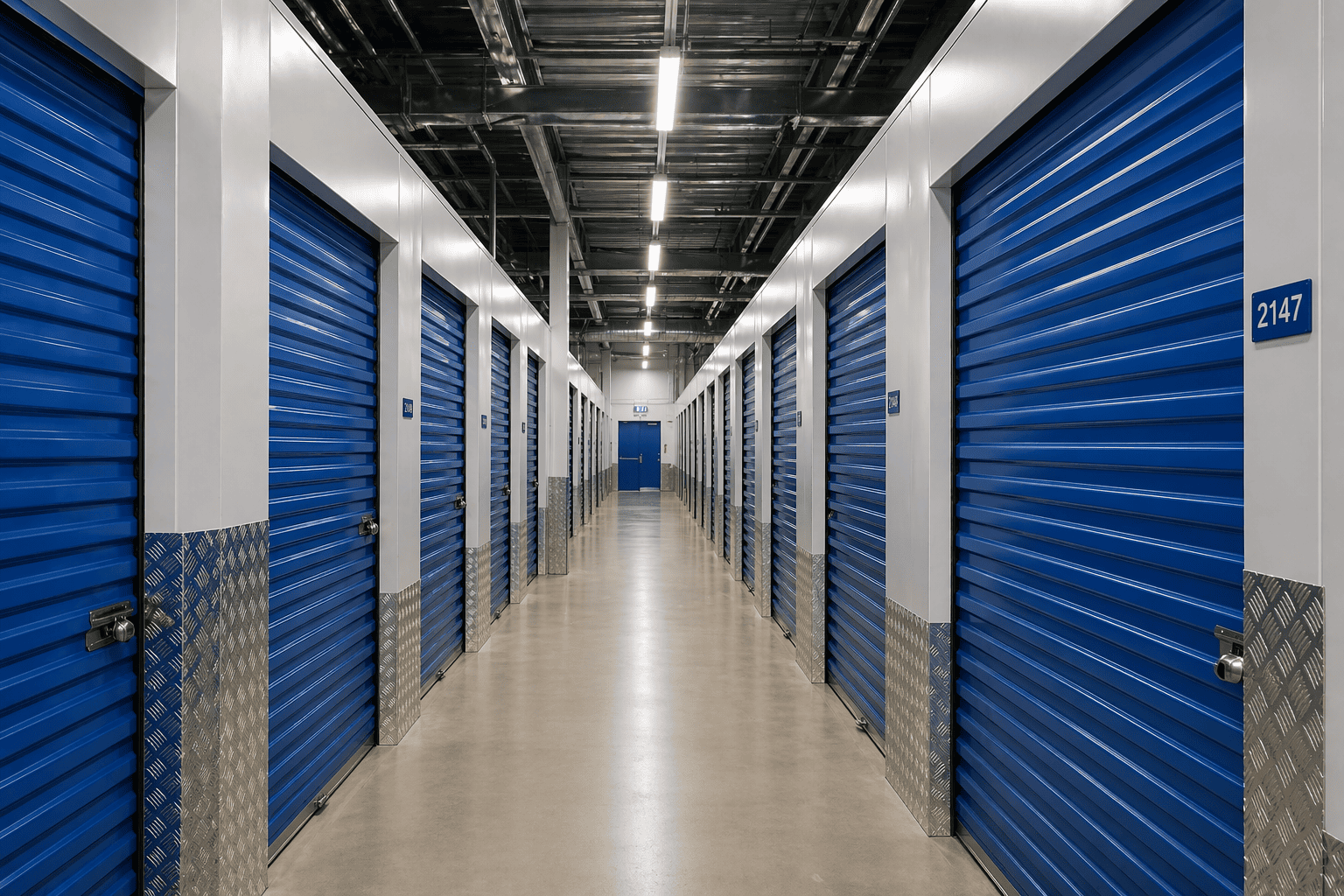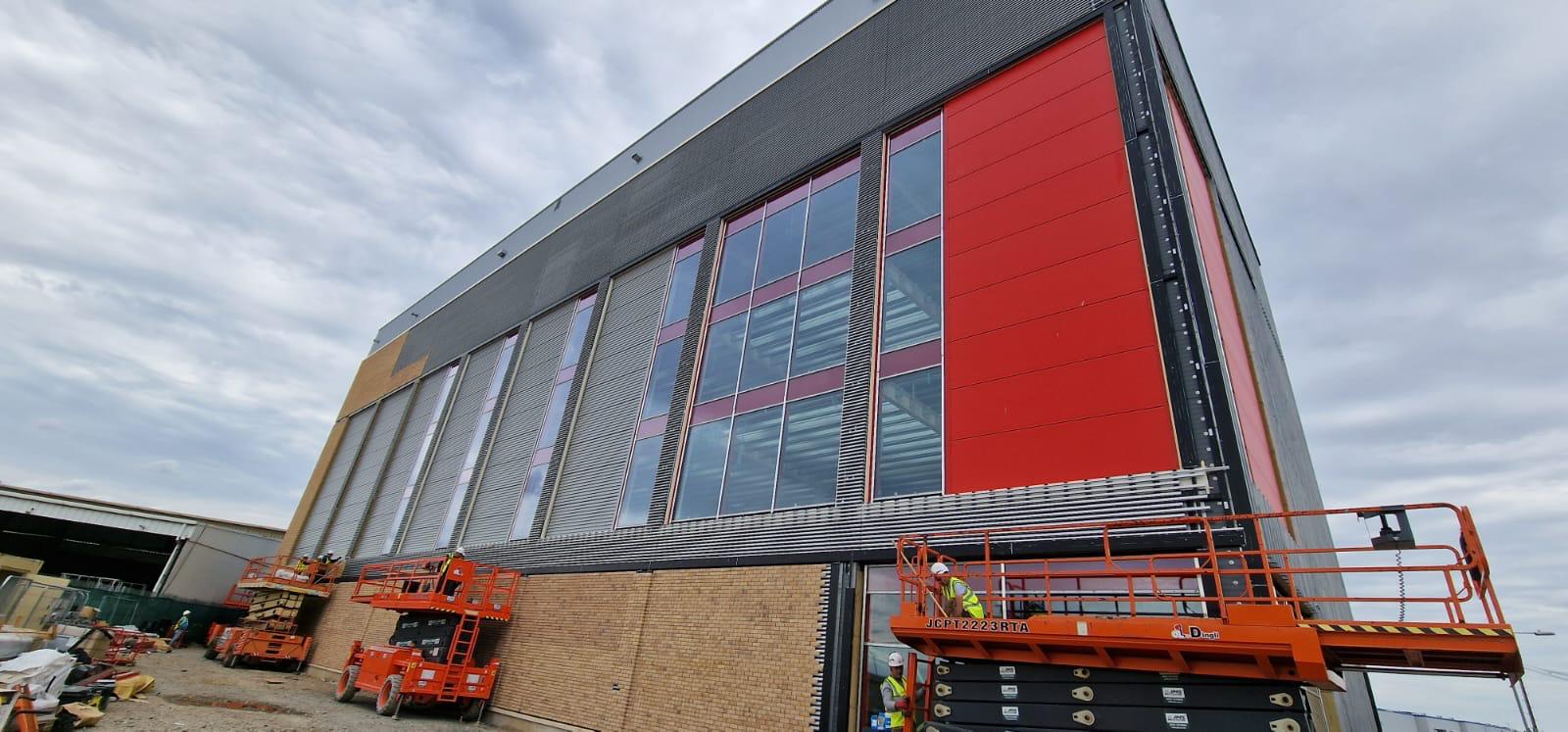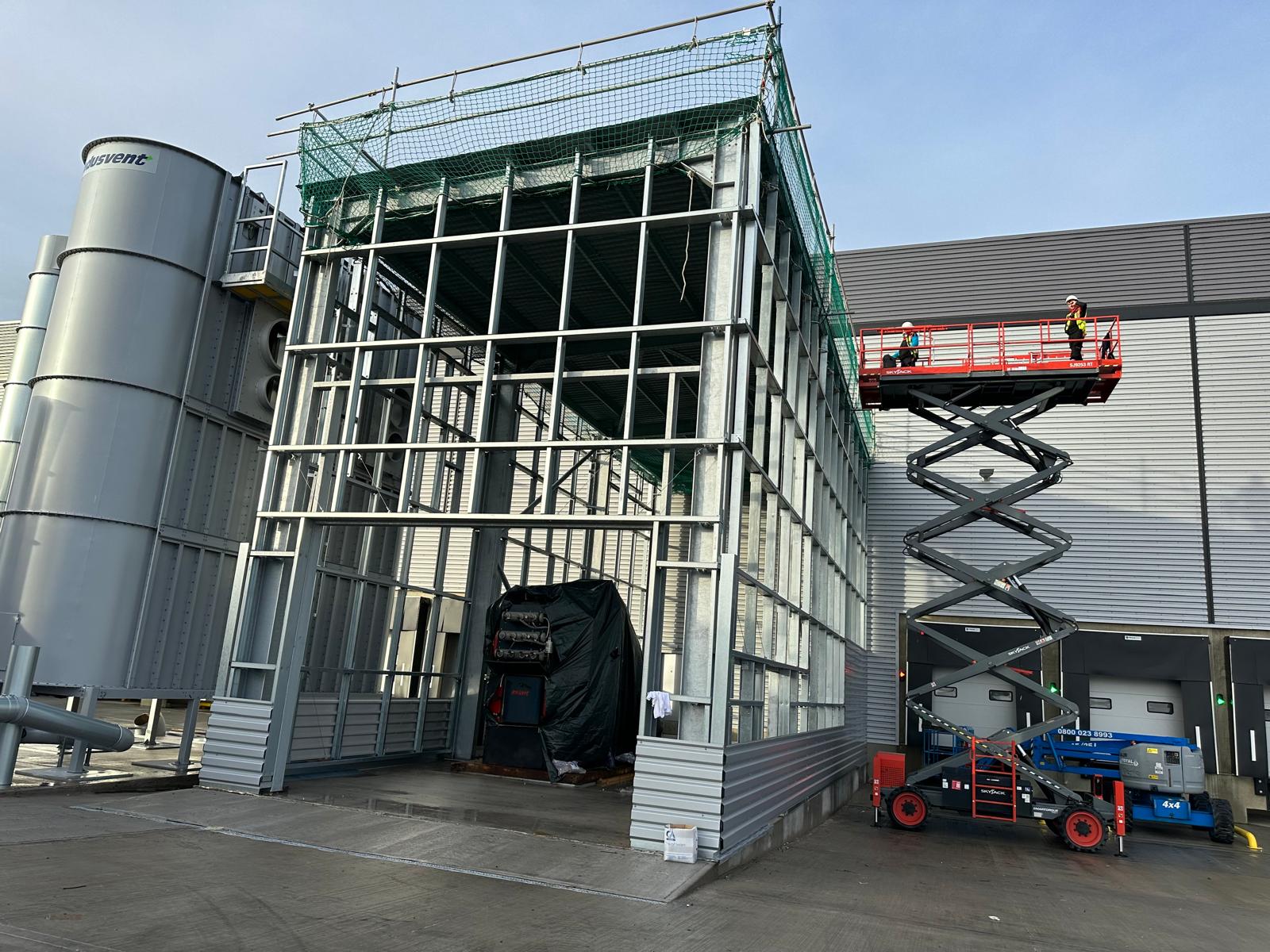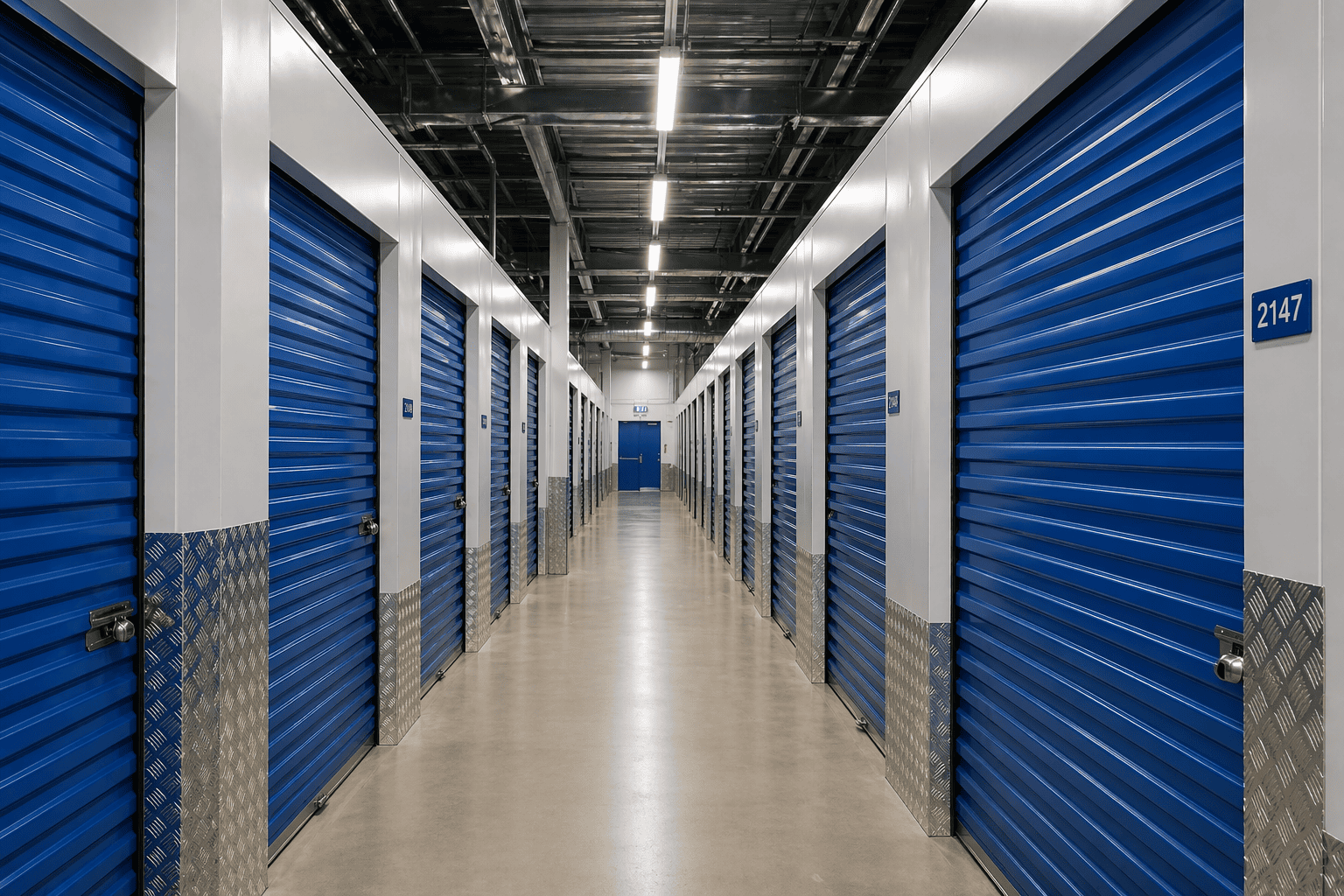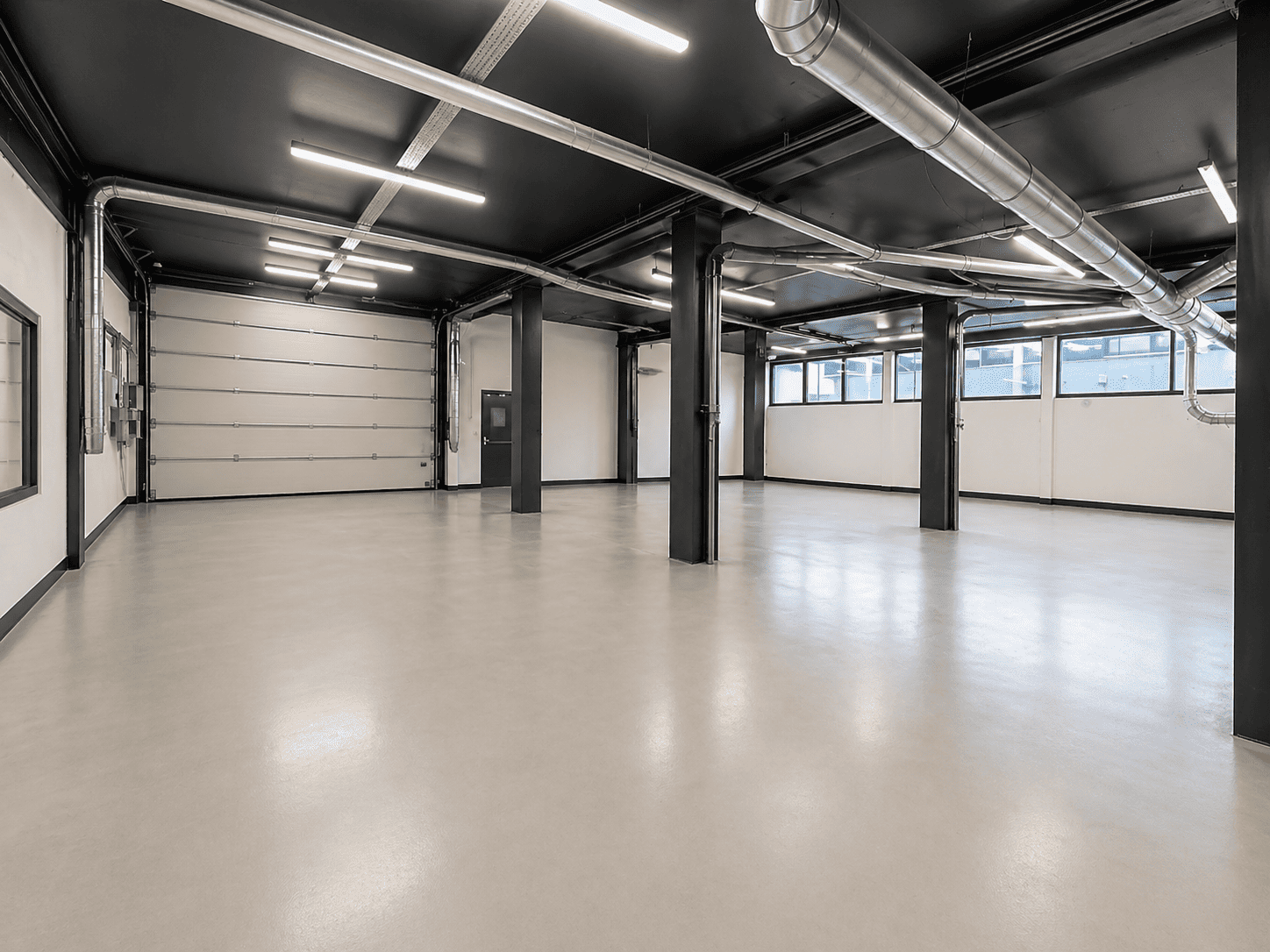
We are more than just building warehouse space; we construct it around how your business operates. Surrey has some of the best road connections in the UK, with its perimeter being defined by the M25 Motorway as well as a number of other major trunk roads that connect the South Coast and the Southwest to London. Warehouse Construction Contractors carry out projects across Surrey across all aspects of industrial property, including warehousing & logistics, close to major motorway junctions, as well as manufacturing units, trade parks & self-storage buildings. Regardless of whether it is for a new development, an extension to existing premises, or the refurbishment of an existing warehouse unit, Warehouse Construction Contractors manage each project from initial site visits through to handover to our clients.
Surrey’s industrial history is defined equally by connectivity and constraints. The county is bounded by the M25 motorway, with the M3 connecting to the south-west, the M23 connecting to Gatwick Airport, and the A3 linking London to Portsmouth. This provides access to sites across the country, which is why so many businesses wish to locate in Surrey.
However, as one of the tightest development-constrained counties in England, Surrey also offers significant limitations. A sizeable proportion of Surrey falls within the Greenbelt, whilst another area, the Surrey Hills, has been designated a National Landscape. Therefore, due to land availability and costs associated with acquiring and developing land for new-build purposes, demand for warehousing far exceeds supply. As such, much of Surrey’s warehouse activity does not involve construction of new developments but rather involves extending, refurbishing or maximising the potential of existing premises.
Consequently, the location of industrial sites throughout the county is largely determined by their relationship to these various locations. For example, Guildford and Woking form an industrial hub in the central and western parts of the county; Redhill and Reigate in the southern-eastern region, near the Gatwick Airport corridor; Camberley and other M3 ‘towns’, located to the south-west; while at the northern boundary of the county, particularly around Staines and the Heathrow Airport fringe, there exists a legitimate need for airport-related logistics.
NEW BUILD WAREHOUSES
You start creating a new warehouse long before you lay the first foundations. We take an initial look at the land to assess its condition, accessibility, and services, and to determine whether there will be any constraints on the design or project timing. This process is especially important in Surrey because most of the area falls within the Green Belt or designated landscapes, which may limit what you can build. Therefore, it is generally better to determine whether these limitations exist before selecting a site rather than afterwards.
Once all necessary permissions are obtained, we enter a detailed design and pricing phase. The building begins to take shape during this period, i.e., the size of the steel frame, the specification of the floor slab (to accommodate your racking and vehicle requirements), the required height, and the layout of the yard, car park, and access routes. In general terms, most distribution facilities in the UK employ a steel portal frame structure supported by a reinforced concrete slab, although we always tailor our designs to how each customer plans to utilise their facility.
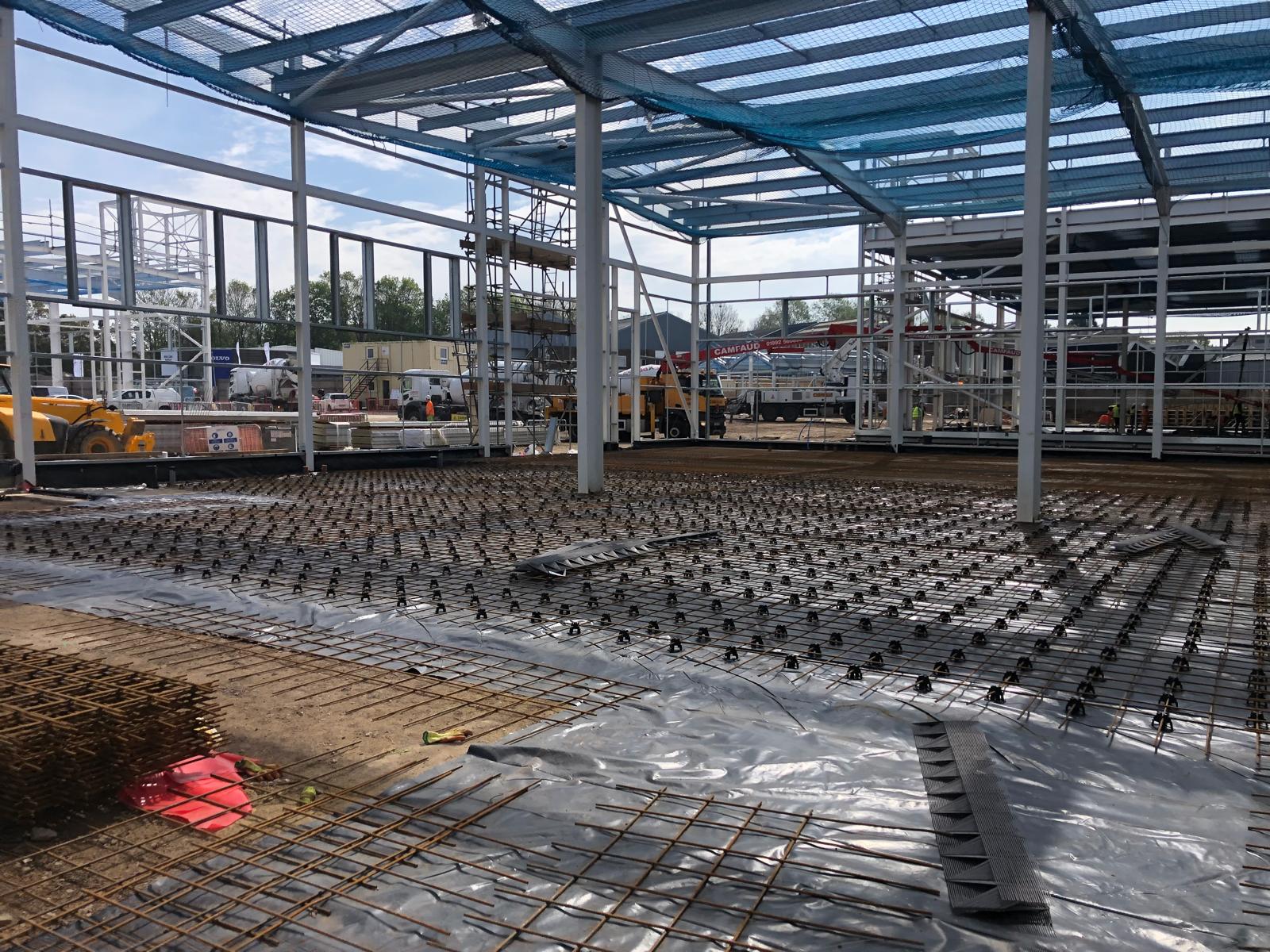
Construction subsequently progresses in the following order: groundworks, frame erection, roofing and cladding, internal fit-out, and finally external works. We provide a single point of contact and manage every aspect of the project ourselves, rather than relying on multiple subcontractors who often pass the buck when delays occur. Good site management also plays an essential role in the smooth progression of projects in Surrey, particularly those located adjacent to residential properties in environmentally sensitive areas.
DISTRIBUTION CENTRES
Compared with a basic warehousing unit, Distribution Centres require considerably more thought and care. Delays or errors made in this type of project typically prove costly to rectify upon completion. A high-bay racking system typically determines the structural configuration of a Distribution Centre with regard to framing height and spacing, depending on the size and number of racking systems and equipment installed within it. Our staff discuss this aspect of the design with you and your racking suppliers early in the development process so that the building's structural elements are designed specifically for operational needs, rather than vice versa.
Loading dock levels and loading bays must be compatible with your company's fleet of delivery vehicles and projected delivery volume. The number of loading docks you install, and their location relative to each other, will directly impact the yard layout and ultimately affect how quickly you can unload a truck and get another ready to depart. During the yard layout process, we take into consideration factors such as truck turning radii, parking spaces, queuing lanes, etc., to ensure that your site operates efficiently once production commences - not simply at handover.
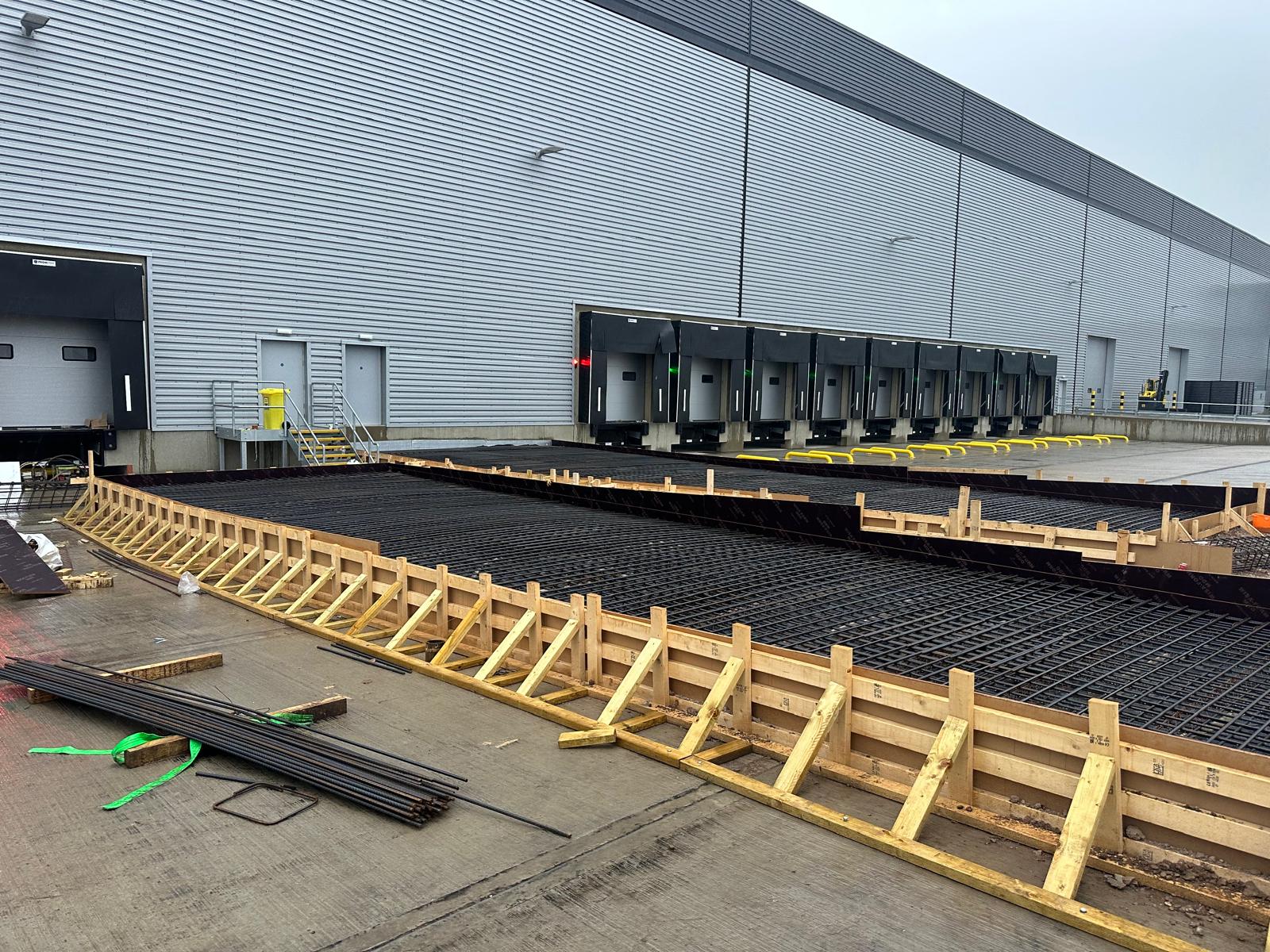
Unlike typical warehousing units, Distribution Centre floors are subject to additional stresses from heavy point loads from racking leg support beams and strict level requirements imposed by Narrow-Aisle Forklift Truck operations. As a result, the concrete floor slab must be correctly specified, constructed and finished at the outset. Our staff carefully plan and construct the concrete works to ensure that the slab meets both structural integrity standards and finish quality requirements.
LOGISTICS FACILITIES
Logistics involves many things, such as cross-docking, parcel hubs, and e-commerce fulfilment. Each one requires different focus points. Cross-docking is designed for high throughput; therefore, the building should be designed specifically for this type of operation, and the doors and yard should be set up to provide the shortest distance between trucks. This can easily be incorporated into the design phase, rather than modifying the building design due to a lack of consideration for cross-docking requirements.
As previously mentioned, e-commerce/parcel operations typically include warehousing, mezzanine pick areas, and significant electrical and data requirements to support all conveyor and sortation equipment. Designing the structural framing, floor loading capacities, and proper routing of service paths early in the design phase can prevent costly modifications during fit-out. With Surrey’s location providing easy access to both motorways and London, it is an ideal location for last-mile and regional distribution operations.
Automation is becoming increasingly popular throughout logistics operations, including automated storage, conveyors and robotic picking. When utilising these types of systems, there are special considerations regarding the need for a relatively flat floor surface, an adequate power supply, and potentially the installation of a dedicated foundation system. To ensure the building is properly designed to accommodate all necessary components of the automated systems, we work directly with automated system suppliers during the design phase to ensure the building does not require modifications after delivery and installation of the automated equipment.
MANUFACTURING FACILITIES
Similar to warehouses in terms of construction details, such as a steel framed structure, concrete slab, clear spans; however, in regard to manufacturing facilities, there are some additional considerations required for design. For example, manufacturing facilities may have higher electrical demand due to the various equipment used in production processes. Additionally, manufacturing facilities require process drainage for cleaning and the segregation of different stages of manufacture. Furthermore, the flooring in manufacturing facilities must be capable of supporting the machinery/equipment used in each respective stage of production.
We begin our involvement in designing a manufacturing facility by identifying and understanding the building's intended use. Once we understand the manufacturing process, we incorporate those requirements into the building design. Therefore, we consider items such as overhead crane requirements when large/heavy parts are to be moved. Ventilation/extraction requirements for production areas where products are produced. How raw materials and finished goods will flow through the building/site. As mentioned earlier, Surrey provides a solid base for high-value manufacturing/technology companies. Many of these companies require specialised requirements for services, sanitation/climate control, which must also be included in the original building design.
WAREHOUSE EXTENSIONS
Adding to a warehouse usually means more than just a larger footprint. The new part will have to blend in with the original building, both aesthetically (cladding, etc.) and functionally (roofing, drainage, etc.). We therefore assess the capacity of the existing building and identify how best to link it with the new extension in terms of safety.
The primary concern for many businesses is remaining operational during construction. Most warehouses continue to operate. This can typically be achieved through a methodical approach; maintaining the weather-tightness of the joint between the two sections, and ensuring that all construction traffic avoids operational zones.
Surrey differs significantly from other counties. There is very little land available, and consequently, extending a building is one of the few viable options for obtaining additional space. Achieving this successfully, with regard to creating a cohesive unit (e.g., roof pitch, height, frame spacing, etc.), with regard to the original building, is what sets us apart from others who may complete extensions in years of trouble.
WAREHOUSE REFURBISHMENTS
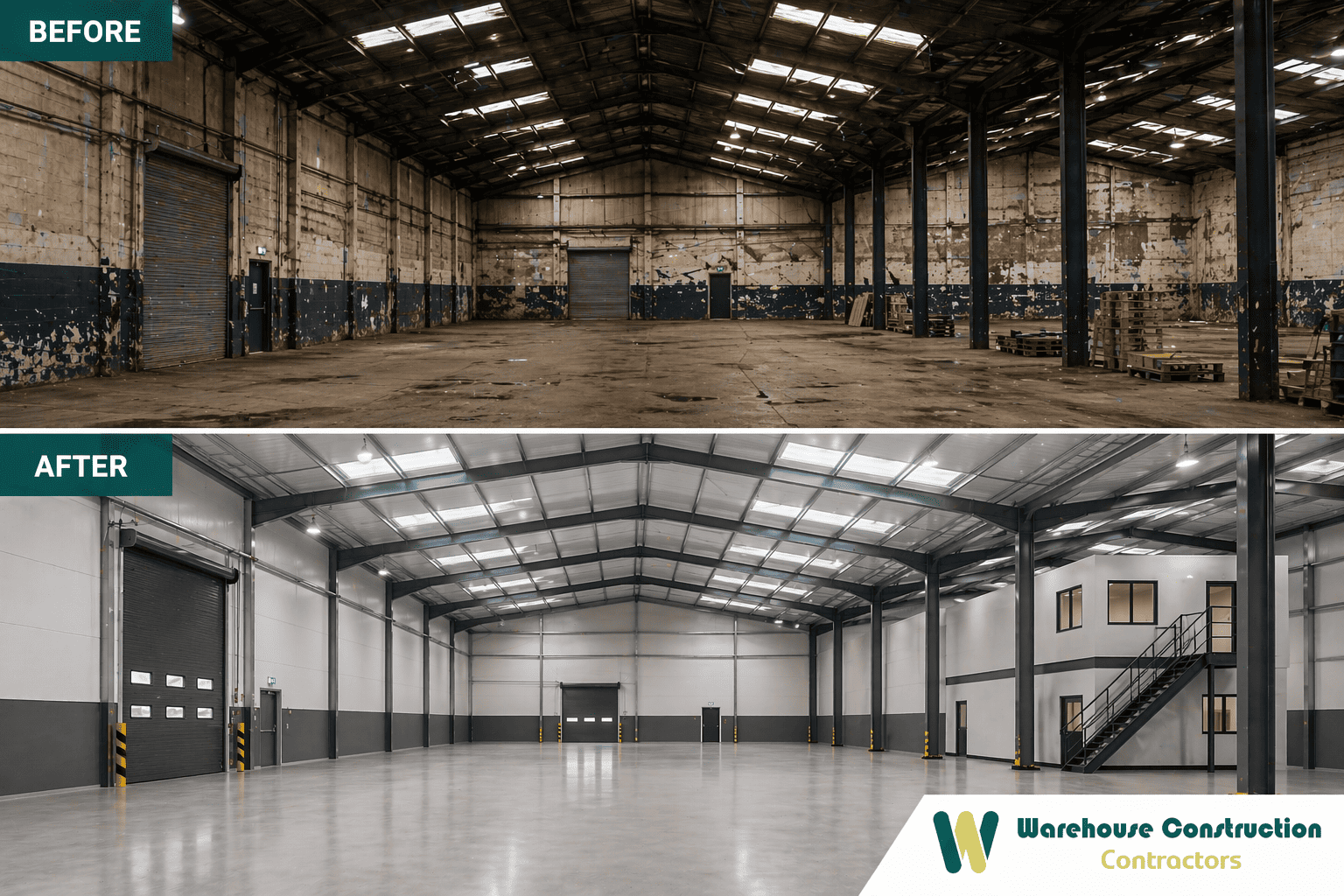
We undertake significant amounts of work within Surrey upon existing structures rather than vacant plots. These constraints are a major reason for this. Refurbishment can range from targeted repairs to a complete removal of all components necessary to restore functionality to those same components: Roof, Floor Cladding, Services & Offices. Roof and cladding refurbishment are often the first port of call, particularly where the existing structure is aged. At these stages, the roofs, walls, and floors may require modernisation to meet Insulation levels, weather tightness, and fire performance compliance.
Floors also depend on their condition. If damaged or beyond economic repair, the floor may need to be replaced entirely. Similarly, if the floors are simply showing signs of heavy usage, then a resurfacing option would be suitable. Services in existing buildings are frequently either undersized or suffering from excessive wear and tear, and will generally require upgrading prior to the commencement of any fit-out activities for new occupants.
Design and build means we take the job from the first idea to the finished, working building. It starts with understanding what you need, then designing something that meets it within a realistic budget and timeline.
Planning is part of this, and in Surrey it's often the hardest part. The county is two-tier, with Surrey County Council and eleven district and borough councils, each running its own planning and its own local plan. Add in the Green Belt and protected landscape coverage, and the planning route can be involved. We work through the requirements of the relevant authority as part of the design, including Green Belt and landscape issues where they apply. Building Regulations are built into the design from the start, not bolted on at the end.
Costing runs alongside design, so you know the real number before you commit, rather than a price that gets stripped back once tenders come in. Once design and cost are agreed, construction runs as normal, with one team carrying the job from drawing to handover.
Technology & Higher-Value Manufacturing
E-commerce & Logistics
Airport & Heathrow-Fringe Logistics
Food & Beverage
Trade Counter Operators
Self Storage
Surrey's main draw is connectivity. The M25 rings the county and links it to every other motorway in the South East. The M3 runs southwest, the M23 heads down to Gatwick, and the A3 connects London to Portsmouth. Few counties offer access in as many directions, which is why demand for space here stays high.
The airports add to it. Heathrow sits just off the northern edge, Gatwick just beyond the southeast, and both drive logistics demand in the nearer parts of the county. Fast rail links into London also help with staff, which matters for warehouse and logistics operations that depend on a reliable workforce.
The thing to be clear-eyed about is supply. Surrey is one of the most development-constrained counties in England, with the vast majority of its land in the Green Belt and significant protected landscapes on top of that. New industrial land is scarce and expensive, and that isn't going to change quickly. For businesses, this cuts two ways: a well-located building in Surrey holds its value strongly because supply is so tight, but getting that building usually means extending, refurbishing or redeveloping an existing site rather than building new on open land. That's the reality we work with, and it's where experience with constrained sites earns its keep.
We deliver warehouse projects in a structured way.
We assess the site, including ground conditions, access, current buildings, services, etc., and identify any potential problems so that the project will commence based on actual site data rather than speculation or assumptions.
Feasibility – we undertake feasibility studies to determine whether the site provides sufficient access, car park spaces, yards etc. to meet both your operational requirements and budget. It is also typical in Surrey (particularly given the large amount of Green Belt) to gain early insight into any potential Green Belt/landscape restrictions that may affect the development.
Plannng - We submit and manage the required planning application to the relevant Surrey Authority to ensure compliance with Road Traffic Regulations, Drainage Standards, Green Belt Requirements and any other Environmental Issues.
Design - once agreement has been reached on the proposed scheme (and prior to the commencement of construction), detailed designs are produced to enable the creation of a buildable solution, including structural elements, the building envelope (walls, roof, and floor), internal and external services, and external works.
Ground Works - the necessary preparation of the site (including the installation of foundations, drainage systems, etc.) to create a stable base for the steel frame and concrete slab.
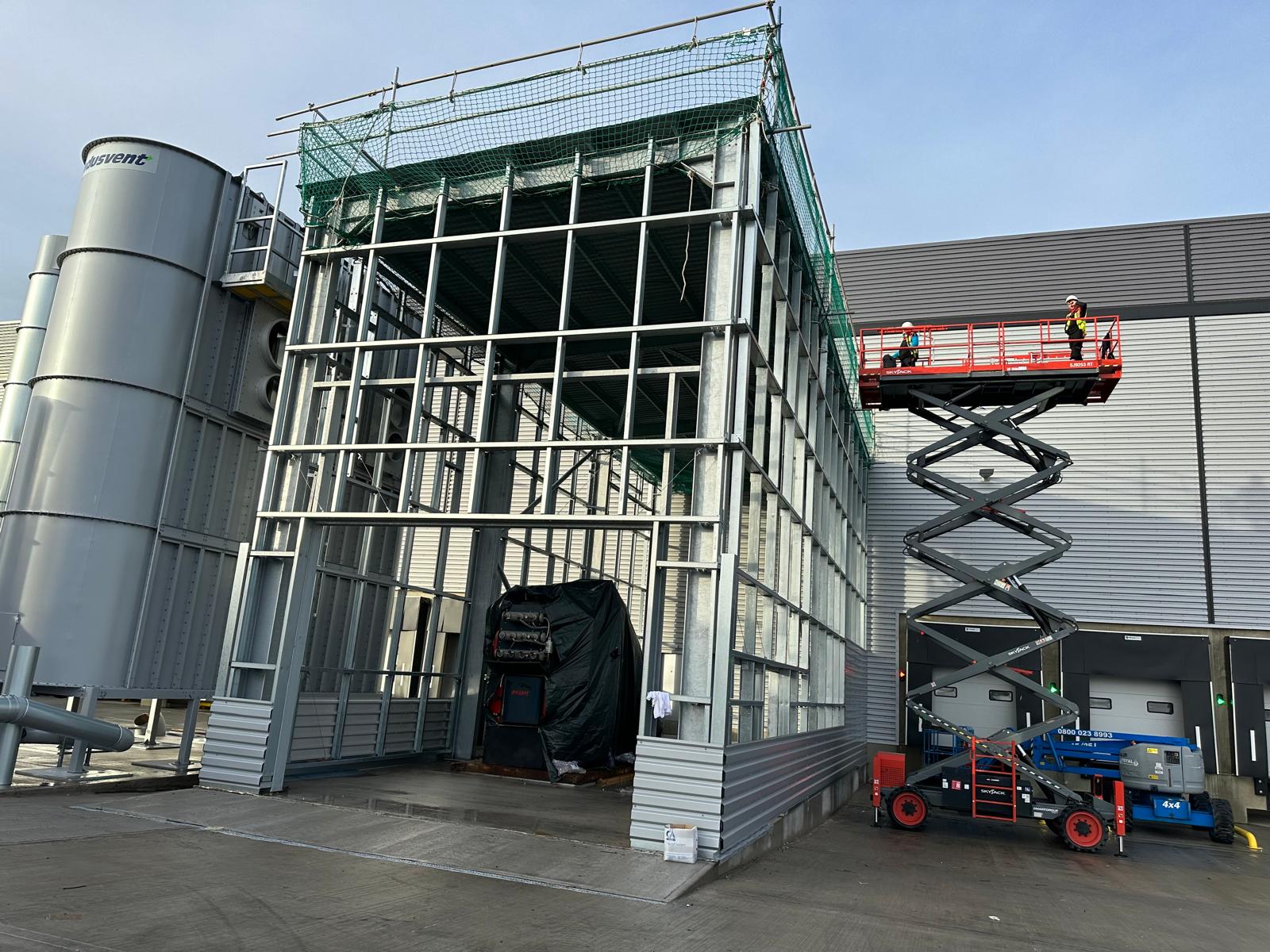
Steel Frame - erection of the steel frame, creating the overall dimensions, span and height of the building.
Envelope - roofing and cladding are applied to protect the building internally, whilst enabling internal fit-out work to be commenced.
Fit-Out - provision of internal finishes (floors, internal services, offices, etc.), fire prevention measures and racking solutions.
External Works - finalisation of external areas (yards, access routes, drainage, car parks, landscaped features).
Hand Over - completion of hand-over documentation to include: building certificates, as-built drawings, etc.
We do the full range of work needed to deliver a warehouse from start to finish:
Because all of this sits with one team, we can run it in the right order and handle changes during the build without the delays that come from juggling separate contractors.
Refurbishment will generally have a greater impact on what we do in Surrey than in other parts of the country, primarily due to the restrictions imposed by Planning. In many cases, there is simply no alternative to reusing a property. As such, if the building has a good structural base but no longer meets the needs of the services, envelope, or layout, then refurbishment can be a quicker and less expensive way to achieve this, especially in Green Belt or Conservation Area locations where redevelopment may not even be an option.
We provide a full range of refurbishment works, including CAT A fit-outs (returning the building to a "shell" condition) and CAT B fit-outs (designed to meet the requirements of your new tenants). We also undertake extensions in conjunction with refurbishment works, allowing you to add additional floor space whilst improving the remainder of the building. We will also carry out structural enhancement works where necessary, e.g., to support changes in use, such as heavier racking systems.
There is an increasing trend towards office upgrade works within existing Industrial buildings. Many businesses wish to improve the working environment for their employees within their current premises rather than relocate. This is typically more difficult and more costly to achieve in Surrey than in other parts of the UK. Improving energy efficiency through insulation, glazing, lighting, and services is another area where we see increased demand, mainly due to tightening regulations on Commercial Building EPC ratings.
It depends on size, spec, location and ground conditions, so there's no single figure. The best way to get a real number is a site visit and a chat about what you need, which we do for free.
It depends on size, complexity and whether you need planning. As a rough guide, a straightforward new unit takes several months from groundworks to handover, with planning and design before that. In Surrey, planning often takes longer than average due to constraints.
Usually yes, as long as the existing structure can take the connection and there's room and access on site. We check the building during the design phase to confirm what's possible. In Surrey, extending is often more achievable than building new, given the Green Belt.
It makes new building on open land genuinely difficult, more so than in most counties, and the planning case more involved. Extensions, refurbishments and redeveloping existing sites are usually far more achievable. The honest answer depends on the specific site, which is why we check early, before you commit, rather than after.
No. We build a range of industrial buildings, including manufacturing plants, trade counter units and self-storage, as well as warehouses and distribution centres.
Would you like to learn more about how we can help you with your next residential or commercial project, fill in your details and a member of our team will be in touch.
A strip-out is the first phase of most warehouse refurbishment, redevelopment and end-of-lease projects, and it sets up everything that follows. Get it right and the building hands over clean, safe and ready for the next stage. Get it wrong, and the problems carry thro..
Read Full Story »
In choosing a site, every other element of the project is set, including the cost of acquisition, the time required to complete the project, planning risks, and ultimately, the structure you will create. If the choice is incorrect, the rest of the project will be spent recovering from an error in judgment that was made within days of commencing...
Read Full Story »