Self Storage Building Builders London

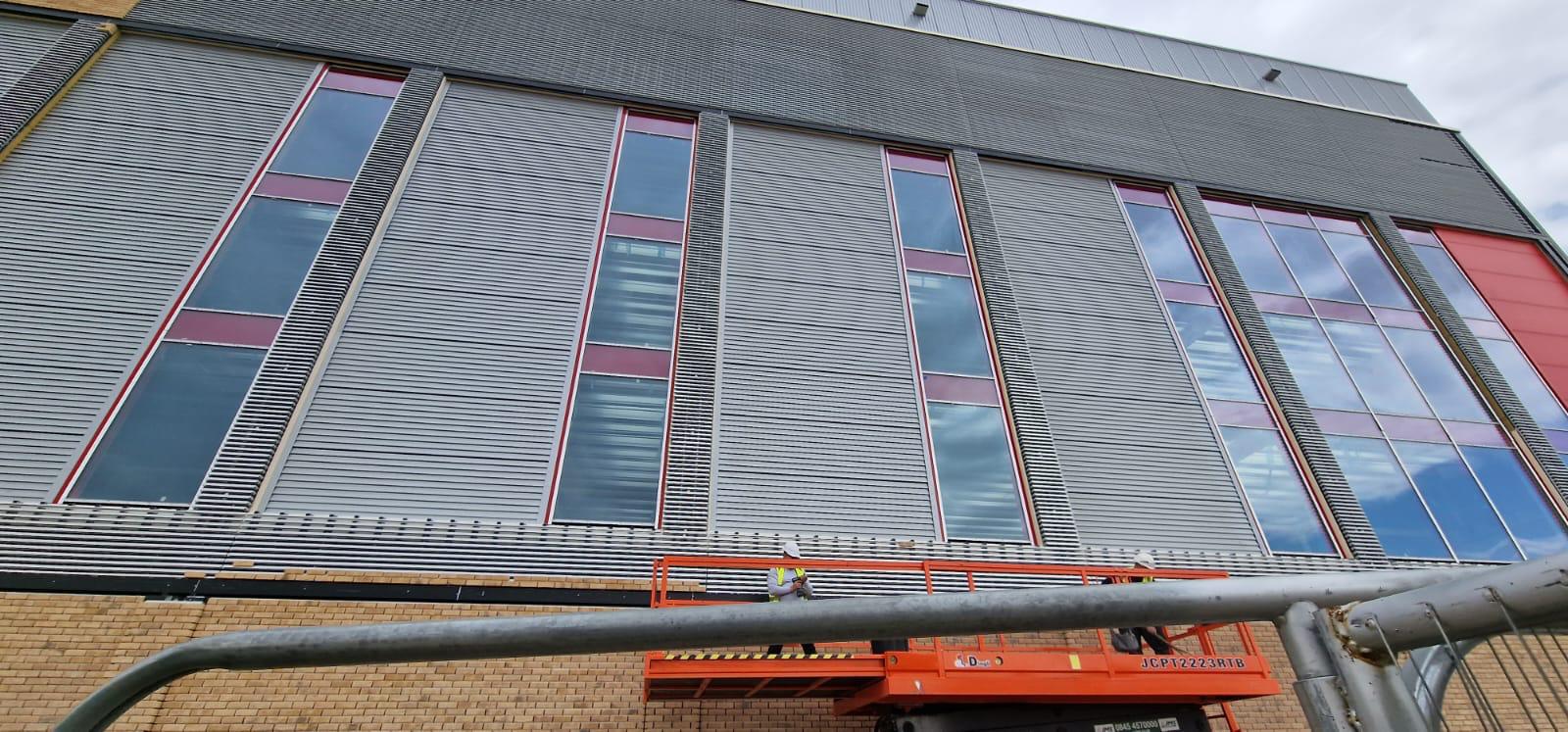
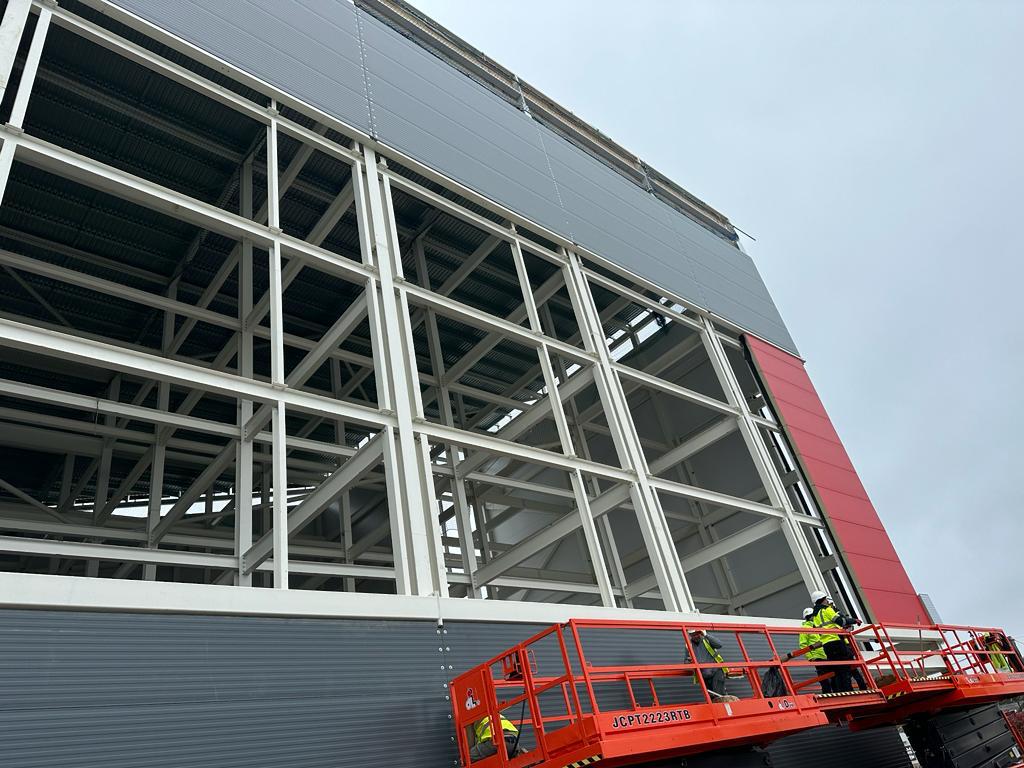
The self-storage builder you choose will influence almost every single aspect of your project, from the way you plan it, through to its quality of construction, through to how much rentable space you get at the end of it and how soon your investment can begin to generate a profit. We provide self-storage building services in London and the South East for landowners, property developers, investors, and business owners. We can take care of the entire process, from assessing your potential development site through to handover.

Self Storage Builders

What We Do

We take care of each stage of the project. This way, no one else gets involved in your project, and there are no breaks or "hand-offs" between contractors that could cause confusion.
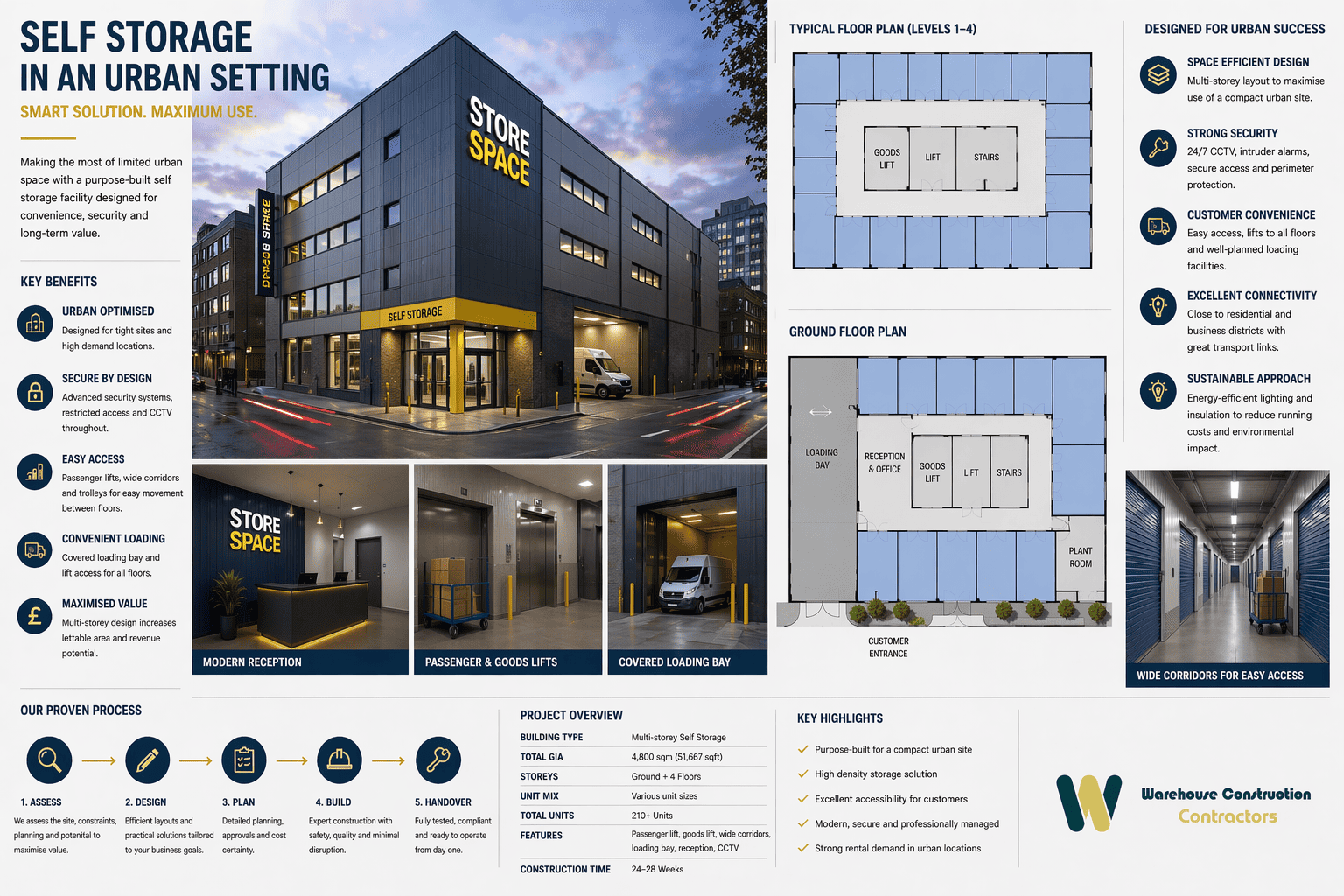
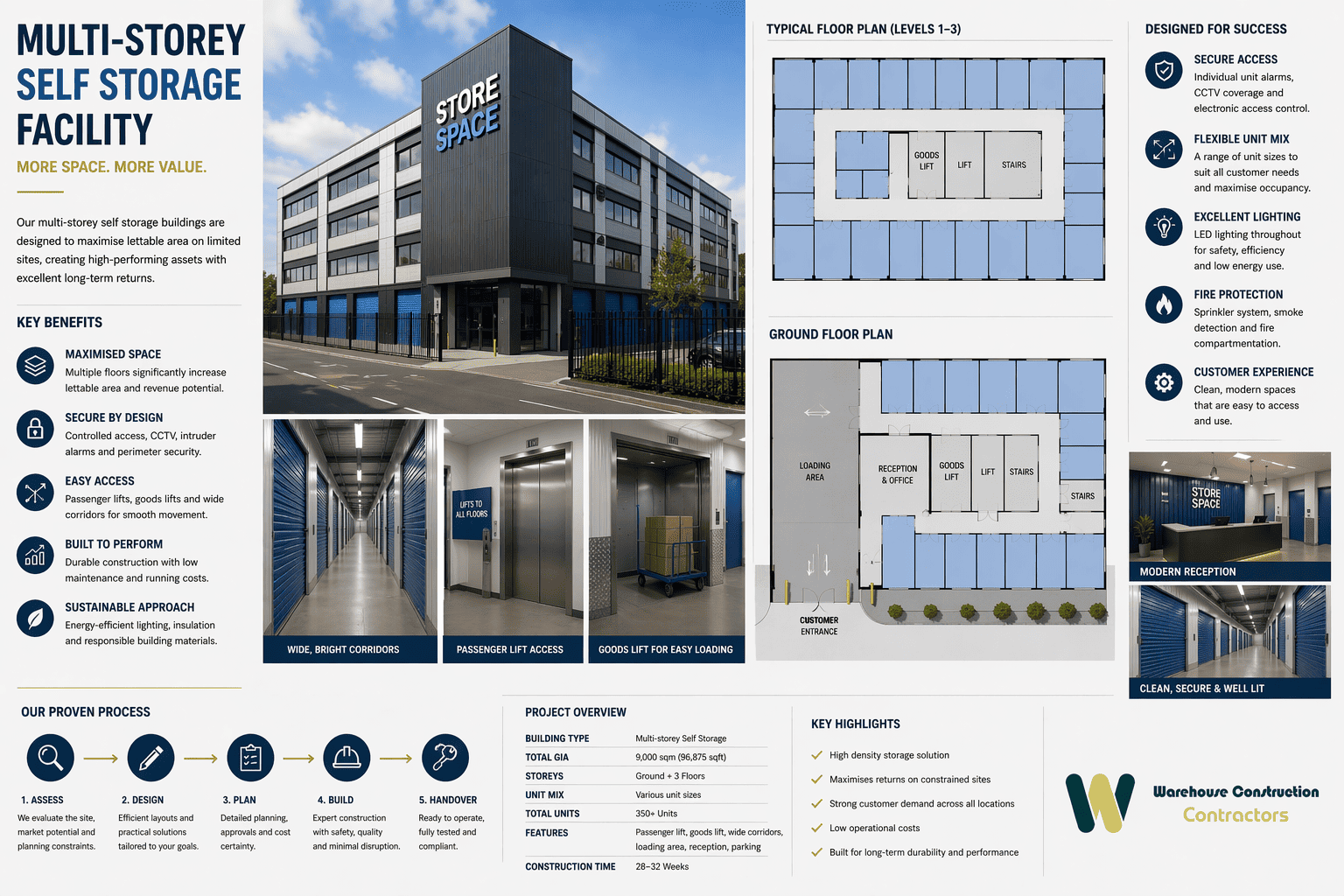
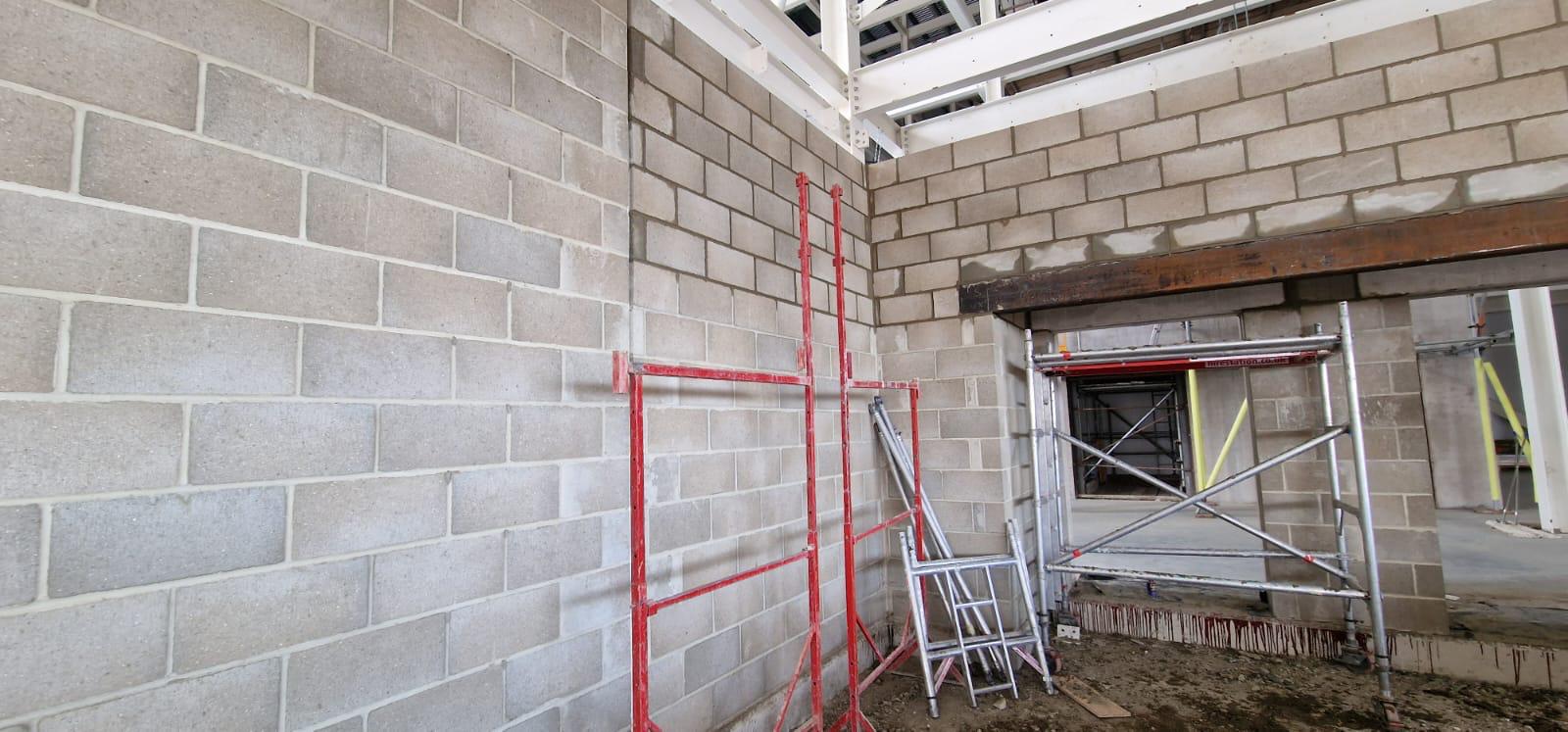
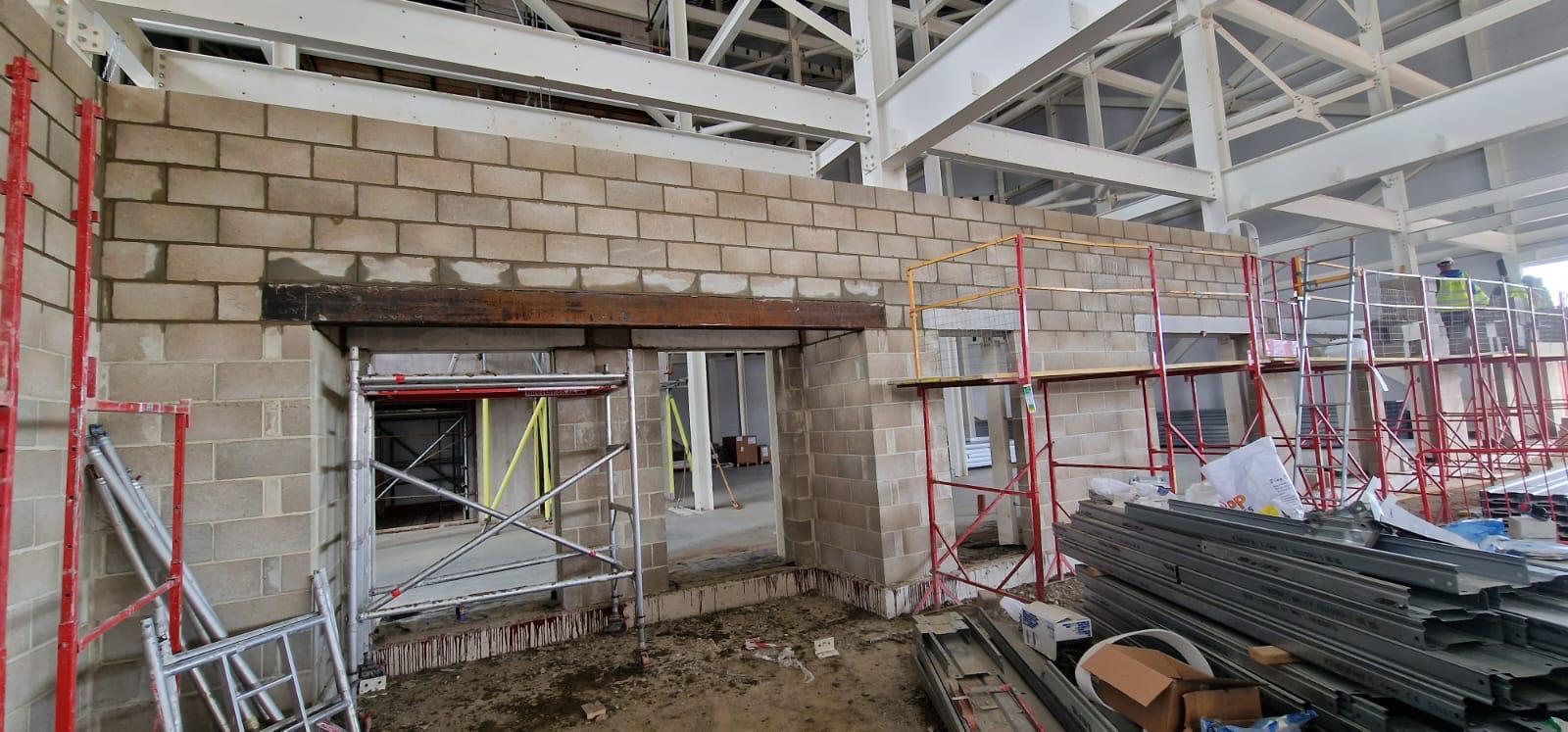
Our process begins by assessing a site to determine whether the property has development potential and what type of building can occupy the land. Following this initial evaluation, we provide preliminary architectural plans, design to maximise lettable space, procure construction services to build the building, and then complete the interior fit-out (including security systems, access control, lighting, and signage). At this time, when we return the completed facility to you, it will be ready to operate.
When our clients contact us, they often have varying degrees of information available regarding their future facility. They have a site and/or concept; they have a site with approved zoning/planning; or they have not yet determined where their new facility will reside. Regardless of which phase you are in, we can assist you.

UK Self Storage Industry Trends

There is significant growth potential in the UK self-storage industry. In the UK, there are approximately 64 million square feet. The UK self-storage industry generated approximately £1.2 billion in revenue in 2024. Although the UK is far behind other countries, such as the U.S., where there is an average of 9.44 square feet of self-storage available to every person (compared to the U.K.'s 0.73 square feet). This represents a great untapped demand.

There are numerous factors which contribute to consistent demand for self-storage. Whether you are planning to move into a new home, need space to store excess business inventory, require additional space while attending school, are downsizing your living arrangements, or simply have items in your home which you no longer want to keep in your home, all of these can be addressed through self-storage without relying upon one particular economic indicator. This is why self-storage tends to be a more stable source of income than other forms of commercial property.

Janus International’s report states that, according to their research, approximately 44% of all self-storage operators intend to expand operations by adding new locations in 2025. Those who are most closely associated with the self-storage industry believe in its future.

self-storage-building-builders1.png

Who We Build For

Investors and Property Developers

Investors and Property Developers choose Self Storage for the long-term cash flow it generates; its lower per-unit operating costs; and its broad-based appeal, which means it does not rely on any one customer segment. Serious institutional capital has been put into the Self Storage Sector in recent years. And this has resulted in higher yields on well-run, high-quality self-storage sites. We will assist you if you are considering investing in self-storage by assessing the feasibility of a development opportunity on your land and providing a clear view of the potential financial returns before you commit. According to CBRE UK, if you are seeking to invest in a form of commercial property that will deliver predictable returns, then self-storage should definitely be given consideration.

Businesses
Are you running out of space? Are you considering storing your business's goods, or would you like to create a self-storage facility to generate rental income? Whatever your requirement, we can assist you in making the best possible use of the land or commercial property that you currently own.
Individuals and Landowners
Do you have any unused land? A self-storage facility could provide steady monthly income from land that previously generated little to no revenue. We will also assist you in determining whether creating a self-storage facility on your land would be a viable investment before you commit to any development.

warehouse-self-storage-builders (2).png

Why do we use Self-Storage?

Self-storage is an easy-to-understand business model. You create storage units. People lease those storage units. You collect the rental income. It is simply about creating a space for others to store their belongings and collecting money from them. No need to worry about selling complex products or managing large groups of employees. According to Cushman & Wakefield, self-storage space across the UK has increased by 7.2%. This can be explained by the increasing number of potential new sites on the horizon. With a growing number of institutions investing in the self-storage sector.  Janus stated in their report that 44% of operators currently plan to invest in new locations. Operators within the industry believe in the concept of self-storage. If they believe in it, it's likely to be successful.

warehouse-self-storage-builders5.png

Types of Self Storage Facility we Build

The appropriate type of self-storage facility depends upon the characteristics of your plot, what you wish to spend (budget), how long your planning process will take, and local demand (local market).
Multi-Storey internal facilities represent the highest potential earnings. Each unit is locked as an individual and placed vertically over several floors, and is intended to provide maximum revenue per square meter. Multi-storey is suitable in urban areas where there is strong foot traffic and/or high land value. Build times are usually between 9 and 18 months after all necessary consents have been obtained.

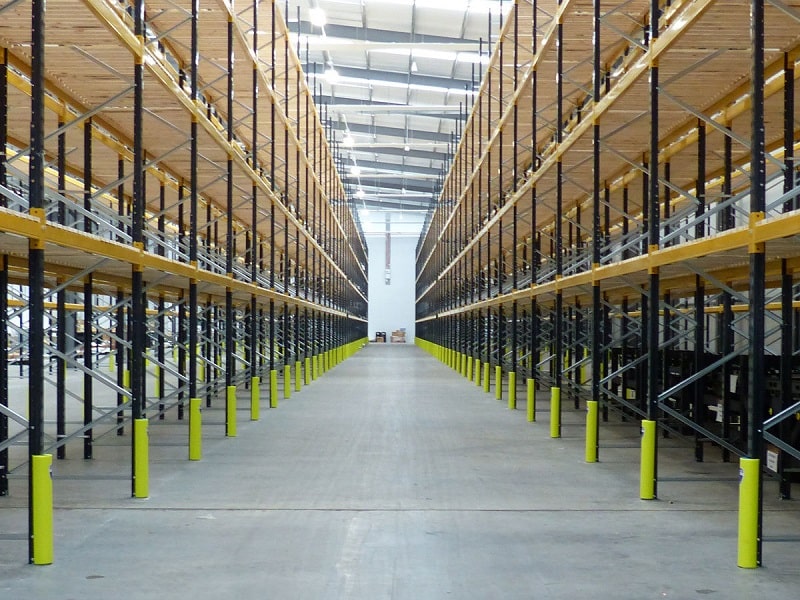
Ground-level drive-through storage is an alternative method of accessing your stored items at the front door of your storage unit. Trade and business customers tend to prefer this form of storage as they can easily move their goods into and out of the unit without having to carry heavy loads upstairs or downstairs. Drive-through storage has less cost associated with it compared to constructing multi-storey buildings, and build times are also shorter. In some cases, both may be viable options on large plots located outside of urban areas.

Portable container-based storage provides flexibility and speed of delivery when needed. Containers can be used if there are difficulties in getting planning approval for a permanent building. Depending on the location and use classification of your property, portable containers may fall under permitted development rights, allowing you to quickly develop your site. While containers can provide an opportunity to develop a site that could otherwise remain undeveloped, this should not be considered the primary option unless absolutely required.
Prior to making any commitments, we will assess the feasibility of developing one or more formats for your specific needs.

warehouse-construction-contractors1.jpg

How Much Will It Cost to Build a Secure Storage Facility?

There are many factors affecting construction costs. However, as a guide, we have identified basic price ranges for building types (standard warehouse & self storage) based upon specific characteristics such as design, specifications, environmental influences and geographical area.

Generally speaking, a typical standard warehouse construction will be in the range of £55/sq ft to £85/sq ft. When you add fit-out for security systems, access control, and fire protection to a self-storage unit, it is normal for this type of project to be priced at anything from £80/sq ft to £150/sq ft. Projects that require specialist or high-specification environments may exceed these price ranges.

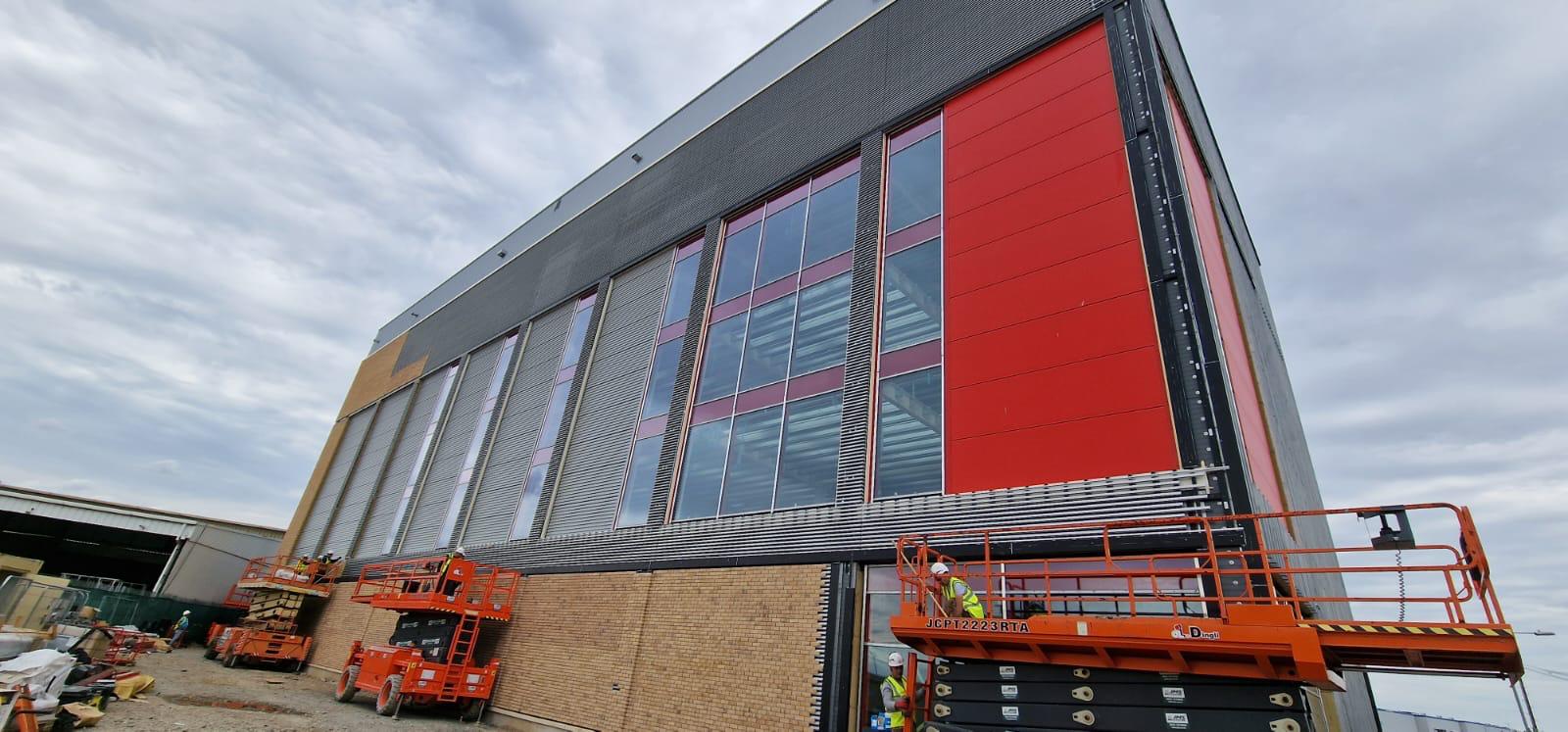
These increased costs arise from several consistent factors. Firstly, the building envelope will be constructed with greater strength. This includes stronger doors, fewer open entrances, and deliberately placed access points. Secondly, mechanical and electrical components will be much more extensive to meet requirements for access control, video surveillance, fire suppression, and, potentially, climate control. Lastly, external work associated with perimeter fencing, secure entrance/exit points, and yard layout will also be substantially higher than those typically found in industrial construction. These costs are often under-estimated during the initial stages.

In addition to the construction itself, there is a common element that can catch people off guard when developing their budget: the site's power supply. An inadequate existing supply, necessitating either upgrading the current supply or installing a new sub-station, will impact both your budget and program. Another significant variable is ground conditions. Piling or on-site remedial action will sit beneath all other activities and can easily affect total costs before the first wall is erected.

When providing our clients with real cost estimates for their projects, we base them on factual cost information for the actual site and build requirements rather than generic rates that could apply to almost any project.

Read More on Costs

self-storage-building-builders2.png

Planning Permission for Self Storage

While most self-storage units are classified as B8 (industrial), that doesn’t necessarily mean obtaining planning permission for a self-storage facility will be easy. Local Authorities tend to consider all aspects of how the facility operates, such as high-volume vehicle usage, 24-hour customer access, and customer foot traffic directly into the building.
Local Authority planners generally begin their examination of a proposed self-storage facility by examining its Highways Impact. They wish to assess the number of vehicles that the site will generate and whether the existing road network can accommodate those vehicle movements. In almost every case, a Transport Assessment is required.
In addition, proximity to residential areas, operating hours, lighting, and noise from vehicle movements are frequently assessed. While none of these items may prove difficult to address, they must be dealt with appropriately, preferably during the Design Phase rather than after submission.
We have developed relationships with specialist self-storage Planning Consultants and understand how local authorities review applications for self-storage facilities. Having a well-defined planning strategy from the outset will save you valuable time and avoid costly redesigns, which could become demoralising during the latter stages of your project.
Permitted Development Rights may apply to container-based self-storage facilities; however, this depends upon several factors, including the use classification of your site.

FAQ

What is the time frame for building a self storage facility?

-

Time frames vary by the size and style of the facility. Container based facilities can take only a few months to build, while a full internal multi storey build can take anywhere from 9-18 months from obtaining planning consent. We will provide you with an honest and realistic time frame when we first meet, not an overly optimistic figure. 

Do I need planning permission?

-

Generally, yes. However, some container-based units may fall within permitted development rights (depending on where the unit is sited and what class of use the land has been designated). We have a team of planning consultants that specialise in the self-storage industry and will assist us in the early stages of the project. 

How much will it cost to build my self-storage facility?

-

Costs will vary greatly depending on the site, size, and type of build. For example, a small container-based unit can be significantly cheaper than a larger, internally built unit. Due to the varying nature of each site, we do not provide a set price; however, once we have evaluated your plot, we will provide you with a detailed cost estimate. 

What size of plot do I require for a self storage facility?

-

There is no definitive answer as to the size of plot required for a self-storage facility, but generally, most viable self-storage plots range from approximately 0.25 acres. While smaller plots may be suitable for a container-based operation, larger plots may be suitable for an internal or mixed format build. We have experience working with a variety of plots. Please contact us, and we will inform you as to the potential capacity of your plot. 

Is self-storage a good investment opportunity currently in the UK?

-

Self-storage provides a solid investment opportunity. The UK Self Storage Market is forecast to contiapproximately 5.5% annually through to 2030. Grand View Research. There are multiple demand drivers, such as moving house, overflow space for businesses, students, etc. The diversity of these demand drivers reduces reliance on any one customer type, making it more robust than many other commercial property types. 

Can I develop Self Storage on Commercial or Industrial Land?

-

Yes, often. Industrial Land in particular lends itself to Self Storage due to the product's open-space requirements. We will evaluate your site and provide guidance on whether it is likely to be feasible from both a planning and construction standpoint. 

What do I do with the facility once I have taken possession of it?

-

You choose. Some clients manage their own facilities. Other clients appoint a management company to oversee the day-to-day operations of the facility. Regardless of which route you choose, we will be able to assist you. Our role is to deliver a facility ready to trade.

Let’s get
started

Would you like to learn more about how we can help you with your next residential or commercial project, fill in your details and a member of our team will be in touch.

This site is protected by reCAPTCHA and the Google Privacy Policy and Terms of Service apply.

Latest From the Blog

warehouse-refurbishment-contractor2.png
How Long Does a Warehouse Refurbishment Take?

Warehouse Refurbishment Timeframes How long will a warehouse refurbishment take? It is probably one of the first questions our clients ask, and one we find most difficult to answer, especially given the many possible scenarios related to the project. So, as a genuine answer, a cosmetic refurbishment (i.e. decorative/ c..

Read Full Story »
warehouse-refurbishment-contractors3.png
What Does Warehouse Refurbishment Cost Per Sq Ft in the UK?

Most Clients will ask their contractor the first question, and most Contractors will either avoid answering it at all costs or just answer in general terms, without providing enough detail for the Client to make a proper Business Case. There are many websites which provide answers such as "Cost varies depending upon Scope & Specification" an..

Read Full Story »