How Much Does It Cost to Build a Secure Storage Facility in the UK?
March 18, 2026
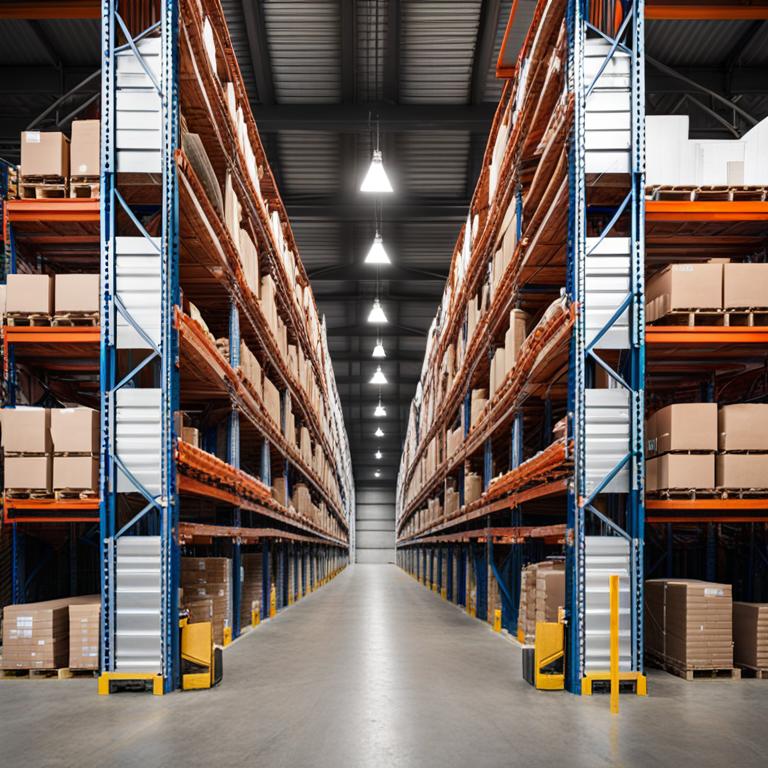
One of the first things clients ask is how much more a secure storage facility costs compared to a standard warehouse. It's a fair question, and the honest answer is that it depends on how far you go with security and control. But there are clear patterns we see across projects that help set realistic expectations.
Where secure storage sits compared to standard warehouses
A typical warehouse build might land somewhere between £55 and £85 per sq ft, depending on height and specification. Once security becomes a genuine priority, costs start to move.
For most secure storage facilities, we see builds coming in broadly between £80 and £150 per sq ft. Higher-end or specialist environments can go well beyond that. The difference isn't just about adding systems on top of a standard build. It comes from how the entire building is designed and put together from the ground up.
What actually drives the cost up
The physical structure is usually the first place where costs increase. Secure facilities require stronger doors, fewer openings, and more controlled access points. The building envelope gets upgraded, which adds cost but also improves overall performance and reduces long-term risk.
Mechanical and electrical requirements grow quickly once you introduce access control systems, surveillance and monitoring, controlled environments and fire protection. Each of those has its own infrastructure requirement, and they add up faster than most people expect at the start of a project. Where the risk profile is higher, backup power also comes into play, with knock-on effects on space planning and infrastructure costs.
Fire protection is a significant line item, particularly for document storage or facilities holding high-value goods. Sprinklers, compartmentation and smoke control systems can add a meaningful portion to the overall budget, but in most cases, they're non-negotiable. Getting this wrong isn't just a cost issue. It's a risk issue.
External works are consistently underestimated. Perimeter fencing, controlled entry points, lighting and yard layout all contribute to cost, and they're often the last things people think about when putting together an early budget. By the time they come into focus, the numbers can be uncomfortable.
Where costs tend to catch people out
The biggest surprises usually come from outside the building itself.
Power is a common one. If the site doesn't have enough capacity and upgrades or a new substation are required, that affects both cost and programme in ways that can be difficult to recover from mid-project.
Ground conditions are another factor that sits underneath everything else, sometimes literally. If the site needs piling or remediation work, that changes the baseline before a single wall goes up.
Planning conditions can also add unexpected costs. Requirements around highways, drainage or environmental measures aren't always visible at the start, and they can bring in work that wasn't budgeted for.
Balancing cost against risk
More security doesn't automatically mean a better building. We see projects where money has been spent in the wrong places, over-specifying areas that don't carry much risk while leaving genuine vulnerabilities unaddressed.
The best results come from understanding where security actually adds value. That means looking at how the building will be used, what's being stored, who needs access and what the real risks are. When security, layout and operation are aligned from the start, the spend goes further, and the outcome is more effective.
A more realistic way to budget
Working backwards from a generic rate per sq ft is rarely a good starting point. It gives a number, but not much else.
A more useful approach starts with the site constraints, defines how the building will actually be used, identifies the level of risk involved, and builds a cost plan around that. It takes a bit more work upfront, but it produces a budget that reflects reality rather than one that unravels when the details come in.
A final thought
Secure storage facilities do cost more than standard warehouses. But when they're designed properly, they reduce risk, support efficient operations and hold their value over time.
The key is understanding where that extra cost comes from and ensuring it's spent in the right places. A well-designed secure facility isn't an expensive version of a standard warehouse. It's a different kind of building altogether, and it should be budgeted for that way.