What Does a Warehouse Refurbishment Actually Include?
April 22, 2026
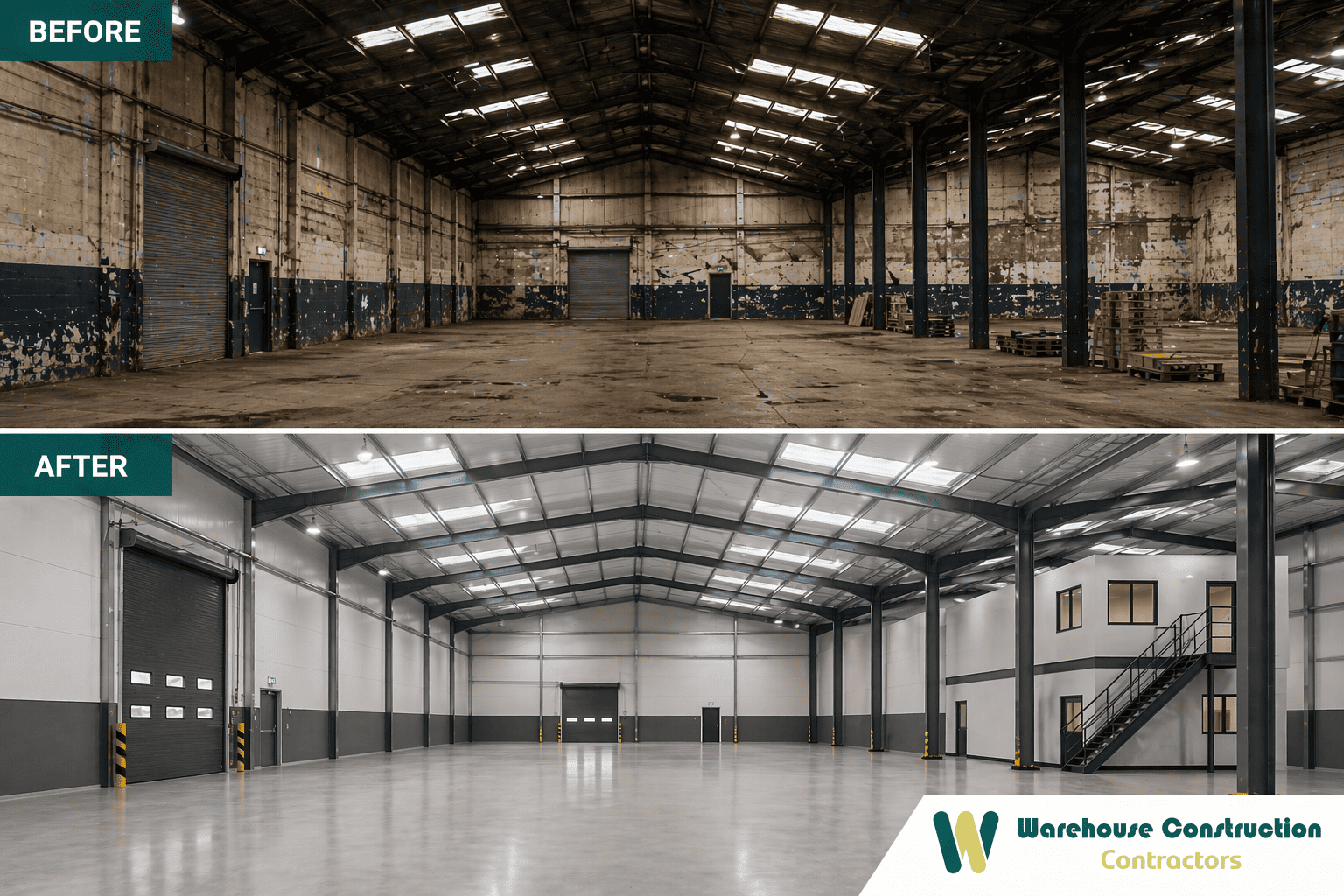
Warehouse refurbishment is one of the many terms we see frequently before a project begins. More often than not, a customer has asked us something similar to “i am looking for a specific answer as to what i am being charged for.” this is an understandable concern. Warehouse refurbishment can range from painting the walls and changing the lighting to stripping the entire interior and completely rebuilding it.
There are many variables regarding how much of each aspect is included in the total, and thus, there are many different price options. Knowing which level of refurbishment is generally associated with which aspects of the process will help you create a better estimate of costs, assist in having a more successful dialogue with contractors regarding expectations of the project, and hopefully save time by avoiding the possibility of getting a quotation that bears little resemblance to what you were expecting.
Below is a breakdown of how warehouse refurbishments are typically defined and priced, from least invasive (lightest) to most invasive (most extensive).
Level 1 - cosmetic & compliance refurbishment
Description of project work: the lightest form of refurbishment. The building structure and service elements are primarily maintained intact. The focus is on condition, appearance and basic compliance.
Typical items included:
Painting of all internal and external surfaces, deep cleaning throughout the facility, replacement of failed or at end-of-life LED lighting, minor repairs to roller shutter doors and pedestrian door entry points, filling minor floor slab damage, fire alarm testing and replacement of outdated detection heads, general repairs to guttering, down pipes and rain water drainage system, replacing broken roof sheets, general yard landscaping/tidy-up etc.
For whom:
Landlords who wish to bring units back into good enough condition to rent again after a vacancy. Tenants wishing to improve health & safety compliance or meet dilapidation schedules but do not want to incur large sums of money for this purpose.
Approximate cost range:
£10 to £25 per square foot based on the condition of the building and the extent of repairs needed. For example, a 10,000 sq. A Ft. Unit in relatively good condition could expect to pay anywhere between £100,000 and £150,000 for a thorough cosmetic and compliance refurbishment.
Not addressed:
Structural issues, inadequate mechanical/electrical systems, poor layouts, old loading facilities or buildings with poor energy performance. If these are the concerns, then a cosmetic refinish will not provide solutions.
Level 2 – CAT A refurbishment
Definition:
CAT A refurbishment represents the typical standards set by most Landlords for preparing a vacant industrial/warehouse unit for rental purposes. By completing a cat a refurbishment the landlord creates a clean/neutral/fully functional environment for the incoming tenant to build out to their desired specifications.
Typical items included:
All items described above for level 1 plus: complete replacement or upgrade of roofing material where necessary, replace cladding panels/profile sheet materials that are failing or visually unappealing, install new/looking upgraded loading bays/dock leveller(s), install new/looked up roller shutter doors & pedestrian doors according to current standards, full LED lighting installation throughout facility at consistent lux levels, upgrade electrical distribution board-general power infrastructure, new/refurbished wc facilities/welfare area provided to basic standards, full decoration throughout facility using neutral color scheme(s), resurface/major repair access road/yard areas provided, provide installation/upgrade perimeter fencing/security features, conduct drain survey-complete repairs.
For whom:
Landlords wishing to relocate vacant units to attract new tenants. Developers are acquiring older industrial assets & bringing them up to market rent standards. Asset managers are working across multiple sites to improve the overall quality of their portfolio.
Approximate cost range:
£25 to £55 per square foot. Based on various factors, including the condition of the existing building, specification level, and the extent of structural envelope works required, a 20,000 sq ft unit brought up to cat a standard would likely fall between £ 500k and £ 900k, depending on specifics.
What drives costs higher within CAT A refurbishment:
Condition of existing building = largest variable. A unit requiring full roof replacement/cladding replacement/significant structural repairs will require substantially higher investment than one where the existing envelope remains sound with services/decoration providing the primary source of expenditure. Where asbestos is present in building materials (and requires removal), additional costs may be incurred beyond base refurbishment expenditures.
Level 3 — Cat A+ Refurbishment
Cat A+ is a fast-growing category in warehouse and logistics, especially for quality-oriented Occupiers. Cat a + provides a more advanced offering than Cat A by providing an occupier with a wide variety of options to enable them to have a facility ready for occupation with little, if any, further fit-out costs.
Typical components of cat a + include:
All elements of cat a, plus fitted office space (typically) comprising: reception area, meeting room, open-plan work space, kitchenette & WC's to commercial standards, complete data/communications package, electric vehicle charging points in the car park, improved landscaped areas & external presentation, increased security via CCTV cameras, entrance control systems & boundary protection, solar photovoltaic panels on the roof, significantly improved insulations to attain a high energy performance certificate (EPC), staff amenities i.e. Shower & locker facilities, led lighting with intelligent controls & occupancy detection sensors, and in some instances pre-installed mezzanine office floors as part of the initial specification.
The ideal landlord/client for cat a+ is one that requires high-grade space in markets with significant demand for good-quality space. Those developers seeking to achieve premium rent levels and differentiate themselves from similar spec cat a product elsewhere in close proximity. Also, investors who seek to obtain BREEAM ratings as part of their sustainability strategies.
Approximate cost range: £55 to £90 per square foot. All the added value to the CAT A will come from the office fit-out component, the sustainable aspects, and enhanced external presentation. However, for Landlords targeting the right type of occupier in the right markets, the additional expenditure will generate higher rents and reduced voids, enabling recovery of these costs.
Things to watch for: CAT a + can mean different things to different people. Some Landlords use "anything with a fitted kitchen and some EV charging points" as their definition of cat a +. Other Landlords will take a far more comprehensive approach. Therefore it is advisable when referring to cat a + you define exactly what each item is included in your cat a + offer rather than just using the term.
Level 4 — full strip out & refit
What it is: the ultimate form of warehouse refurbishment. In essence, all aspects of the original fit-out, services & sometimes parts of the structure are stripped away, and the building is built anew to a particular client's requirements. Essentially, a new building is created within an existing building shell.
What's typically included:
Complete demolition & removal of all original fit-out materials (partitions, mezzanines, services & finishes); repair/upgrades to the structures and envelopes; total replacement of the building envelope (roof & cladding etc.) as necessary; new concrete floor slab or full resurface of existing slab to meet load requirements; complete replacement of electrical/mechanical/plumbing (M&E) package; bespoke lighting scheme; full heating ventilation air conditioning (hvac) system; sprinkler system; fire alarm; access control & security; bespoke offices tailored to clients' specific needs; mezzanine floors constructed to client specifications; bespoke loading bay/dock equipment configurations; full external works including; yard; surfacing; drainage; fencing; landscaping & exterior lighting; planning permission & building regulation approvals throughout.
The ideal occupier/developer for a full strip-out & refit would be a client who has secured a long-term lease on premises that need to be adapted specifically for their operations. Those developers wishing to re-position fundamentally obsolete buildings which neither cat a nor cat a + can compete in terms of functionality. And businesses that have outgrown their present premises and therefore need a fundamental re-configuration prior to operation.
Approximate cost range: £80 to £150 per square foot, occasionally higher for extremely specialised environments. Depending on specifications, site conditions, and the degree of specialisation in the M&E package, a fully refurbished 30,000-square-foot warehouse could cost between £2.4m and £4.5m.
Cost drivers at this level: structural/envelope condition of the building being refurbished; complexity of the M&E specification; live vs vacant delivery environment; contamination/asbestos remediation specialists; site ground conditions affecting slab designs; extent of external/yard works. At this level, the details matter greatly and an extensive survey/design phase prior to commencement of construction is imperative.
The Costs That Catch People Out at Every Level
Whether your warehouse refurbishment is minor or major, there are a few cost items that will normally catch people out who have never been through the process before.
A significant percentage of all warehouse buildings built prior to 2000 contain some form of Asbestos. A mandatory management survey must be completed before work begins. Where Asbestos Containing Materials (ACM) are damaged during the course of the refurbishment, then ACMs require the services of licensed asbestos contractors. The cost of removing ACM is dependent upon what type of ACM is present and where, however, adding £20,000 to £100,000 plus to a project due to asbestos removal is not uncommon; especially on older steel framed warehouses containing extensive quantities of asbestos insulating boards (AIB), or sprayed coatings.
Electrical supply upgrades are becoming an increasing problem on old industrial sites where the original electrical infrastructure cannot provide enough power to meet the demands of modern mechanical & electrical systems. An upgrade to the site supply or the provision of a new substation may add additional costs, and as this would involve negotiations with the Distribution Network Operator (DNO), etc., it should be included within the program.
The condition of drainage is often worse than its appearance suggests. Early in the process, undertaking a CCTV drainage survey is highly recommended, as the cost of fixing failed or blocked drains identified after stripping out mid-project will always be greater than if they were identified and costed initially.
When stripping back fit-outs to reveal structural damage, it may not be until after initial demolition work has taken place that problems become apparent. Conducting a thorough pre-start survey using competent professionals will reduce this risk, but will not eliminate it completely. To account for this possibility, include a contingency fund within your budget, particularly when working with older structures.
How to Use This to Plan Your Budget
To create an accurate budget for a warehouse refurbishment, a comprehensive assessment of the building's current condition, along with a detailed description of the desired end product, is essential.
It is generally impossible to accurately calculate the cost of a warehouse refurbishment based solely on generic price-per-square-foot figures without an understanding of the building's condition and/or specifications to achieve the desired outcome. Therefore, instead of using generic pricing data, use the building's condition and required specifications to determine what the final refurbished space should look like, and then develop your budget accordingly.
At an early stage in planning for a warehouse refurbishment and wish to obtain a realistic estimate for your potential costs regarding your building and your expectations? The best next step would be to conduct a site inspection. This option does not incur any costs and provides both parties with a far clearer idea of what is truly involved.