Planning Permission for Storage Facilities in the UK — What to Expect
March 24, 2026
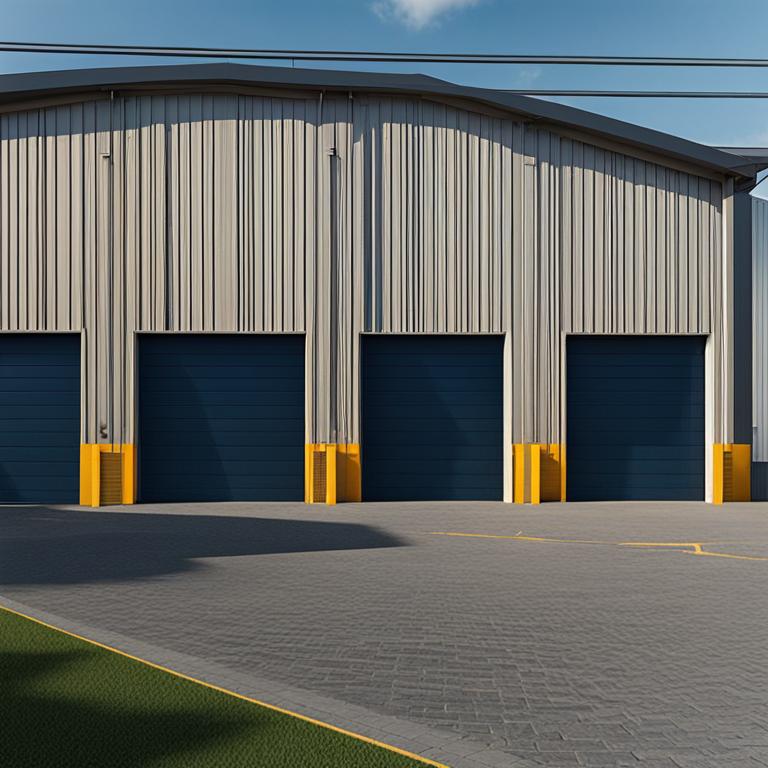
Planning is often where storage projects slow down. Not because they're particularly unusual, but because the requirements aren't always clear at the start and the process has more moving parts than people expect.
If you're building a storage facility, understanding how local authorities typically approach these schemes makes a real difference to how smoothly things go.
How the building gets defined matters more than you'd think
Most storage and distribution buildings fall under Use Class B8, but that doesn't mean approval is straightforward. Planners look closely at how the building will actually operate, and the detail behind the use often matters more than the classification itself.
If the facility involves regular vehicle movement, 24-hour operation or customer access, as is common with self-storage, those factors will be scrutinised. A building that looks simple on paper can attract significant planning attention depending on how it's used day to day.
Getting the description of development right from the start is important. Vague or overly broad descriptions can create problems later, either by inviting more scrutiny than necessary or by restricting how the building can be used once it's built.
Traffic and access are usually the first concern
For most storage developments, the impact of highways is where the conversation starts. Local authorities want to understand how many vehicle movements the site will generate, how those vehicles access the site, and whether the surrounding road network can handle that traffic without causing problems for existing users.
In many cases, a transport assessment is required to support the application. This isn't just a formality. It needs to be well-evidenced and realistic, because highway officers will look at it carefully. If the assessment doesn't stack up, it becomes a point of objection that can slow everything down.
Early engagement with the highways authority, before the application goes in, is usually time well spent. It surfaces issues early and gives you a chance to address them through design rather than negotiate them after submission.
How the building sits within its surroundings
Storage buildings are often large, and planners will consider how they relate to the surrounding area. Height, massing and appearance all come into play, particularly if the site is near residential properties or in a location with sensitive visual characteristics.
Noise from vehicle movements, lighting and operating hours are also common areas of focus. A facility running 24 hours with regular HGV access will attract more scrutiny than one operating standard hours with light traffic. These aren't necessarily barriers to approval, but they need to be addressed properly, and in some cases they'll shape the design.
Landscaping and boundary treatment can help manage some of these concerns. Planners often use conditions to control these elements, so having a considered approach to them from the start puts you in a stronger position.
Environmental and drainage requirements
Sustainability and drainage are now a standard part of the planning process, not optional extras. Most projects will need to address surface water drainage through a SUDS strategy, energy performance, ecological considerations and, on brownfield sites, potential contamination.
None of these are usually deal-breakers, but they all take time to work through properly. Ecological surveys, for example, are season-dependent, which means leaving them too late can hold up an application by months. Getting the groundwork done early keeps the programme on track.
Contamination is worth flagging separately. If the site has any history of industrial use, a preliminary risk assessment will almost certainly be required. Depending on what it finds, further investigation and remediation could follow. This is the kind of thing that can significantly affect cost and programme if it's not picked up early.
Planning conditions can affect how you build
Approval isn't the end of the planning process. Conditions attached to a consent can shape how the project is delivered, and if they're not picked up early, they can cause real delays during construction.
Conditions tied to materials, landscaping, highways works and drainage systems are all common on storage schemes. Some of these require approval before work starts. Others need to be discharged at specific stages. If the construction programme hasn't been built around them, you can find yourself waiting on planning responses at exactly the point when you need to be moving.
The projects that avoid this are the ones where planning conditions are mapped against the construction programme from the point of approval, not treated as an afterthought once work is underway.
Why getting involved early makes a difference
The smoother projects are the ones where planning, design and construction are considered together from the start rather than in sequence.
When design decisions are made with planning in mind, the application is stronger and less likely to run into objections that require significant redesign. When construction is considered alongside planning, the conditions that come back are easier to manage and less likely to cause programme issues.
Pre-application engagement with the local authority is worth considering on most schemes. It gives you a read on the key concerns before the application goes in, and it tends to lead to better outcomes and faster decisions.
A final thought
Planning a storage facility isn't usually about overcoming major obstacles. It's about understanding what matters to the local authority and addressing it properly from the start.
Most issues that slow these projects down are foreseeable. With the right preparation, they can be dealt with early, which keeps the project moving and avoids the kind of redesign that costs time and money at exactly the wrong moment.