How Long Does a Warehouse Refurbishment Take?
May 1, 2026
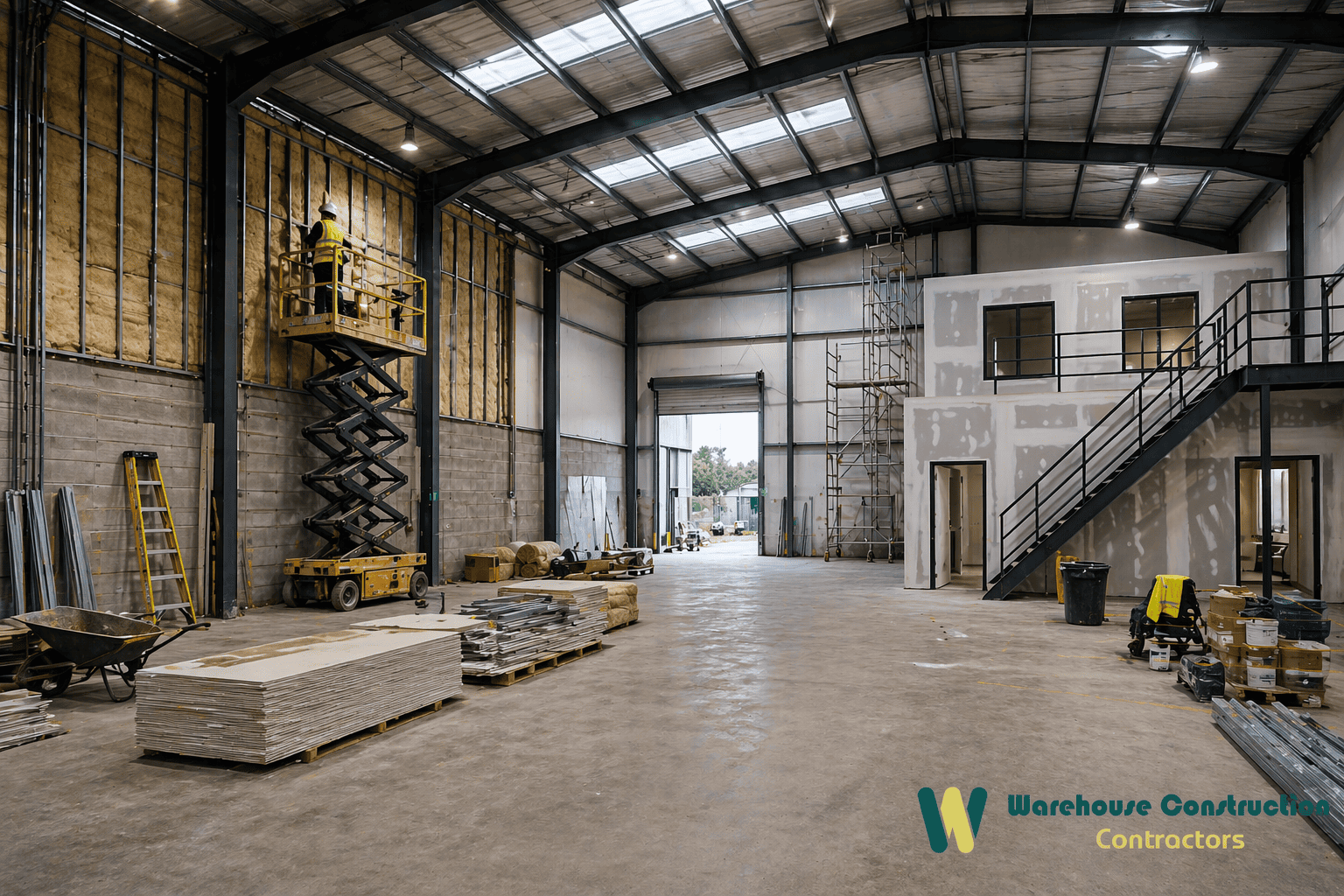
Warehouse Refurbishment Timeframes
How long will a warehouse refurbishment take? It is probably one of the first questions our clients ask, and one we find most difficult to answer, especially given the many possible scenarios related to the project. So, as a genuine answer, a cosmetic refurbishment (i.e. decorative/compliant) can be completed in anything from several weeks to the best part of a year. Again, we say "anything" because whilst both are referred to as refurbishments, they are fundamentally different projects.
This article aims to break down approximate timescales by project scope, identify factors that can contribute to delays in your construction program, and, hopefully, provide you with an understanding of what to expect before embarking on planning.
Short Answer By Project Scope
We have provided below the typical reference points used by Warehouse Construction Contractors for projects based in London and the surrounding areas of the South East.
Typically, a cosmetic/compliance refurbishment on a building that has had little maintenance over recent years will run approximately 2-6 weeks. Typically, a cat-A refurbishment, which includes envelope works, service upgrades, and all aspects of internal and external refurbishment, will run for 3-5 months. A cat-A+ refurbishment, including a full office fit-out, sustainability elements, and additional external works, will typically take 4-7 months. Finally, a complete strip-out/refit of a property typically takes 5-9 months, and potentially longer depending on the size and complexity of the property being refurbished.
Again, please note that these are the construction phase timescales. In other words, they start from when work commences on-site. All activity leading up to that date - i.e. surveys, designs, planning, etc., will add additional time to the overall program. Historically, this aspect of the program has been grossly underestimated.
Level 1 – Light Refurbishment (Cosmetic & Compliant): 2 to 6 Weeks
A light refurbishment, including decoration, replacement of LED lighting, minor door repairs, basic floor patching, and general compliance works, can be completed relatively quickly on a structurally sound building that requires little or no mechanical/electrical work and/or further planning.
Factors that may cause the upper end of the time scale for such projects include;
the size of the building;
the amount of space that needs to be accessed at the same time;
whether or not the building is occupied during the course of the works;
asbestos issues identified during the course of the works (a very common reason for unexpected delays on light refurbishments, particularly in older properties where an asbestos survey was last carried out);
Level 2 – Cat A Refurbishment: 3 to 5 Months
A fully comprehensive Cat A refurbishment is considered a substantial construction project. Works may include:
roof replacement or overlay;
cladding replacement;
new loading bay/dock leveller installation;
full M&E replacement;
welfare facility provision;
yard resurfacing;
and full redecoration, etc., etc., all undertaken sequentially and concurrently throughout a coordinated construction program.
The typical construction phase for a mid-size unit (15,000 to 25,000 sq ft) will take 10 to 16 weeks from commencement of site works. Larger units (typically 40,000 sq ft+) tend to increase in duration in direct proportion to their size.
Time added onto this timeframe is generally due to:
The state of the original building - e.g. units requiring full roof replacements/repairs or major M&E remedial works tend to take longer than those with a solid envelope and require mainly services and finishings;
Strip-out works at the beginning of a program may reveal items that were previously unseen during the initial survey. Correct treatment of such items is always preferable, regardless of any resultant increase in time.
Beginning with Level 3 — Cat A+ Refurbishment, (approximately) 4 to 7 months
Cat A+ will go beyond providing a neutral shell and include fitting out offices, electric vehicle (EV) charging, solar photovoltaic (PV), enhanced security measures, and increased specifications across all aspects. As such, there are two programmatic issues arising from the inclusion of these features: more trades to coordinate, and greater design detail required prior to commencing works to price and procure all necessary materials and labour.
As part of the solar PV installation, it is essential that this be sequenced into the program alongside the roofing works. It is generally more efficient to replace/overlay the roof first and then install the PV system shortly thereafter. Due to this sequencing requirement, both packages need to be designed, procured, and coordinated together rather than sequentially.
Fitting out the warehouse space for office use is typically one of the last phases of construction and is often on the critical path. This is primarily due to the number of trades working in sequence — structure, services, ceiling and partitions, finishes, joinery, IT, and AV.
For clients requiring a specific completion date for their offices to be occupied, it is imperative that this trade sequence be carefully planned from the outset of the program.
Level 4 — Complete Strip Out and Rebuild: approximately 5 to 9 months plus
The complete strip-out and rebuild is the most complex and longest-duration scope level. Everything is removed from the building, it is inspected structurally and in terms of its envelope. It is then built back up from the inside out based on a defined operational brief.
The demolition and stripping phase alone can range anywhere from 3 to 6 weeks, depending on the size of the facility. Depending on what is found during the stripping phase (structural repair issues previously unknown, M&E issues were worse than anticipated etc.), this can also add considerable amounts of time that cannot be accounted for exactly.
The construction phase for a full rebuild/refit of a 30,000- to 50,000-square-foot building is generally 5 to 7 months. Larger facilities, specialised areas or projects with extensive M&E packages generally require more time. Properly developing your design prior to starting construction provides the greatest protection for your schedule at this scope level. Late design changes during a complete rebuild can be costly and disruptive compared to those at lower scope levels.
Elements That Add Time Prior To Commencement Of Construction Works
Pre-construction is where many clients underestimate total project timing. Below are common elements that add time prior to breaking ground:
Investigations/surveys need to be conducted before you can develop your design. Asbestos Management Surveys are a statutory requirement before any refurbishment work is carried out on a building that may contain asbestos. Structural surveys, Drainage CCTV surveys and Condition surveys all assist with defining the scope. On Brownfield sites, a Contamination Assessment may be required. Procuring these types of studies at the onset of a project saves you time down the line.
Developing designs takes time. The more complex your scope, the more detailed your design will need to be prior to obtaining quotes/purchasing material/labor. Hurrying this phase so you can commence on-site sooner almost always results in more time lost overall since changes made late in the design process, while work is underway, are significantly more difficult/dangerous/disruptive.
Obtaining Planning Permission is required for all exterior alterations, changes of use and/or certain structural works. In theory, a simple application on an established Industrial Site could be processed in 8 – 12 weeks. Applications involving Highways, Environment or Neighbouring impacts will require longer processing periods. Warehouse Construction Contractors recommend engaging with Local Authorities prior to submitting planning applications on nearly every scheme that requires consent — although this may delay your commencement period slightly, it typically results in faster determination times and less uncertainty.
Obtaining Building Regulations Approval is mandatory for structural alterations, modifications to Mechanical & Electrical Systems and Fire Safety Changes. If you manage your Building Regulation approvals concurrently with your design process, it should not significantly delay your project timeline. However, you need to submit and coordinate these approvals early in your project rather than leaving them until your work is about to commence.
You need to purchase long lead items as soon as possible. Structural Steel, Specialised Cladding Systems, Loading Bay Equipment, and Custom Mechanical & Electrical Components all have lead times that can affect when your construction can begin or conclude. Warehouse Construction Contractors identify Long Lead Items at the Design Stage and purchase these early on in order to maintain your Project Schedule.
Factors That Can Cause Delays in Refurbishing Warehouses
Warehouse refurbishments often occur when parts or all of the building remain occupied by its users. This is possibly the largest single variable affecting the program and should be properly accounted for, rather than being overly optimistic.
Adding time to the program is necessary because you cannot build the zones in the most efficient sequence due to the operational space that must remain active. The operational areas create many constraints, including where contractors can access the site, the times they can work, and how they can move around the site.
The degree to which these factors affect the program depends on how much of the building needs to remain operational and how easily the user can temporarily relocate from portions of their use within the building. A user who can consolidate their operations into one portion of the building while the other is under renovation provides a significantly cleaner work environment for contractors and a shorter total program length than a user who requires full access to each portion of the building.
Another factor related to operational space is operating hours. When operations continue through nighttime or weekend hours, noisy or disruptive work may be limited to specific hours. Therefore, although the number of construction days may remain constant, the program duration will be extended.
A way to mitigate this problem is to conduct detailed planning before commencing work. Warehouse Construction Contractors conducts phased development strategies with clients before developing a project program. As such, potential limitations created by operational space are identified and included in the program at inception rather than being discovered during the course of the project. Programs that identify potential limitations in operational space are far more valuable than those that make unrealistic promises and fail to meet expectations after several weeks of construction.
Identifying Typical Reasons for Program Slippage
Identifying typical causes of slippage enables the contractor to develop plans to avoid similar causes.
Although there are numerous ways that programs can be affected negatively (i.e., delayed), two of the most common causes of negative impacts include:
1) Discovery of unlocated asbestos during construction. Although asbestos discoveries are generally expected, those made during construction are less frequent. However, the discovery of asbestos located in an area that was not identified in the asbestos survey conducted prior to beginning construction activities can result in cessation of work in that area until an asbestos removal company completes an assessment and manages the asbestos. Mitigation for this occurrence includes conducting a comprehensive asbestos survey prior to the commencement of construction and establishing a contingency provision in the program to address unlocated asbestos in older buildings.
2) Discovered hidden structural issues during strip-out. Structural elements may exist below the existing fit-out that were unknown until demolition. Depending on the severity of the issue, resolving it may require additional structural intervention beyond what was anticipated. Similar to asbestos surveys, a comprehensive survey conducted prior to stripping out the existing fit-out can reduce, but not entirely eliminate, this risk.
Additionally, failure to map conditions required to obtain planning approvals onto the program schedule results in unnecessary delays on approved projects. Planning conditions requiring approvals prior to commencing specific work (e.g., material selection, landscape modifications) will delay those works if not addressed in a timely manner. Warehouse Construction Contractors identifies and maps every condition in the planning approval package onto the construction schedule at the time of approval, ensuring this type of delay is avoided.
Delays caused by late design decisions impede progress at both project scope levels. Clients frequently need to make decisions on specification items, layout changes, or fit-out details, and these decisions are subsequently slower than scheduled, allowing trade personnel to cease work pending a decision. Establishing clear decision-making milestones at project inception will minimise this type of delay.
Finally, upgrades to electrical power supplies involving utilities companies (DNOs) are outside the contractor's control and can add significant amounts of time to a program. If a necessary upgrade to an existing electrical power supply to support construction operations is not identified until after the mechanical/electrical (M/E) design phase, the program will be significantly impacted. Therefore, identifying whether power upgrades are needed as early as possible is something Warehouse Construction Contractors does on every project for exactly this reason.
Obtaining a Reliable Program Estimate for Your Project
The estimated durations provided in this Guide serve as useful references rather than actual program estimates. Only by having your building surveyed and defining your project scope can you establish a reliable program estimate. Additionally, by understanding the specific constraints of your project from inception, you can design your program to accommodate them and provide a basis for informed decisions (e.g., scheduling start dates, creating business plans, negotiating leases).
Warehouse Construction Contractors provides a complimentary site visit and consultation to discuss your proposed warehouse refurbishment project and provide a preliminary estimate of your project's expected duration based on your specific requirements and what we observe in visiting your facility — not an arbitrary value intended solely to secure an opportunity that bears little resemblance to how your project will ultimately unfold.