What Does Warehouse Refurbishment Cost Per Sq Ft in the UK?
April 23, 2026
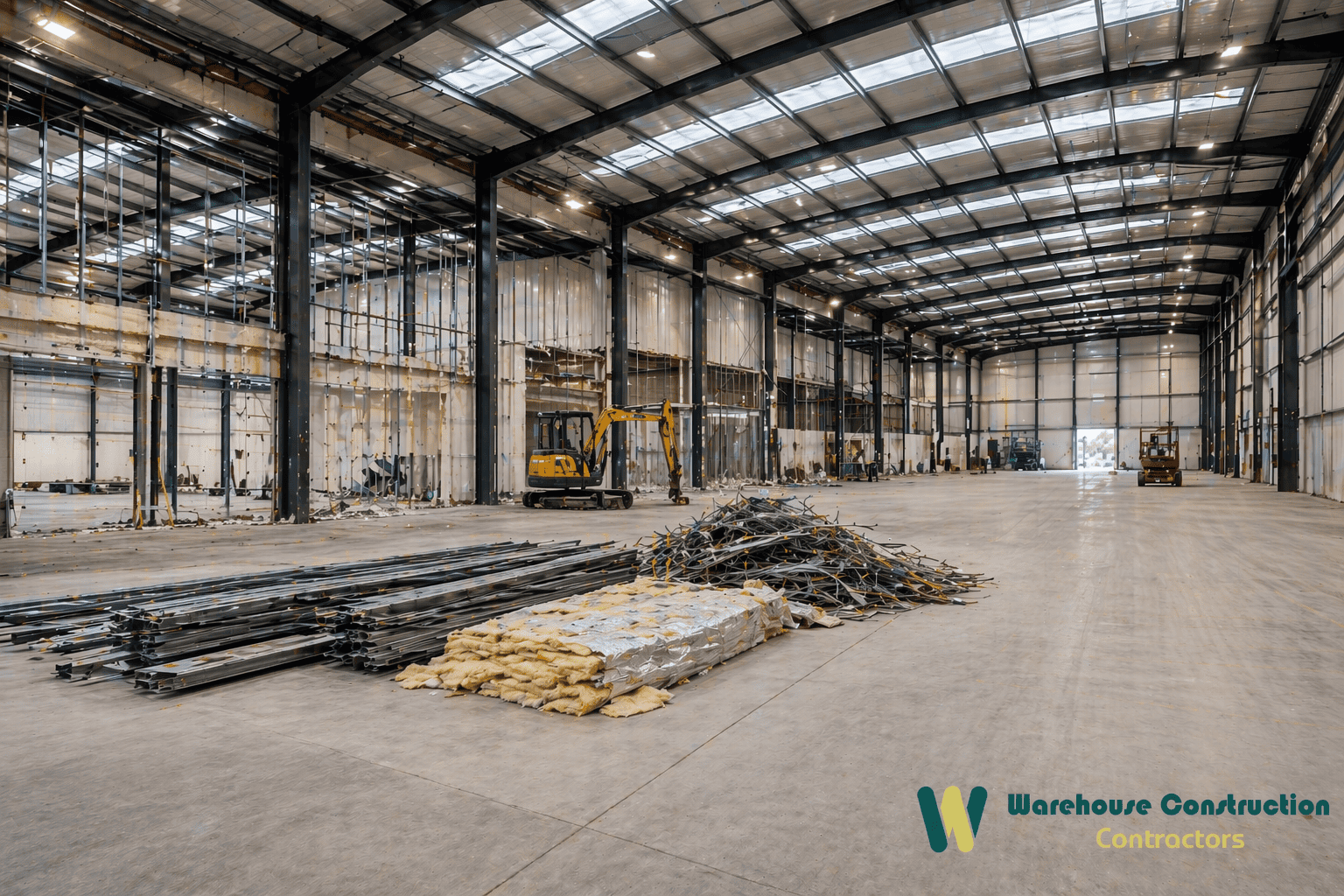
Most Clients will ask their contractor the first question, and most Contractors will either avoid answering it at all costs or just answer in general terms, without providing enough detail for the Client to make a proper Business Case. There are many websites which provide answers such as "Cost varies depending upon Scope & Specification" and stop there. This is correct; however, unless you want to spend your money on Surveys and Design Fees before knowing whether the project is financially viable (which we do not recommend), this type of information is of little use.
This Guide provides actual Cost Ranges based on the Costs incurred across various types of Projects (broken down into Levels) and reflects what we see on our projects each day. These are also based on today's Current UK Construction Costs and the factors that drive these costs up or down. We will provide you with a framework to place your Project within the provided Cost Range.
Why Warehouse Refurbishment Costs Vary So Much
A few things are worth noting before we go into the numbers. Two warehouse refurbishment projects that appear identical at first glance could result in greatly varying cost outlays. It is generally the condition of the original building which will be the most influential factor in determining cost variance. An example would be a warehouse that appears to be structurally sound when viewed externally, may have underlying serious defects such as a failed roof membrane, numerous asbestos-containing products throughout the structure, inadequate floor slabs to carry the weight of modern high-density racking systems and/or outdated Electrical and Mechanical (E& M) services unable to meet today's standards. When strip-out occurs, this information becomes apparent and ultimately affects the project's true cost.
Another important consideration is specification levels. For instance, a Cat A refurbishment aimed at achieving a ‘basic’ lettable standard and a Cat A+ refurbishment aiming to achieve a 'premium' level of occupier satisfaction through providing a comprehensive office space fit-out, including electric vehicle charging points and solar photovoltaic panels, are both referred to as 'refurbishments'; they represent vastly different types of projects in terms of cost and complexity.
Lastly, location impacts costs. In general, labour costs in London and the surrounding areas are greater than in other parts of the United Kingdom. Also, projects carried out in dense urban environments with restricted access, limited working hours, or complex logistical challenges generally cost more to complete than those in unconstrained rural or suburban areas.
There are also many unseen factors which do not become evident until actual work commences. Examples include, but are not limited to, Asbestos-Containing Materials (ACMs), ground conditions, and unforeseen structural integrity issues, which can significantly affect project costs. This is one of the reasons why experienced contractors always advise undertaking a full Pre-Commencement Survey along with establishing a reasonable Contingency Allowance.
In light of these considerations, the following are realistic cost ranges for warehouse refurbishment.
Light Refurbishment — £10 to £30 Per Sq Ft
What this covers:
This is the entry level. The building structure, envelope and primary services are largely left in place. The focus is condition, appearance and basic compliance. Typical scope at this level includes internal and external redecoration, full LED lighting replacement, minor repairs to roller shutter doors and pedestrian doors, patching of minor floor slab defects, fire alarm servicing and replacement of outdated detection heads, repairs to guttering, downpipes and drainage, replacement of isolated failed roof or cladding sheets, general yard tidying and minor external repairs.
Where within the range your project sits:
At the lower end of £10 to £15 per sq ft, you're typically looking at a building in reasonable condition where the main work is cosmetic — decoration, lighting and minor repairs. At £20 to £30 per sq ft, the scope expands to include more significant repairs, full door replacements, more extensive floor patching and a broader range of compliance works.
Real numbers:
A 10,000 sq ft unit at the lower end of this range costs roughly £100,000 to £150,000. At the upper end, the same unit might run to £250,000 to £300,000 once more significant repair works are factored in.
What this won't fix:
A light refurbishment addresses condition and compliance. It doesn't resolve structural issues, inadequate loading facilities, poor energy performance, layout problems or M&E that's no longer fit for purpose. If those are the issues, the budget needs to reflect a higher scope level.
Who typically uses this scope:
Landlords bring a unit to a basic lettable standard between tenancies, where the building is fundamentally sound. Occupiers managing dilapidations liability at lease end. Businesses are carrying out periodic maintenance and upgrades rather than a fundamental reconfiguration.
Mid-Range Refurbishment — £30 to £65 Per Sq Ft
What this covers:
This is where most Cat A and many owner-occupier refurbishment projects sit. The scope goes beyond cosmetic matters and addresses the building's performance — its envelope, services, loading facilities, and welfare provision. Typical scope includes everything in the light refurbishment, plus full or partial roof replacement or overlay, replacement of cladding panels and profiled sheeting, new or upgraded loading bays and dock levellers, new roller shutter doors to a current specification, full LED lighting installation throughout to a designed lux level, electrical infrastructure upgrade including distribution board replacement and improved power capacity, new WC and welfare facilities, resurfacing or significant repair of yard and access roads, perimeter fencing and security upgrades, drainage survey and repair, full internal and external decoration to a consistent finish standard.
Where within the range your project sits:
At £30 to £40 per sq ft you're typically looking at a building with a sound envelope where the main work is services, doors, loading and welfare. The structural spend is limited, and the existing roof and cladding are being retained and repaired rather than replaced.
At £45 to £55 per sq ft the scope starts to include more significant envelope works — partial or full roof replacement, more extensive cladding replacement, structural repairs to the frame or loading area.
At £55 to £65 per sq ft you're approaching a comprehensive Cat A refurbishment on a building that needs meaningful work across most elements. This is often where older buildings end up once the full scope of works becomes clear after strip-out and survey.
Real numbers:
A 20,000 sq ft unit at £35 per sq ft produces a project cost of around £700,000. At £50 per sq ft the same unit comes in at £1 million. At £60 per sq ft, £1.2 million. These are realistic figures for a solid mid-range refurbishment on a reasonably conditioned building, before any significant asbestos works, power supply upgrades or abnormal items.
What drives cost to the upper end of this range:
Roof replacement is a significant spend item. A full single-ply membrane roof replacement on a 20,000 sq ft building can cost £150,000 to £250,000 on its own. Full cladding replacement adds further. An electrical infrastructure upgrade, such as a new substation or a significant supply upgrade, can substantially increase the overall cost.
Who typically uses this scope:
Landlords are repositioning vacant industrial stock to attract new tenants and achieve market rents. Developers are acquiring older assets and bringing them up to a competitive standard. Asset managers working across a portfolio to lift quality and extend asset life. Occupiers are taking a new lease on an older building that needs modernising before it can support the operation.
Cat A+ Refurbishment — £60 to £95 Per Sq Ft
What this covers:
Cat A+ has become an increasingly common target in the warehouse and logistics market, particularly for units competing for higher-quality occupiers. It goes beyond the neutral shell of Cat A and delivers a fitted, functional building that a tenant can move into and operate with minimal additional investment.
Scope typically includes everything in the mid-range Cat A refurbishment, plus fitted office accommodation to an office-standard finish with reception, meeting rooms, open-plan workspace, kitchen and WC, full data and communications infrastructure throughout, EV charging points in the car park, enhanced external landscaping and presentation, upgraded security including CCTV and access control, solar PV panels on the roof, improved insulation throughout targeting a strong EPC rating, and LED lighting with smart controls and occupancy sensors.
Where within the range your project sits:
At £60 to £70 per sq ft the Cat A+ offer is relatively restrained — a decent office fit-out, some EV chargers, upgraded security and improved presentation, on top of a solid Cat A base.
At £75 to £85 per sq ft the specification becomes more comprehensive — larger or higher-spec office accommodation, solar PV, more extensive sustainability features and enhanced external works.
At £85 to £95 per sq ft you're looking at a high-specification Cat A+ with a full sustainability package, BREEAM-assessed, with significant office accommodation and all the features that premium occupiers now expect as standard.
Real numbers:
A 25,000 sq ft unit delivered to a solid Cat A+ standard at £70 per sq ft produces a project cost of around £1.75 million. At £85 per sq ft that becomes £2.125 million. At the top of the range, £95 per sq ft, the same unit comes in at £2.375 million.
Is the additional spend over Cat A justified?
In the right market, yes. Cat A+ assets consistently achieve better rents, shorter void periods and attract higher-quality covenants than equivalent Cat A stock. The additional cost over a standard Cat A refurbishment is typically recoverable through improved rental performance within a reasonable timeframe. In softer markets or locations where occupier demand is more limited, the calculus is different and the specification level should reflect that.
Full Strip-Out and Refit — £85 to £150+ Per Sq Ft
What this covers:
This is the most comprehensive level of warehouse refurbishment. The existing fit-out, services and sometimes elements of the structure are removed entirely and the building is rebuilt from the inside out to a specific operational brief. The outcome is effectively a new building within an existing shell.
Scope includes full demolition and strip-out of existing fit-out, partitions, mezzanines and services, structural repairs or upgrades to the frame and envelope, complete replacement of roof and cladding where required, new concrete floor slab or full resurfacing to the required loading specification, completely new M&E package including high-capacity power supply, bespoke lighting design, full HVAC, sprinkler system, fire alarm, access control and security, bespoke office accommodation, mezzanine floors to the structural specification required, bespoke loading bay configuration and dock equipment, full external works, and in most cases planning and building regulations management throughout.
Where within the range your project sits:
At £85 to £100 per sq ft the strip-out and refit scope is comprehensive but the specification is relatively standard. The existing structure is sound, abnormal items are limited and the M&E package is functional rather than highly complex.
At £100 to £125 per sq ft the specification becomes more demanding — higher-spec M&E, more complex mezzanine structures, bespoke office fit-out, more extensive structural repairs or a more challenging site.
At £125 to £150 per sq ft and beyond, you're typically dealing with a combination of a complex building, a demanding specification, a constrained or difficult site, significant structural or contamination issues, or a highly specialist operational requirement such as temperature-controlled storage, pharmaceutical environments or high-security facilities.
Real numbers:
A 30,000 sq ft full strip-out and refit at £95 per sq ft produces a project cost of £2.85 million. At £120 per sq ft that becomes £3.6 million. At £140 per sq ft, £4.2 million. These are significant numbers, and they reflect the fact that at this level you are essentially constructing a new building in terms of the internal environment, services and fit-out.
When does a full refit make more sense than a new build?
The existing structure has value. You're not paying for foundations, primary steel, roof and envelope from scratch. You're paying to upgrade them and rebuild everything inside. If the building is well-located and structurally sound, the total cost of a full refit can still be meaningfully lower than the equivalent new build while delivering an outcome that's functionally comparable. The site is already established, planning is generally simpler, and the programme can be faster.
The Cost Items That Sit Outside These Ranges
The figures above cover the core construction cost of the refurbishment itself. There are several additional items that sit alongside these numbers and need to be budgeted for separately.
Asbestos survey and removal is not optional on any building constructed before 2000. A management survey before works start is a legal requirement. If asbestos-containing materials are present and are disturbed by the refurbishment, they need to be removed by licensed contractors before the main programme begins. Costs range from a few thousand pounds for minor isolated items to £100,000 or more on buildings with extensive asbestos-insulating board, ceiling tiles or sprayed coatings.
Power supply upgrades are increasingly common on older industrial sites where the existing infrastructure can't support modern M&E. If the supply to the site needs upgrading or a new substation is required, costs of £50,000 to £200,000 or more are possible, and the process involves the DNO which adds time to the programme.
Professional fees covering design, project management, structural engineering, planning consultants and building regulations typically add 8 to 15 percent on top of the construction cost depending on project complexity.
Planning fees and surveys including drainage CCTV, structural surveys, ecological assessments and transport assessments where required.
Contingency should be budgeted at 10 to 15 percent on a refurbishment project. Refurbishments carry more inherent uncertainty than new builds because the existing building always holds surprises. A contingency allowance isn't pessimism — it's what separates a budget that holds from one that doesn't.
VAT at 20 percent on construction costs, unless the project qualifies for a reduced rate or zero rating. It's worth taking advice on this early as it can have a meaningful impact on overall project cost.
How to Use These Figures
These ranges are a starting point, not a fixed price. The only way to get a reliable cost for your specific project is a thorough survey of the existing building combined with a clear brief about what the finished space needs to achieve.
What these figures allow you to do is sanity-check early assumptions, have more informed conversations with contractors and advisers, and understand roughly where your project sits before committing to design fees and surveys.
If the numbers suggest your project is financially viable, the next step is a proper pre-commencement survey of the building and a detailed cost plan built around the actual scope. That's where the real number comes from — and it's the only one worth relying on.
If you're at that stage and want a straightforward conversation about what your building and your requirements are likely to cost, a site visit is the most useful starting point. There's no charge for that initial discussion and it gives both sides a much clearer picture than any guide can.