How Long Does It Take to Build a Warehouse?
March 16, 2026
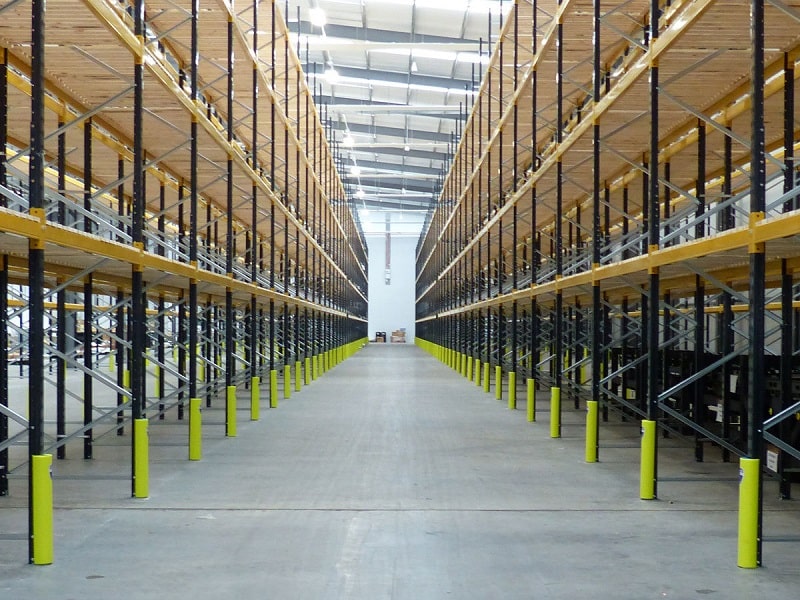
There are very few things we are asked prior to starting a project that cause as many concerns as "How long will this take?" The reason for the concern is legitimate — and there really is no one-size-fits-all correct answer. However, there is a very logical progression of steps that all warehouse builds follow. If you understand what these steps are, you will be able to create a far more effective plan — not only for managing your operations, but also for setting reasonable expectations with your stakeholders.
We have detailed below each stage of a new-build warehouse program — from the moment you look for land to the day you get the key.
The Eight Stages in Detail
Stage 1 — Land Acquisition & Due Diligence
4–12 weeks
Prior to creating a single drawing, you need to find the right site. This stage is about finding a piece of land or purchasing an existing site, negotiating Heads of Terms, retaining solicitors and conducting preliminary due diligence — such as title searches, environmental surveys, and flood risk assessments. For industrial and logistics sites in London and the South East, where land availability is limited, this stage can take significantly longer to complete because the right site might not be immediately available.
Factors That Can Delay Stage 1:
Whether you are purchasing freehold or leasing the property, the title's complexity and whether any contamination or remedial work is identified during the environmental survey. Having a contractor engaged early-on in the process — even at this stage — can allow you to evaluate the site for buildability prior to committing to purchase.
Stage 2 — Design & Planning Permission
8–16 weeks
This is typically the longest stage of pre-construction and is where the majority of delays occur. An architect or a design-and-build contractor will develop a design based upon your requirements and submit it to the Local Planning Authority (LPA) for planning consent. The vast majority of warehouse applications fall into industrial permitted development or require full planning consent. The statutory consultation periods alone take approximately 8 weeks and any additional conditions or objections can greatly extend the overall timeframe.
During this period, structural and mechanical/electrical engineers will simultaneously prepare technical drawings to enable the procurement of materials and commencement of ground works as soon as planning consent is granted.
Factors That Can Delay Stage 2:
Proximity to residential properties, highway impact assessments, ecological surveys, flood zone classification and the appetite of the LPA. Pre-applications with the council can prevent extended delays later on.
Stage 3 — Ground Works
4–8 weeks
Once planning has been obtained and Building Regulations approval has been granted, groundworks can commence. These include site clearance, excavation, relocation of services, installation of drainage, pile caps or strip foundations (depending on soil conditions), and preparation of the concrete slab. For the vast majority of UK industrial sites, the slab is the most important component — it must be designed and constructed to meet your specific floor load requirements, whether for standard racking or high-bay automatic storage.
Factors That Can Delay Stage 3:
Ground conditions revealed by investigation, unforeseen utility lines, inclement weather and the complexity of the drainage strategy. A poor site investigation report results in both cost and time overruns greater than anywhere else.
Stage 4 — Erection of Structural Steel Frame
4–8 weeks
Upon completion of foundation curing, the structural steel frame can be erected. Portal frame steel is the preferred construction method for UK warehouses — it is quick to construct, economical in spans and provides the necessary column-free internal space required by logistics and storage operations. A standard 2,500 – 5,000 square foot warehouse can be framed within two to three weeks; however, larger buildings of 50,000 square feet or more will require a longer lead time for fabrication of the steel frame.
Factors That Can Delay Stage 4:
Lead time for fabricating the steel (typically six to ten weeks from placing the order), availability of cranes and potential wind holds on site. Order steelwork while planning is still underway to avoid a gap between slab curing and frame erection.
Stage 5 — The building envelope (the roof and the cladding)
3-6 weeks
This is when the roof sheeting, wall cladding, insulation, rooflights and guttering go on to make the building weather tight. This stage is affected by the weather because it can stop you from putting up standing seam or profiled metal sheeting in windy conditions. At this time you would normally install dock levellers, loading doors, personnel doors and roller shutters.
Factors that affect the time scale:
Cladding delivery lead times,
Weather hold-ups (especially due to wind),
The complexity of the roof drainage strategy.
If your specification includes Solar PV then you need to coordinate this with the roofing contractor at an early stage.
Stage 6 — M&E
4-10 weeks
When the building is weather tight, then the mechanical and electrical installation can start in earnest. This covers the incoming electrical supply and distribution boards, lighting (LED high-bay or strip depending on the intended use of the warehouse), heating (gas or air-source heat pump radiant systems are common in warehouses), sprinkler systems if needed, fire detection and alarm, CCTV and security systems, and the data and comms infrastructure. M&E is generally the most complicated co-ordination activity on a warehouse build — lots of specialist sub-contractors working sequentially and in parallel.
Factors that affect the time scale:
DNO (Electricity Network Operator) connection timescales — these can take 12-24 weeks and must be applied for early.
Sprinkler design approvals, and whether the building has a wet or dry system, can greatly impact the program.
Stage 7 — Internal fit-out
3-6 weeks
By this stage the warehouse looks complete. Internal fit-out covers the office pod or mezzanine (if specified), partition walls, suspended ceilings, W.C. and welfare facilities, floor line marking, racking base plates (if fitted as part of the build), and the final finishes. For some clients this stage runs into the tenant fit-out — racking, automation equipment, and M.H.E installation — which usually happens right after the practical completion.
Factors that affect the time scale:
How much office space there is compared to the amount of warehouse floor space,
Any mezzanine structure (this will require separate structural calculations and Building Control sign off).
The coordination of tenant specific requirements.
Stage 8 — Commissioning and Hand-over
2-4 weeks
The last stage covers the testing and commissioning of all the building systems — lighting controls, alarm panels, sprinkler flow tests, fire suppression, heating and ventilation, and any automated systems. The Contractor will provide an O&M (operation and maintenance) manual, obtain the Building Control completion certificate, perform the client walk-through and snagging process and then issue the practical completion certificate and hand over the keys.
Factors that affect the time scale:
The size of the snagging list,
Building Control inspection availability,
The speed at which commissioning sign-offs are received from the system manufacturers.
A well managed project with good quality control throughout should have a minimal snag list at this time.
Building a warehouse is a significant undertaking — but it doesn't have to feel like stepping into the unknown.
With the right contractor by your side from day one, every stage of the programme becomes manageable and predictable. The projects that run smoothly are almost always the ones where the client and contractor planned together early, made decisions promptly, and kept a clear eye on the long-lead items that can quietly derail even well-funded builds.
Whether you're at the early stages of assessing a site, waiting on planning, or ready to break ground, Warehouse Construction Contractors has the experience to guide you through the full process — from groundworks to handover — on time and on budget.
Ready to get started? Contact our team today and let's talk through your project.