How to Design a High-Security Warehouse in the UK
March 18, 2026
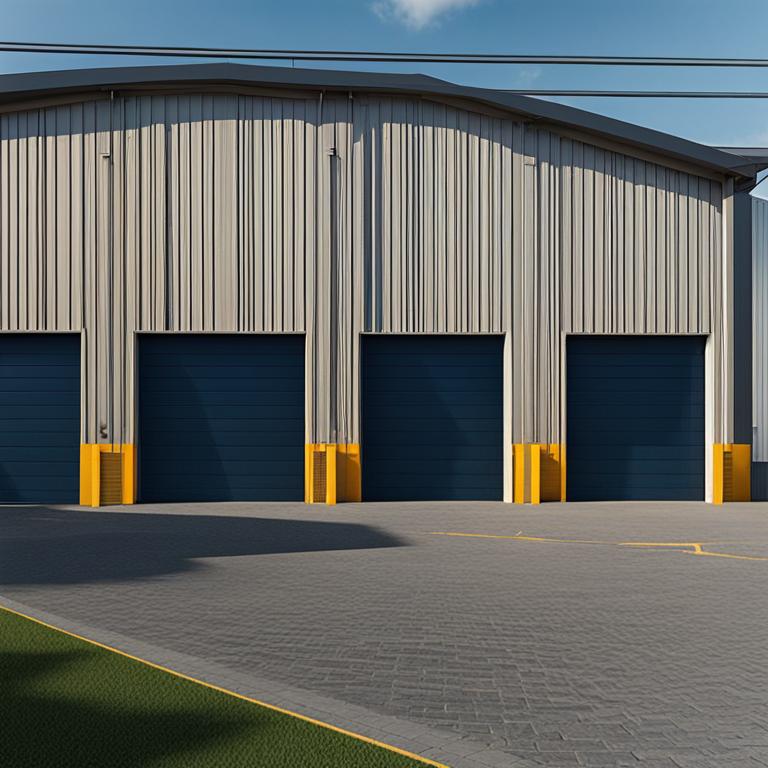
When most people think about warehouse security, they picture cameras and alarms. But the truth is, how secure a building is gets decided long before any of that, at the design stage.
We've worked on projects where expensive security systems were bolted on at the end to fix problems that better planning would have avoided entirely. A well-designed warehouse doesn't need layers of add-ons. It removes risk from the start.
Start with how people move, not what materials you use
The first thing we look at is movement. How do people and vehicles get in and out? Where are the blind spots? How does traffic flow across the site?
Poor access planning creates exposure. If delivery vehicles and staff are using the same entry points, or if visitor access isn't clearly separated from operational areas, you're already creating risk. A clean, controlled layout where every route has a purpose reduces the need for heavy security measures later. It also makes the site easier to manage day to day, which matters when you're running a busy operation.
We look at where the gatehouse or reception sits, how far vehicles travel before reaching the building, and whether the layout naturally limits unauthorised movement without relying on physical barriers everywhere.
Cut down the weak points
Every opening in a warehouse is a vulnerability. Doors, loading bays, roller shutters, service penetrations, each one is a point where security can break down. That doesn't mean you remove them. It means you're deliberate about where they go, how many there are, and how they're used.
We usually reduce the number of access points and concentrate activity into controlled zones. Fewer openings means fewer things to monitor, fewer opportunities for unauthorised entry, and a simpler security setup overall. It also means that when something does need to be secured, the investment goes further because it's focused rather than spread thin across the whole building.
Loading bays warrant particular attention. They tend to be large, widely used, and harder to control than standard doors. Where possible, we look at how they're positioned relative to the rest of the site and whether they can be contained within a secure zone of their own.
The yard is part of the building
This is one of the most common mistakes we see. People treat the yard as an afterthought. It isn't. It's part of the security strategy, and it needs to be designed that way.
Boundaries, layout, sightlines, lighting, and surface markings all play a role. A well-designed warehouse sitting on a poorly arranged yard is still exposed. If vehicles can approach from multiple directions, if there are areas that aren't visible from the building, or if the perimeter isn't clearly defined, the risk doesn't stop at the wall.
Small changes to positioning and flow can make a real difference. Where do HGVs wait before entering? Is there a holding area that keeps them away from the building until they're cleared? Can staff see what's happening in the yard from inside? These aren't complicated questions, but they don't always get asked early enough.
Zone the inside based on risk
Not every part of a warehouse needs the same level of protection. Trying to lock everything down to the same standard usually creates operational problems. Staff can't move freely, processes slow down, and people start propping doors open to get around it.
Instead, divide spaces by risk level. High-value stock areas, server rooms, and management offices get tighter controls. General storage and lower-risk zones stay accessible for day-to-day operations. The building stays functional, and security is focused where it actually counts.
This kind of internal zoning also makes it easier to manage access rights. Rather than giving everyone blanket access or locking down every corner, you create a tiered system that reflects how the building actually works. It's more logical, easier to enforce, and far less disruptive to the people using the space every day.
Think about lighting and sightlines together
Security lighting often gets treated as a standalone decision made late in the process. It works much better when it's designed alongside the layout.
Good lighting removes shadow and reduces the places where activity can go unnoticed. But it's not just about quantity, it's about where it sits and what it covers. A well-lit car park with blind spots around the perimeter isn't as secure as it looks. Lighting that's coordinated with camera positions and natural sightlines from the building is far more effective.
The same applies during the day. Where are the points of natural visibility from inside the building? Can staff see the yard, the entrance, and the loading area without leaving their workspace? These things can be shaped at the design stage without adding cost.
Get security into the brief early
The projects that go well are the ones where security is part of the conversation from day one. It shapes the layout, the structure, the services, and even the programme. When it's considered early, decisions are better, and costs are lower.
Trying to retrofit security later almost always means compromise. Cameras get mounted in awkward positions because the structure wasn't designed with them in mind. Access control gets added to doors that weren't specified for it. Lighting gets crammed in where it fits rather than where it's needed. Each compromise adds cost and reduces effectiveness.
Getting a security consultant or designer involved at the start of a project isn't an added expense. It's the thing that stops you from spending far more further down the line to fix problems that didn't need to exist.