What is the cost of Building a Warehouse in the UK
November 24, 2025
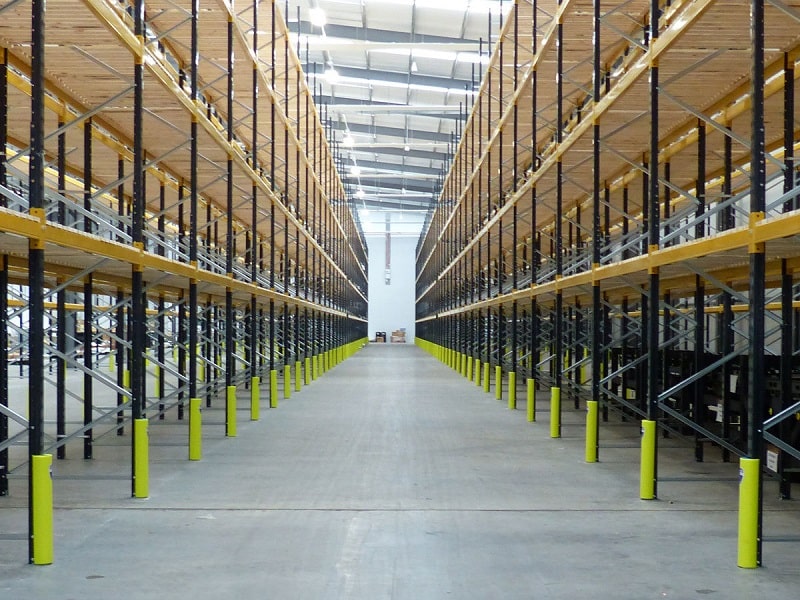
When speaking to clients for the first time, developers, logistics operators or manufacturers, the conversation is almost always the same: “Roughly what’s it going to cost us to build the warehouse?”
The truth is, there isn’t a single price or answer to this question. The expenses change depending on the site, the building details, and the end user's requirements. Despite this, there are sensible ranges. After delivering projects across the UK, we have a good idea of where budgets typically fall.
What we’re seeing in the current market.
Most warehouse projects in the region are priced at £55 to £85 per sq ft for a basic warehouse with reasonable eaves height and standard fit-out. This covers the steel frame, the envelope, the internal floor, basic M&E, a small office and the external yard.
As you shift to logistics-grade buildings with dock levellers, superior cladding, enhanced power supply, and better lighting, costs will rise. These usually fall within the £85-£130 per sq ft range.
High-bay, automation-ready warehouses constitute a separate segment. The height and weight of frames, weight of the steel, the strength of the slabs and a specific mechanical and electrical requirement drive these buildings to cost between £120-£200 per sq ft. This depends on the quantity of robotics or racking needed.
The most expensive storage is cold simply because everything is specialist: insulated panels, refrigeration, floor heating, etc. Those builds have a consistent cost of £180- £350 per square foot. These estimates are not arbitrary. These items are derived from actual tenders and ongoing projects over the past 12 to 18 months.
Where costs really move.
Of all the things that surprise people most, it is the ground that does most. Good ground keeps the budget steady. The numbers can shift quickly due to soft ground, contamination, or a high water table. The soil reports may necessitate piling, ground improvement or specialist slabs, all of which will add to the cost.
Height is another factor. Increasing the roof line height increases the weight on the steel, which changes the frame’s response. The cost increase is not linear; it adds up more quickly.
Then there’s the power. Today's warehouses require a lot more than before a decade. Automation, electric vehicle charging, enhanced lighting levels, and backup resilience are wants of operators. More than one-third of the budget is typically allocated to monitoring and evaluation packages.
Furthermore, the conversation around energy now includes the building envelope. Customers are looking for better insulation, tighter buildings, and long-term savings. Cladding and roofing upgrades are standard, which increases costs.
Not on the Spreadsheets.
This is where experience helps. These things are often missed in the early planning stage.
* Sufficient energy supply to the site.
* Requirements for fire safety strategy (sprinklers, smoke vents, compartmentation).
* Improvement of the highway coupled with planning.
* Drainage upgrades or attenuation.
* Brownfield remediation.
* Making the yard stronger for heavy HGV movements.
* Fitting out the internal office space.
When considered individually, they are insignificant, but when combined, they can cause a significant dent in the budget. We highlighted them early on so clients are not caught by surprise later.
A rough sense of where the money goes.
Most warehouses we construct typically cost between 10% and 20%. This is why most is vague.
* The base of the structure takes up a lot of area that can be a quarter or more.
* The height and length of a steel frame can vary.
* Envelope and roofing.
* Monitoring and evaluation, which has grown significantly recently.
* External works and drainage.
* The design fees, surveys and planning for sizing depend on location, ground conditions and power requirements. But this gives a realistic sense of how the client’s budget is usually spent.
Location still matters.
We build across the UK, and prices vary by region.
Developments in London and the South East will nearly always be more expensive due to labour rates and site types. The Midlands is usually more competitive. Certain northern and coastal areas add transport costs. Remote locations add mobilisation time. There's nothing dramatic about it; it is the practical realities of construction in the UK.
How long does it take?
Most warehouses follow a similar rhythm. Once the planning and design work is done, the on-site programme usually takes between six and twelve months, depending on scale, weather and complexity.
Straight-forward steel buildings can be erected quickly - the frame and cladding can be up in weeks. The expected timeline is being stretched out due to the M&E, commissioning, and office fit-out work parties now expecting more from the buildings.
Keeping control of the budget.
We’ve learned that if we are involved upfront, we can guide designs away from needless overspecification, flag MHE needs early, and identify ground or utility issues, among other things that may arise. Design Changes Sometimes Save Clients More Than They Expect.
Final word.
Having a warehouse built in 2025 is different from one ten years earlier. The construction industry is responding to operators who require more intelligent, taller and more efficient buildings. When you understand the real costs and the reasons behind them, every project starts well.