What Security Features Should a Storage Facility Include?
March 18, 2026
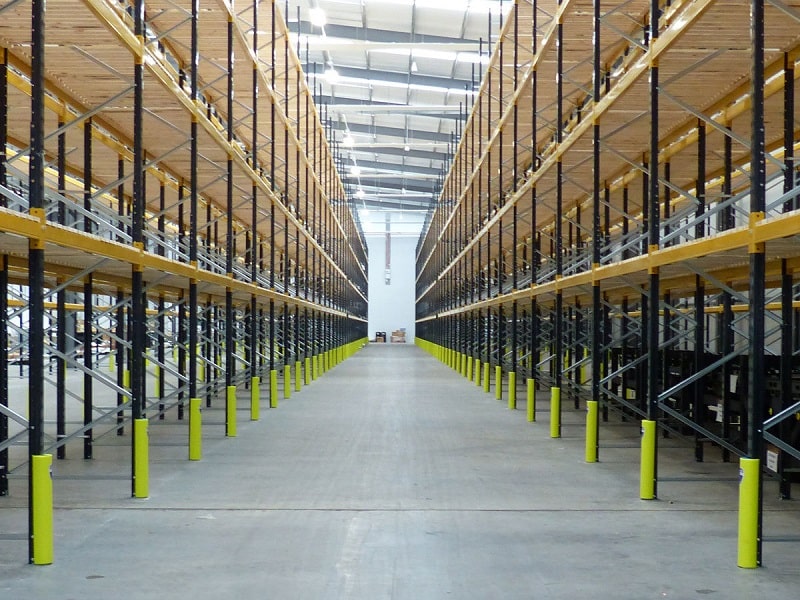
There isn't a fixed checklist for secure storage. What's required depends entirely on what's being stored and how the building will operate day to day.
That said, there are certain features we consistently see in well-designed facilities. Not because they're on a standard list, but because they solve real problems that come up time and again.
Controlled access, done properly
Access control is one of the most misunderstood parts of storage security. People tend to think of it as simply restricting entry. In practice, it's about managing flow across the whole site.
Too much restriction slows operations down. Staff spend time waiting, processes back up, and people start finding workarounds. Too little creates obvious risk. The balance sits in how access points are positioned, how many there are, and how movement is managed from the perimeter right through to the most sensitive areas of the building.
It's also worth thinking about different user types. Staff, contractors, visitors and delivery drivers all have different needs and different risk profiles. A good access control setup reflects that, rather than applying the same rules to everyone.
A building envelope that doesn't create vulnerabilities
Security isn't just electronic. The physical structure matters just as much, and in some cases more.
Wall build-ups, door specifications, roof details and floor construction all play a role. If these aren't considered properly, they introduce weak points that no amount of technology can fully compensate for. A high-spec access control system on a door set into a poorly specified wall isn't actually secure.
This is particularly relevant for facilities that store high-value goods or items that require environmental control. The building's fabric needs to meet the security requirements, not just the systems bolted onto it.
Fire protection as part of the security strategy
In many storage environments, fire is just as serious a risk as unauthorised access. Sometimes more so. Yet it is often treated as a separate workstream rather than as part of the overall security thinking.
Sprinkler systems, compartmentation and smoke control aren't just compliance items. They protect what's inside the building. A break-in might result in theft. A fire can result in total loss. Getting the fire strategy right early has a direct impact on how the building is laid out, how it's insured, and how much it costs to run.
We see this underestimated at the start of projects more often than almost anything else.
Reliable power and resilience
Security systems rely on power. So does temperature control, monitoring, access control and communications. If the power goes down, the question is what fails and what keeps running.
For most standard facilities, a basic backup arrangement is enough. But where the risk profile is higher or where the building's contents require continuous environmental control, resilience planning becomes a proper design consideration. Backup generators, uninterruptible power supplies and failover systems all need to be factored in early because they affect space planning, cost and the building's overall specification.
It's not always obvious at the start how much this matters, but it can have a significant impact later if left too late.
Visibility and monitoring
Surveillance technology has come a long way, but it still works best when the building supports it. A camera covering a poorly lit area with awkward sightlines will always underperform compared to one positioned where the layout does half the work.
Clear sightlines, well-positioned access points, and logical movement routes make monitoring more effective and reduce the number of systems needed to properly cover the site. It also makes it easier for staff to notice when something isn't right, which is often the most reliable form of monitoring.
Lighting ties into this, too. It's not just about visibility at night. Good lighting design removes the shadow and ambiguity that make incidents harder to identify and investigate after the fact.
Getting the basics right first
The most effective storage facilities aren't necessarily the ones with the most systems. They're the ones where the fundamentals have been thought through properly from the start.
Good layout, strong structure and clear access control do most of the work. Technology sits on top of that and fills in the gaps. When it's the other way around, when systems are carrying the load that good design should be carrying, it costs more, performs worse, and creates problems that are genuinely difficult to fix without going back to the beginning.
The facilities that hold up over time are the ones where security was treated as a design issue, not a procurement one.